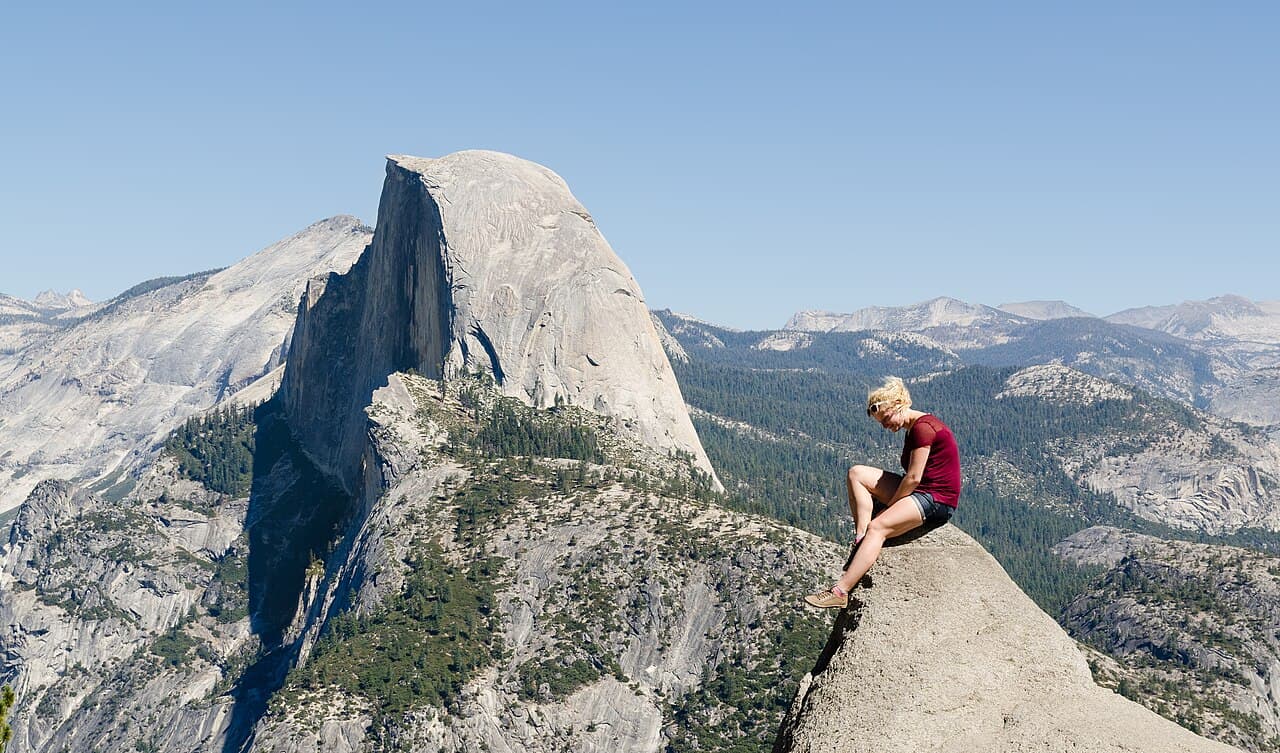
Half Dome vs Angels Landing Permits
Half Dome and Angels Landing regularly top lists of America's best hikes. Both require permits. Both have exposure and cables/chains. Both deliver unforgettable summit experiences. But they're quite different in difficulty, accessibility, and permit competition. Here's a detailed comparison.
Overview: The Two Hikes
Half Dome in Yosemite National Park is a 14-16 mile round-trip hike with 4,800 feet of elevation gain, culminating in the famous cable route on steep granite. Angels Landing in Zion National Park is a 5.4 mile round-trip hike with 1,488 feet of elevation gain, featuring a narrow ridge with chain handholds. Both are iconic, both are strenuous, both have elements of risk.
Permit Comparison at a Glance
Here's how the permit systems compare:
- Half Dome: preseason lottery (March) plus a daily lottery 2 days before
- Angels Landing: a quarterly seasonal lottery (2026: February 13-25, April 1-20, July 1-20, and October 1-20) plus a day-before lottery that runs every day
- Half Dome quota: 225 day-hike permits per day on the cables
- Angels Landing quota: NPS publishes no fixed number, only a range - "a few hundred to 800 or more per day"
- Half Dome lottery success: 22% preseason, 19% in the daily lottery (2024, NPS)
- Angels Landing lottery success: about 50% on average across both lotteries in the pilot program's first two years (NPS)
Half Dome Permit Details
Half Dome uses a two-phase lottery system:
- Preseason lottery: apply March 1-31 for dates that summer (late May-October)
- Results announced mid-April. NPS awarded 22% of 2024 preseason applications
- Daily lottery: apply 2 days before your hiking date
- Daily lottery ran 19% overall in 2024 - about 22% on weekdays, 14% on weekends
- Permit cost: $10 application fee, plus a per-person fee if you're selected
- Permits are date-specific and non-transferable
Angels Landing Permit Details
Angels Landing has required a permit for the chain section above Scout Lookout since April 2022, and there are two independent ways to win one:
- Seasonal lottery: quarterly, not monthly - in 2026 the windows are February 13-25, April 1-20, July 1-20, and October 1-20, opening 8am MT and closing 11:59pm MT
- Each seasonal window covers one season of hike dates, issued 1 to 3 months ahead
- Day-before lottery: runs every day from 12:01am to 3:00pm Mountain Time, permits issued at 4pm MT
- Both run on recreation.gov, and you can enter both for the same trip
- Permit cost: $6 to apply (covers up to 6 people, non-refundable), plus $3 per person if you win
- Cancelled seasonal permits roll automatically into the day-before lottery
- Daily quota: no fixed number published - NPS says allocations run from a few hundred to 800 or more per day
- Scout Lookout and everything below it needs no permit at all
Difficulty Comparison
Both hikes are strenuous but in different ways:
- Half Dome distance: 14.2 miles round trip (most people take 10-14 hours)
- Angels Landing distance: 5.4 miles round trip (4-5 hours typical)
- Half Dome elevation: start at 4,035', summit at 8,846' (4,800' gain)
- Angels Landing elevation: start at 4,300', summit at 5,790' (1,488' gain)
- Half Dome exposure: The cable section is very steep (400' at 45+ degrees)
- Angels Landing exposure: Narrow ridge with 1,000'+ drops on both sides
Warning: Don't Underestimate Either Hike
Both hikes have seen fatalities. Be honest about your abilities:
- Half Dome cables are extremely slippery when wet (deaths have occurred)
- Angels Landing chains require comfort with significant exposure
- Half Dome's length causes altitude sickness and exhaustion issues
- Both require good physical conditioning and no fear of heights
- Turn back if conditions deteriorate (thunderstorms are deadly on both)
Which Is Harder to Get a Permit?
Half Dome, and it isn't close. Its preseason lottery awarded 22% of applications in 2024 and the daily lottery ran 19%. NPS puts Angels Landing at about 50% across both of its lotteries over the pilot program's first two years. Both let you plan ahead. Half Dome runs a March preseason lottery, Angels Landing a quarterly seasonal lottery covering one season of dates 1 to 3 months out, and both keep a short-notice lottery running for people who lost or never applied. If you're booking flights around a single hike, Half Dome is the one to build the trip around, because Angels Landing gives you a second bite every morning you're in Zion.
Tip: Stack Your Angels Landing Entries
The Angels Landing day-before lottery resets every morning, so a four-night Zion trip is four independent entries rather than one shot. Pick your dates carefully: NPS says the odds run from 8% in the day-before lottery on Memorial Day Weekend Sunday all the way to 100% on random mid-week days through the year. Enter the seasonal lottery for your season as well, because the two draws don't compete with each other - just note it runs quarterly, so a missed window costs you three months. While you wait, Zion's other headline hikes (The Narrows bottom-up, Observation Point, Kolob Canyons) need no permit.
Best Time to Visit Each
Optimal seasons differ slightly:
- Half Dome season: Late May through early October (cables installed)
- Half Dome best months: June and September (avoiding August crowds)
- Angels Landing season: Year-round (but icy conditions in winter)
- Angels Landing best months: March-May, September-November (milder temps)
- Both: Weekdays have better permit odds and smaller crowds
Which Should You Do First?
If you've never done either, consider your comfort level. Angels Landing is shorter and lets you test your exposure tolerance more quickly. If heights terrify you, you'll know within the first mile of the chain section. Half Dome requires all-day commitment before you reach the cables. If you're comfortable with exposure and want the bigger adventure, Half Dome's length and elevation make it more of an achievement.
The Experience Comparison
Both summits deliver incredible rewards:
- Half Dome summit: Massive granite dome with 360° Sierra views, room to spread out
- Angels Landing summit: Knife-edge pinnacle, intimate space, Zion Canyon panorama
- Half Dome accomplishment: The famous cables are a bucket-list achievement
- Angels Landing accomplishment: Conquering the narrow ridge is unforgettable
- Both: The permit challenge makes the summit sweeter
Tip: Consider Both on a Road Trip
Yosemite and Zion are about 500 miles apart. Many hikers combine both in one Southwest road trip, along with Grand Canyon, Bryce, Death Valley, and Kings Canyon. Sequence the applications: Half Dome's preseason lottery closes March 31, so lock that date first, then enter the Angels Landing seasonal lottery in the quarterly window that covers your Zion dates, and keep entering the day-before lottery once you're on the road.
Conclusion
Half Dome and Angels Landing are both bucket-list worthy. Half Dome offers the bigger adventure with its length and elevation. Angels Landing delivers comparable thrills in a shorter package. On permits they are not close: Half Dome awarded 22% of preseason applications in 2024, NPS puts Angels Landing at about 50% across its first two years, and Angels Landing gives you a fresh entry every morning of your trip. Do Angels Landing first to find out how you handle exposure, then tackle Half Dome when you're ready for the full-day challenge.
Track these permits
Live availability, current lottery dates, and cancellation alerts.