Four Pass Loop Permit: Route and Dates
Four Pass Loop permits are booked by advance reservation in Maroon Bells-Snowmass Wilderness. The route covers 26 miles.
26 miles, four passes over 12,000 feet, and about 11,000 feet of climbing - booked by zone, so you pitch wherever you like inside the one you reserved.
This guide covers the Four Pass Loop permit.
$10 per person, per night from May 1 to October 31 (children 16 and under free) + $6 non-refundable reservation fee
Permit Cost
3 to 5 days
Duration
26 miles
Distance
11,000'
Elevation Gain
strenuous
Difficulty
About Four Pass Loop
The Four Pass Loop is a 26-mile circuit in the Maroon Bells-Snowmass Wilderness that climbs over four passes higher than 12,000 feet, with roughly 11,000 feet of vertical gain. The Forest Service says it takes between three and five days depending on your party's ability and on trail and weather conditions. Overnight permits come from Recreation.gov only - ranger stations do not issue them - and they are booked by zone. You reserve a spot in each zone you plan to camp in, for each night, and then camp anywhere within it. That is different from Conundrum Hot Springs, Crater Lake and Capitol Lake in the same wilderness, which are booked as designated campsites. Get this backwards and you are camped outside your permit. Permits are released in blocks: April 1 - July 31 dates go on sale February 15, August 1 - November 30 dates on June 15, and December 1 - March 31 dates on October 15, all at 8 am Mountain time. The fee is $10 per person per night from May 1 through October 31, children 16 and under free, plus a non-refundable $6 reservation fee. You are limited to two permits per person per calendar year and a maximum stay of seven nights. Bear canisters are not a recommendation here. Food, trash and scented items must be in an IGBC-approved bear-resistant container, and the Forest Service says visitors without one will be ticketed and required to leave.
The Four Pass Loop is a zone permit, not a campsite permit, and getting that distinction right is the difference between a legal trip and a citation. There is no Snowmass Lake Camp or Geneva Lake Camp to book. There are zones - Maroon, North Fork, East Fork, Snowmass Lake, Geneva Lake, Upper Snowmass - and you reserve a spot in the zone you intend to sleep in, for each night you sleep there, and then you camp anywhere within it. Elsewhere in the same wilderness, Conundrum Hot Springs, Crater Lake and Capitol Lake do work by designated site, which is exactly why people get it wrong.
The Four Pass Loop
- Distance
- 26 miles
- Route type
- loop
- Elevation gain
- 11,000 ft
- High point
- 12,500 ft
- Low point
- 9,580 ft
- Trip length
- 3 to 5 days
- Difficulty
- strenuous
Entry points: Maroon Lake Trailhead, Snowmass Creek Trailhead
Elk Range, Colorado. Nearest town: Aspen, CO
Points along the route
- Maroon Lake TrailheadMile 0, 9,538 ft
- Crater LakeMile 1.92, 10,096 ft
- West Maroon ValleyMile 5
- Maroon Zone
- West Maroon PassMile 6.54, 12,479 ft
- Frigid Air PassMile 9.05, 12,402 ft
- Fravert BasinMile 12
- North Fork Zone
- Geneva Lake Zone10,943 ft
- Trail Rider PassMile 16.16, 12,397 ft
- Snowmass Lake ZoneMile 18.44, 10,987 ft
- Buckskin PassMile 22.26, 12,473 ft
- Minnehaha GulchMile 25
- Crater Lake / TrailheadMile 27
- East Fork Zone
- Upper Snowmass Zone
Four Pass Loop permit detailsandAll Maroon Bells-Snowmass Wilderness permits
The Experience
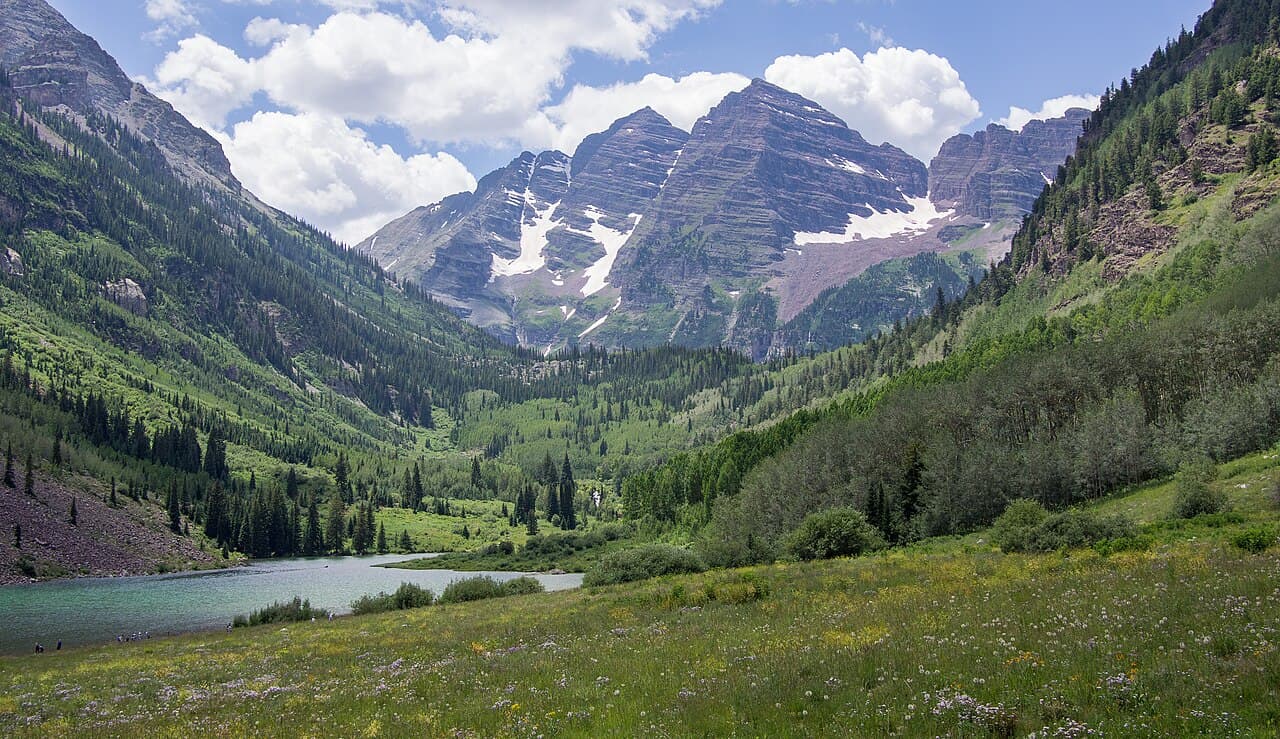
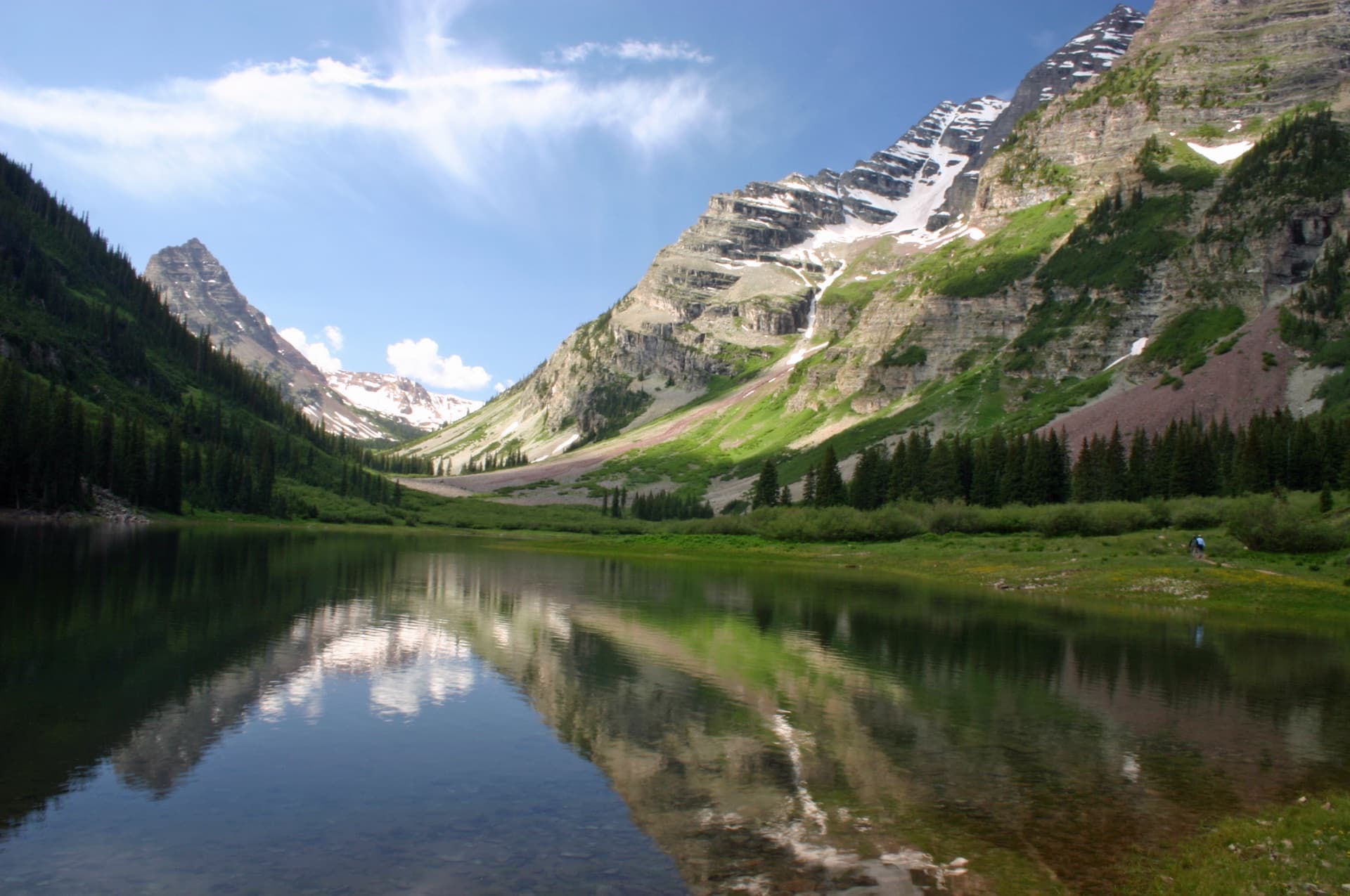
You climb out of the Maroon Valley in the dark to beat the afternoon storms, and by mid-morning you are on a pass at 12,000-something feet looking at the next one. Then you drop, and do it again. Four times. The Elk Range is loose, dark rock and improbably green basins, and by the third pass your legs have stopped negotiating.
The loop from the Maroon Lake trailhead is 26 miles with roughly 11,000 feet of vertical gain and takes most parties three to five days depending on ability, trail and weather. It crosses four passes above 12,000 feet - West Maroon, Frigid Air, Trail Rider and Buckskin - linking alpine lakes and basins under the Elk Range peaks.
What you book is a sequence of zone-nights. The Forest Service publishes a quota for each: Maroon takes 15 groups a night, North Fork 17, Snowmass Lake 13, Crater Lake 11, Geneva Lake 8, East Fork 7 and Upper Snowmass 6. Within each zone, most permits are for parties of 1-4, with a handful of 5-10 permits in Maroon, North Fork and Snowmass Lake. Total group size is capped at 10 if you reserve multiple campsites.
If you start at Maroon Lake you also need a parking or bus reservation for the Maroon Scenic Area - there are only so many parking spaces, and the link to book it comes in your permit confirmation email.
What to Expect
26 miles with about 11,000 feet of vertical gain, over four passes above 12,000 feet
Three to five days for most parties
Zone camping, not campsites - reserve a zone for each night and pitch anywhere inside it
Zone quotas per night: North Fork 17 groups, Maroon 15, Snowmass Lake 13, Crater Lake 11, Geneva Lake 8, East Fork 7, Upper Snowmass 6
Total group size capped at 10 if you reserve multiple campsites
A separate parking or bus reservation if you start at the Maroon Scenic Area
No toilets anywhere in the wilderness
Best window is July to September; October to late June means snow-covered passes
Get Four Pass Loop Alerts
Be first to know when cancellations happen.
Permit Requirements
Permits are available only through Recreation.gov - ranger stations do not issue them
Reserve a spot in each zone for each night you camp there, and camp only in your reserved zone
Conundrum Hot Springs, Crater Lake and Capitol Lake are designated campsites, not zones
Two permits per person per calendar year, and permits cannot overlap dates
Maximum stay is seven nights per permit
Food, trash and scented items must be in an IGBC-approved bear-resistant container - no container means a ticket and being required to leave
$10 per person per night May 1 through October 31; 16 and under free
Group size is capped by the campsite, with a total of 10 if multiple campsites are reserved
Campfires are prohibited above 10,800 feet anywhere in the wilderness, including Snowmass Lake, and at all designated sites at Conundrum, Crater and Capitol Lakes
Dogs must be on leash everywhere in the wilderness and are prohibited in the Conundrum Hot Springs Zone
The permit holder or named alternate trip leader must be present, with the printed permit and photo ID
There are no toilets - WAG bags are highly recommended, or dig a cat hole six to eight inches deep at least 200 feet from water, camp and trails
Gear & Preparation
Required Gear
- •An IGBC-approved bear canister or Ursack - mandatory, and enforced
- •A bathroom plan: WAG bags or a trowel. There are no toilets in this wilderness
- •Shelter and layers for above 12,000 feet, where afternoon storms are the norm not the exception
- •Printed permit and photo ID, carried by the permit holder or alternate
- •A stove - fires are prohibited above 10,800 feet, which covers most of where you will camp
Recommended Gear
- •Trekking poles for four descents off 12,000-foot passes
- •Microspikes if you go before mid-July; deep snow persists on the passes late
- •Water shoes for the river crossing, which the Forest Service warns is perilous in early-summer snowmelt
- •A pre-dawn start plan and a headlamp, because the passes want to be crossed before afternoon storms
- •A copy of the Overnight Permit Zone Map, so you know exactly where your zone starts and stops
Hazards & Safety
Afternoon thunderstorms on four passes above 12,000 feet, with no shelter and nowhere to descend quickly
Early-summer snowmelt making the river crossing perilous, per the Forest Service's own warning
Deep snow persisting on the passes until late in the summer
Altitude - you sleep high and cross higher, repeatedly
Black bears; this is why the canister rule is enforced with citations
Loose Elk Range rock, which is what the Maroon Bells are notorious for
October to late June: snow-covered campsites, trails and passes, avalanche hazard, and difficult route finding
Best Time to Visit
July through September - the Forest Service says so in the permit text itself. From early October to late June, campsites, trails and mountain passes are snow-covered and trailheads may be inaccessible; avalanche hazards exist and snow makes route finding difficult. The Four Pass Loop is often snow-bound from October through June. If you are not prepared to travel and camp on snow, plan for summer.
Pro Tips
Be logged in at 8 am Mountain on the release date. February 15 covers April through July; June 15 covers August through November.
Never say camp when you mean zone. Your permit is for a zone and a night, and camping outside it is a citation - the only designated-site zones in this wilderness are Conundrum, Crater Lake and Capitol Lake.
East Fork (7 groups) and Upper Snowmass (6) are the tightest quotas on the loop. Build the itinerary around them and the rest usually falls into place.
Book the Maroon Scenic Area parking or bus the moment the confirmation email arrives. It is a separate reservation with limited spaces.
Two permits per person per calendar year, and they cannot overlap dates - so a partner booking the second half of a longer trip is worth planning for.
Rent the canister in Aspen if you do not own one. The rule is enforced by removal from the wilderness, not a warning.
100+ wilderness permits, extensive backcountry experience
This guide is based on personal experience obtaining wilderness permits and is regularly updated to reflect current policies and strategies.
Frequently Asked Questions
How do I get a Four Pass Loop permit?
+
Four Pass Loop permits require advance reservations. Book online as soon as reservations open for your desired dates.
When is the best time to visit Four Pass Loop?
+
July through September - the Forest Service says so in the permit text itself. From early October to late June, campsites, trails and mountain passes are snow-covered and trailheads may be inaccessible; avalanche hazards exist and snow makes route finding difficult. The Four Pass Loop is often snow-bound from October through June. If you are not prepared to travel and camp on snow, plan for summer.
How long is the Four Pass Loop route?
+
The route is 26 miles, as a loop. Plan on 3 to 5 days.
How difficult is the Four Pass Loop route?
+
Fit backpackers who are acclimatised or willing to spend a night high before starting. Four 12,000-foot passes in three to five days is the whole difficulty; the trail itself is established and signed.
Where does the Four Pass Loop route start?
+
The permit covers 2 entry points: Maroon Lake Trailhead, Snowmass Creek Trailhead.
What gear do I need for the Four Pass Loop route?
+
Essential gear includes: An IGBC-approved bear canister or Ursack - mandatory, and enforced, A bathroom plan: WAG bags or a trowel. There are no toilets in this wilderness, Shelter and layers for above 12,000 feet, where afternoon storms are the norm not the exception, Printed permit and photo ID, carried by the permit holder or alternate, A stove - fires are prohibited above 10,800 feet, which covers most of where you will camp.
Don't Miss Your Four Pass Loop Permit
Cancellations happen every day. PermitSnag monitors Four Pass Loop availability 24/7 and alerts you the moment a spot opens up.
Get Permit AlertsTrip planning
Articles that plan a trip around this permit.