Rainier Permit: Route and Dates
Rainier permits are drawn by lottery in Mount Rainier National Park.
This guide covers the Mount Rainier Climbing permit.
$82 per person climbing fee + $12 per person per night wilderness permit + $6 reservation fee
Permit Cost
About Rainier
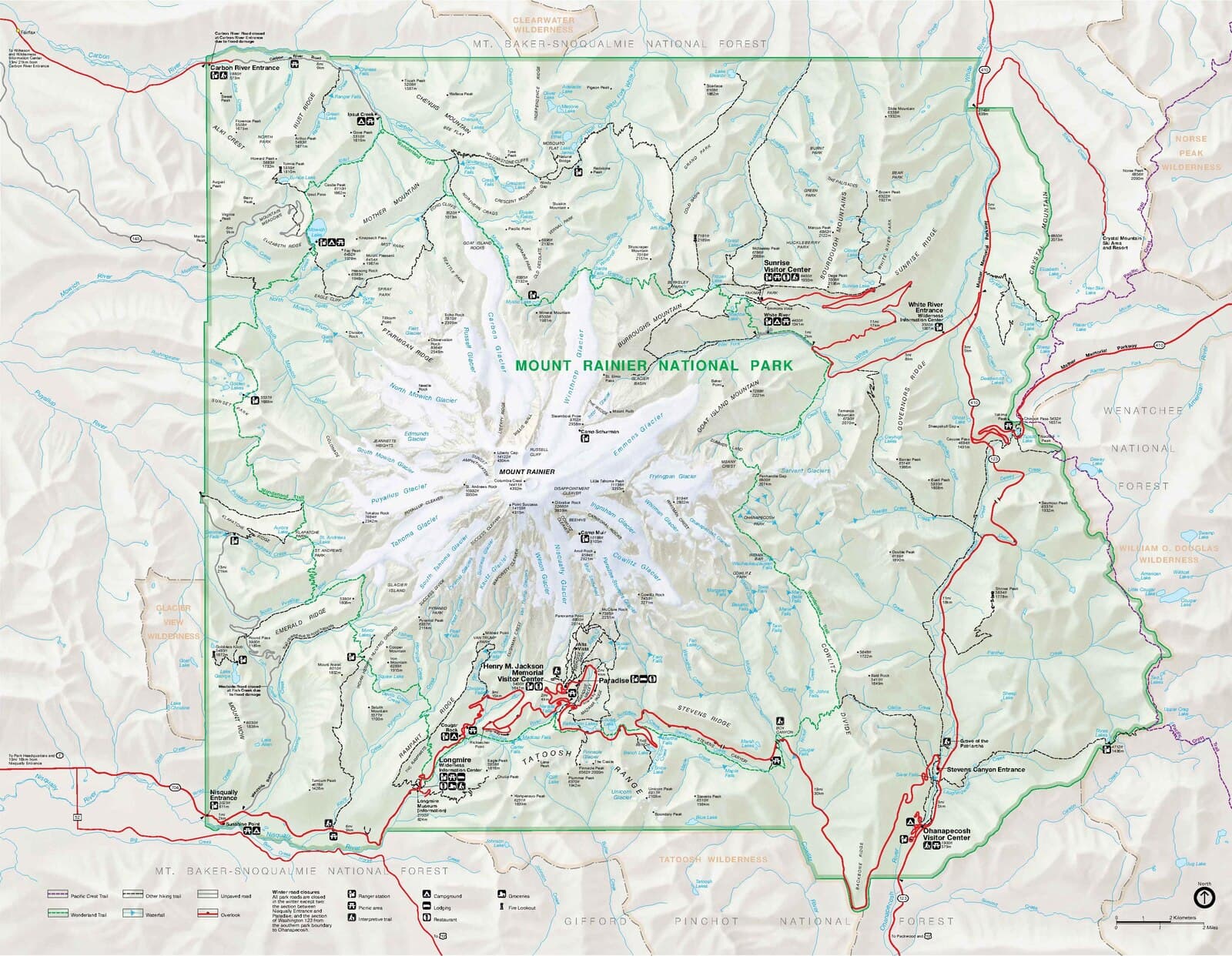
Mount Rainier is a 14,410-foot active volcano and the most heavily glaciated peak in the contiguous United States. NPS says reaching the summit by any route takes a vertical gain of more than 9,000 feet over ten or more miles, and that technical glacier-travel rope skills are required. There are over twenty climbing routes reached from four main trailheads — Paradise, Westside Road, White River and Mowich Lake — though SR165 to Carbon River and Mowich Lake is currently closed with no alternate route. The permitting is layered, and which layers apply depends on when you go. Federal regulation requires a permit to be on a glacier or above roughly 10,000 feet, requires climbers to be 18 or have a guardian's permission, and prohibits soloing without specific authorization. From September 15 to May 21 you self-register: pay $82 per person at Pay.gov before you arrive, then fill out a card at the kiosk at the Paradise Old Station, and in winter that card also serves as your wilderness permit. From May 22 to September 30 there is no self-registration — you register in person at a wilderness information station, and the park holds roughly half of capacity at each camp and zone for walk-ups available 24 hours before the climb. On top of climbing registration, the high-use season from May 1 to September 15 requires a wilderness permit at $12 per person per night, even if you are not camping and are climbing in a single push, because the park manages use along the whole route. Roughly two thirds of summer permits are reservable in advance on Recreation.gov and the remaining third are walk-up. An optional early-access lottery exists because demand for the Wonderland Trail and high-use climbing routes exceeds capacity: in 2026 it opened February 10, closed March 3, notified applicants March 14, and gave winners staggered booking windows from March 21 before general on-sale on April 25. About success rates: NPS does not publish one any more. Its annual climbing statistics stop reporting the number of climbers who summited after 2018, the last figure being 5,135 successful out of 10,762 climbers, or 47.7%. No current NPS page gives a per-route success rate.
The Rainier route
Entry points: Paradise, White River
Cascade Range. Nearest town: Ashford
Points along the route
- Camp Muir10,080 ft
- Ingraham Flats11,000 ft
- Camp Schurman9,460 ft
- Columbia Crest14,410 ft
Rainier permit detailsandAll Mount Rainier National Park permits
What to Expect
More than 9,000 feet of vertical gain and over ten miles of travel to the summit, by any route
Roped glacier travel — NPS says technical rope skills are required and recommends practical crevasse rescue knowledge
A high camp at Camp Muir (10,080 ft) or Camp Schurman (9,460 ft), where you melt snow for water and treat or boil it
A summit push starting in the small hours
Severe winter-like storms that NPS says are not uncommon even during summer
A permit stack: climbing registration, plus a wilderness permit at $12 per person per night whether or not you camp
Get Rainier Alerts
Be first to know when cancellations happen.
Permit Requirements
A permit is required to be on a glacier or above normal climbing high camps, roughly 10,000 feet (36 CFR 7.5(b))
You must be at least 18 or have permission from a guardian to apply
A party must consist of at least two people; soloing requires specific authorization via the Solo Application Form
Maximum party size is 12; NPS recommends a minimum of four for winter climbs
Each climber pays $82 at Pay.gov before arriving in the park, in both the winter self-registration and summer walk-up seasons
A wilderness permit is required May 1 to September 15 at $12 per person per night, even for single-push climbs that never camp
Reservations are held until noon on the start date and are cancelled after that unless you email morawildernessreservations@nps.gov or call 360-569-6650
The person named on the reservation must activate the permit in person at a ranger station with photo ID, an off-trip emergency contact, and details of any vehicle left overnight
Guided climbs must go through an authorized guide service; leading or joining an unauthorized guided climb is illegal
Gear & Preparation
Required Gear
- •Crampons and ice axe
- •Rope, harness and crevasse rescue gear — NPS can deny a climbing permit for lack of gear or experience or both
- •Helmet
- •A stove and pot; there is no liquid water at either high camp
- •Cold-weather layers for storm conditions that can arrive in summer
Recommended Gear
- •Water treatment or the fuel to boil, since NPS requires melted snow be treated or boiled
- •A wand set for whiteout navigation on the upper glaciers
- •A current weather forecast obtained before you start; rangers at Camp Muir and Camp Schurman can update it
Hazards & Safety
Crevasse falls on heavily glaciated terrain
Rockfall on the Disappointment Cleaver, worst in warm afternoons and late season
Weather — NPS says severe winter-like storms are not uncommon during summer and that poor weather often contributes to accidents and near-misses
Whiteout navigation on featureless glacier
Altitude, on a route that gains over 9,000 feet
Avalanche on approach terrain, especially on the north-side routes
Best Time to Visit
May 1 through September 15 is what NPS calls the peak climbing season, and it lines up with staffed ranger stations at both high camps. Camps fill fastest on Friday nights and weekends, so a midweek start is the easiest way to improve your odds. In 2026 reservable dates run to October 12.
Pro Tips
Pay the $82 at Pay.gov before you drive to the park — both the winter self-registration and the summer walk-up route assume it is already done
Get a reservation. NPS says outright not to rely on a walk-up permit, especially for Friday nights and weekends
The early-access lottery is optional and only buys an earlier booking window — general on-sale on April 25 is the real deadline for most people
Show up by noon on your start date or the park cancels the reservation and your camps go back into the walk-up pool
You need a wilderness permit even if you never camp; the park manages use along the whole route, not just the campsites
Bring a stove: NPS says climbers must melt snow at both high camps and treat or boil it
Ask the rangers at Camp Muir or Camp Schurman for an updated forecast before your summit bid
100+ wilderness permits, extensive backcountry experience
This guide is based on personal experience obtaining wilderness permits and is regularly updated to reflect current policies and strategies.
Frequently Asked Questions
How do I get a Rainier permit?
+
Rainier permits are distributed through a lottery system. Apply during the lottery window, and if you're not selected, check for cancellations as they become available.
When is the best time to visit Rainier?
+
May 1 through September 15 is what NPS calls the peak climbing season, and it lines up with staffed ranger stations at both high camps. Camps fill fastest on Friday nights and weekends, so a midweek start is the easiest way to improve your odds. In 2026 reservable dates run to October 12.
Where does the Rainier route start?
+
The permit covers 2 entry points: Paradise, White River.
What if I don't win the Rainier lottery?
+
Cancellations happen regularly. Use PermitSnag to monitor availability and get alerts when spots open up. You can also check for walk-up permits or consider similar alternatives in the area.
What gear do I need for the Rainier route?
+
Essential gear includes: Crampons and ice axe, Rope, harness and crevasse rescue gear — NPS can deny a climbing permit for lack of gear or experience or both, Helmet, A stove and pot; there is no liquid water at either high camp, Cold-weather layers for storm conditions that can arrive in summer.
Don't Miss Your Rainier Permit
Cancellations happen every day. PermitSnag monitors Rainier availability 24/7 and alerts you the moment a spot opens up.
Get Permit Alerts