Longs Peak: Permit, Route and Dates
Longs Peak permits are booked by advance reservation in Rocky Mountain National Park. The route covers 6 miles.
Four designated camps on the Longs Peak trail, topping out at the Boulderfield - nine sites at 12,760 feet, six miles and 3,360 vertical from the trailhead.
This guide covers the Longs Peak Wilderness Permit (Overnight).
$36 Wilderness Administrative Fee per trip reservation - not per night and not per person - non-refundable, May 1 to October 31. Winter reservations are $10. Park entrance fees are separate.
Permit Cost
2 days
Duration
6 miles
Distance
3,360'
Elevation Gain
strenuous
Difficulty
About Longs Peak
Rocky Mountain National Park is a designated-site wilderness with no dispersed camping, and the Longs Peak trail carries four of those sites: Goblins Forest (6 sites, 1.2 miles, 10,120 feet), Moore Park (2 sites, 1.7 miles, 9,760 feet), Battle Mountain Group (1 site, 2.8 miles, 11,000 feet) and the Boulderfield (9 sites, 6 miles, 12,760 feet). Every one has a privy. The fee structure is unusual and in your favour: $36 is a Wilderness Administrative Fee for each trip reservation - not each night and not each person - non-refundable, from May 1 to October 31. Winter reservations cost $10. Walk-ins pay the same $36. Park entrance fees are separate. Summer reservations for the 2026 season opened March 1 at 8:00 am MST on Recreation.gov, and requests must be made at least three days before your first camping date. Between November 1 and April 30 the park accepts no reservation requests at all. Party size: individual sites take 1 to 7 people, group sites take 8 to 12, and groups over seven may not camp in neighbouring individual sites - they must use a group site or split up and camp at least a mile apart. On this trail the only group site is Battle Mountain. Stay limits are seven nights June through September, fourteen nights October through May with no more than 21 total per year, and no more than three consecutive nights in one camp area. Bear canisters are required from April 1 to October 31 - a hard-sided, commercially made, carry-in/carry-out canister, with no other method permitted. The park applies this to wilderness areas below tree line and, explicitly, in the Boulder Field of Longs Peak, due to recurring wildlife incidents. Store the canister 70 adult steps - 200 feet - from your campsite. Campfires are prohibited park-wide in the wilderness; portable stoves only. Permits and dashtags must be picked up in person at a park Wilderness Office, open 7 am to 3:30 pm daily, and a permit not collected by noon on the first day of your trip is cancelled and reissued. One good side effect: a Wilderness Overnight Backpacking permit serves as your timed entry reservation, though you still need a valid park entrance fee or pass, and you have to pick up the physical permit first.
Camping on this trail is how most people give themselves a real chance at the summit: sleep at the Boulderfield and you start the Keyhole Route at first light instead of 2 am from the parking lot. It is also the one place in Rocky Mountain National Park where the bear canister rule reaches above treeline - the park names the Boulder Field of Longs Peak specifically, because of recurring wildlife incidents.
The Longs Peak route
- Distance
- 6 miles
- Route type
- out-and-back
- Elevation gain
- 3,360 ft
- High point
- 12,760 ft
- Low point
- 9,405 ft
- Trip length
- 2 days
- Difficulty
- strenuous
Starts at Longs Peak Trailhead
Front Range. Nearest town: Estes Park, CO
Points along the route
- Longs Peak TrailheadMile 0, 9,405 ft
- Goblins ForestMile 1.2, 10,120 ft
- Moore ParkMile 1.7, 9,760 ft
- Battle Mountain GroupMile 2.8, 11,000 ft
- BoulderfieldMile 6, 12,760 ft
- Longs Peak summit14,259 ft
Longs Peak permit detailsandAll Rocky Mountain National Park permits
The Experience
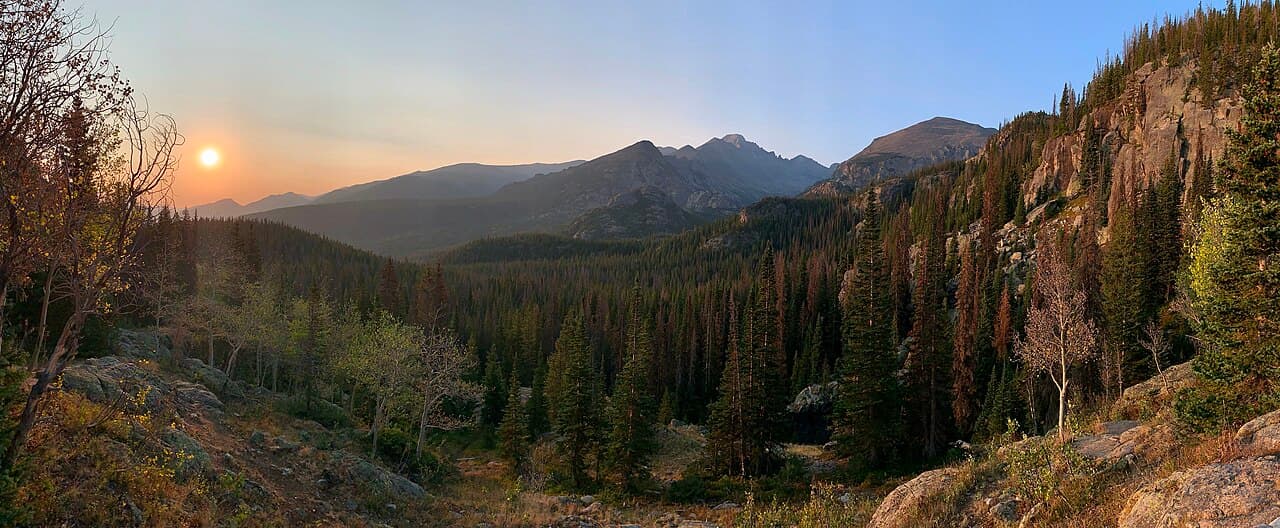
Goblins Forest is still in the trees. Battle Mountain is at the edge of them. The Boulderfield is not a campsite so much as a field of talus with rock rings and a privy, at 12,760 feet, with the Keyhole notch visible above you and weather that arrives without asking.
The park publishes the four camps from the Longs Peak Trailhead at 9,405 feet: Goblins Forest, 6 sites, 1.2 miles in at 10,120 feet with 720 feet of gain; Moore Park, 2 sites, 1.7 miles at 9,760 feet; Battle Mountain Group, 1 site, 2.8 miles at 11,000 feet with 1,600 feet of gain; and the Boulderfield, 9 sites, 6 miles at 12,760 feet with 3,360 feet of gain. Every one has a privy. The park's twenty-year average snow-free dates run from May 28 at Moore Park to June 19 at the Boulderfield.
What it does not publish is a round-trip distance or total gain to the summit, and we are not going to invent one. What it does publish about the summit route is a warning worth quoting in full: the Keyhole Route is not a hike, it is a climb that crosses enormous sheer vertical rock faces, often with falling rocks, requiring scrambling, where an unroped fall would likely be fatal.
What to Expect
Four designated camps: Goblins Forest, Moore Park, Battle Mountain Group and the Boulderfield
The Boulderfield is 6 miles and 3,360 feet from the trailhead, at 12,760 feet, with nine sites and a privy
$36 per trip reservation, not per person or per night
1 to 7 people at individual sites; 8 to 12 at the Battle Mountain group site
Bear canisters required April 1 to October 31, including at the Boulder Field
No campfires anywhere in the park's wilderness - portable stoves only
Your wilderness permit doubles as a timed entry reservation, but you still pay the entrance fee
Get Longs Peak Alerts
Be first to know when cancellations happen.
Permit Requirements
A wilderness permit is required to camp overnight in the wilderness of Rocky Mountain National Park
Individual sites take parties of 1 to 7; group sites take 8 to 12. Groups over 7 may not camp in neighbouring individual sites
Between April 1 and October 31 all food, scented items and garbage must be in a hard-sided commercially made bear-resistant canister; no other method is permitted
Store the canister 70 adult steps - 200 feet - from your campsite
Maximum 7 nights June through September; 14 nights October through May, and no more than 21 nights per year
No more than 3 consecutive nights in one camp area
Campfires are prohibited; use portable stoves only
Permits and dashtags must be collected in person at a Wilderness Office, and are cancelled if not picked up by noon on day one
Gear & Preparation
Required Gear
- •A hard-sided commercial bear canister - required, and no alternative is accepted
- •A stove; campfires are prohibited
- •Wind and cold protection rated for 12,760 feet in any month
- •Water treatment
- •A helmet if you intend to go above the Boulderfield - the Keyhole Route has falling rock
Recommended Gear
- •Trekking poles for 3,360 feet of gain with a pack
- •Traction and an ice axe outside the short summer window
- •A headlamp for a pre-dawn summit start
- •A tent that stands up to sustained wind on open talus
Hazards & Safety
The Keyhole Route above the Boulderfield. The park's own words: not a hike, a climb crossing enormous sheer vertical rock faces, often with falling rocks, requiring scrambling, where an unroped fall would likely be fatal
Afternoon thunderstorms on completely exposed ground at 12,760 feet
Winter conditions, which the park says are present on Longs Peak for most of the year and can return at any time
Altitude - the Boulderfield sits above 12,700 feet with a 3,360-foot climb to reach it
Wildlife incidents at the Boulder Field, which is why the canister rule reaches above treeline there
Best Time to Visit
Mid-July through mid-September. The park's twenty-year average snow-free date for the Boulderfield is June 19, and its July 10, 2026 report had Longs Peak almost entirely in summer conditions, with trails snow-free to both the Boulderfield and Chasm Lake. Outside that window the park's blunt framing applies: for most of the year Longs Peak is in winter conditions, requiring winter mountaineering experience and specialized equipment.
Pro Tips
The $36 is per trip, not per person. A party of six pays the same as a solo hiker, which makes this one of the cheapest good permits in the system.
Sleeping at the Boulderfield is the whole point - it turns a 2 am parking-lot start into a first-light start from 12,760 feet.
Buy or borrow a hard-sided canister before you go. RMNP accepts nothing else between April 1 and October 31, and the Boulder Field is named specifically.
Reserve at least three days before your first camping date; the park will not take a request closer than that.
Your permit covers timed entry, but only once you have the physical copy in hand. Collect it at a Wilderness Office between 7 am and 3:30 pm.
Start for the summit by 3:00 AM. Afternoon thunderstorms on the exposed ground above the Boulderfield are the single most predictable danger here, and the only defence is being back below treeline before they build.
Bring a helmet and turn around if the weather is building. Loose rock is constant on the Keyhole Route, and the park's own framing is that an unroped fall there would likely be fatal.
100+ wilderness permits, extensive backcountry experience
This guide is based on personal experience obtaining wilderness permits and is regularly updated to reflect current policies and strategies.
Frequently Asked Questions
How do I get a Longs Peak permit?
+
Longs Peak permits require advance reservations. Book online as soon as reservations open for your desired dates.
When is the best time to visit Longs Peak?
+
Mid-July through mid-September. The park's twenty-year average snow-free date for the Boulderfield is June 19, and its July 10, 2026 report had Longs Peak almost entirely in summer conditions, with trails snow-free to both the Boulderfield and Chasm Lake. Outside that window the park's blunt framing applies: for most of the year Longs Peak is in winter conditions, requiring winter mountaineering experience and specialized equipment.
How long is the Longs Peak route?
+
The route is 6 miles, as an out-and-back. Plan on 2 days.
How difficult is the Longs Peak route?
+
Backpackers acclimatised enough to sleep at 12,760 feet, whether or not they intend to go higher. The trail to the Boulderfield is a hike.
Where does the Longs Peak route start?
+
Longs Peak Trailhead.
What gear do I need for the Longs Peak route?
+
Essential gear includes: A hard-sided commercial bear canister - required, and no alternative is accepted, A stove; campfires are prohibited, Wind and cold protection rated for 12,760 feet in any month, Water treatment, A helmet if you intend to go above the Boulderfield - the Keyhole Route has falling rock.
Don't Miss Your Longs Peak Permit
Cancellations happen every day. PermitSnag monitors Longs Peak availability 24/7 and alerts you the moment a spot opens up.
Get Permit Alerts