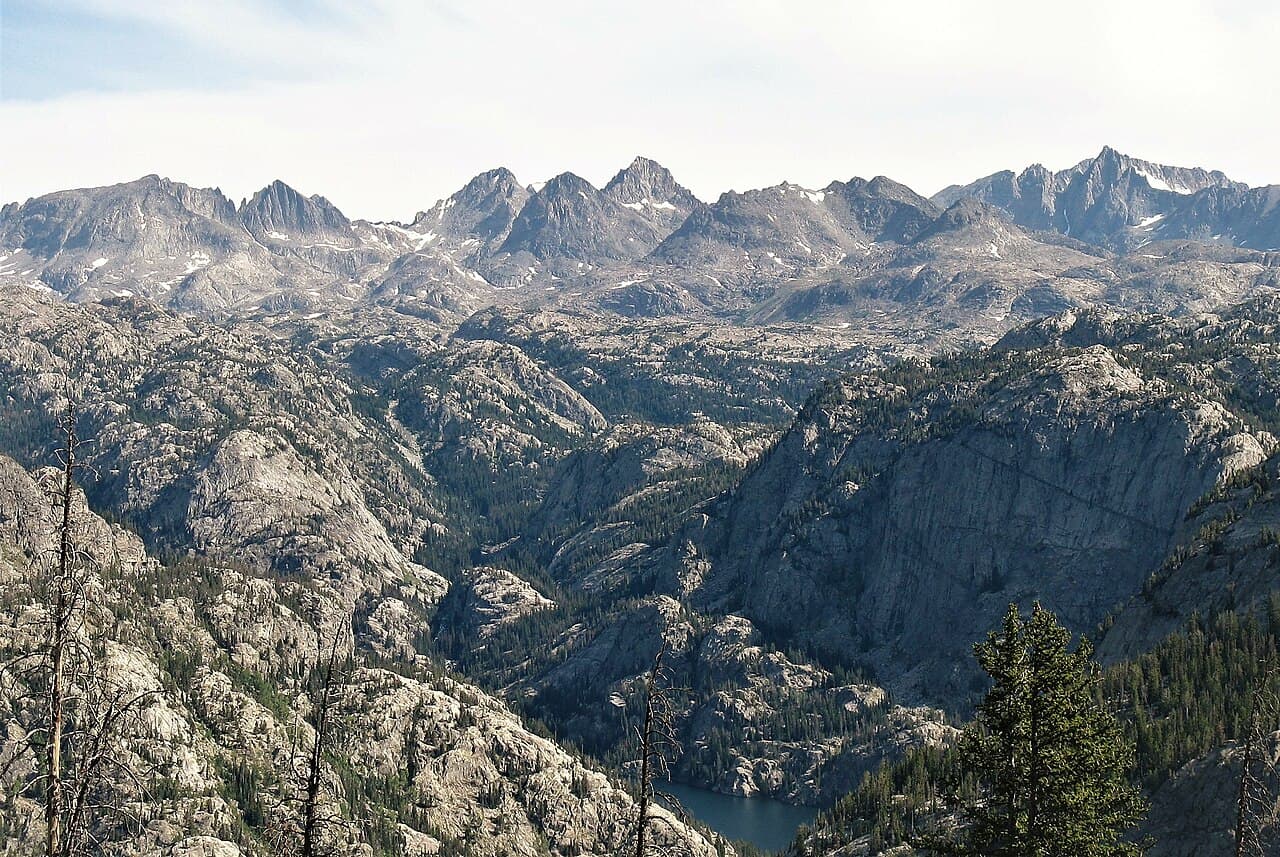
Titcomb Basin Permit: Route
Titcomb Basin permits are walk-up only in Bridger-Teton National Forest / Wind River Range.
A basin of alpine lakes under the Continental Divide, in a wilderness that asks nothing of you at the trailhead and everything of you after it.
This guide covers the Titcomb Basin permit.
No fee. Individual backpacking in the Bridger Wilderness needs no permit
Permit Cost
3-5 days
Duration
strenuous
Difficulty
About Titcomb Basin
Titcomb Basin sits in the Bridger Wilderness on the Bridger-Teton National Forest, in the Wind River Range. There is no quota, no lottery and no entry fee for an individual backpacking trip. Bridger-Teton requires free permits for organized groups and for recreational livestock users in the Bridger Wilderness, and only accepts applications beginning April 1 for the current year. Applications go to the Pinedale Ranger District, which can be reached at 307-367-4326. The wilderness itself runs 80 miles along the Continental Divide and holds the headwaters of the Green River. Bridger-Teton counts 600 miles of trail, hundreds of high alpine lakes and glaciers, with elevations above 13,000 feet — and lists potable water as not available anywhere in the system.
Bridger-Teton describes the Bridger Wilderness as extending 80 miles along the Continental Divide and holding the headwaters of the Green River, with hundreds of high alpine lakes, glaciers and wide sweeping valleys, and 600 miles of trail. Titcomb is where that description stops being general.
The Titcomb Basin route
- Route type
- out-and-back
- Trip length
- 3-5 days
- Difficulty
- strenuous
Wind River Range, Wyoming. Nearest town: Pinedale
Titcomb Basin permit detailsandAll Bridger-Teton National Forest / Wind River Range permits
The Experience
Granite on both sides, water down the middle, and elevations that Bridger-Teton itself sums up as ranging above 13,000 feet with winter always just a breath away.
This is an unpermitted trip in an unstaffed wilderness, which is a different kind of planning problem from a lottery. Bridger-Teton requires free permits only for organized group use and overnight stock use, applied for through the Pinedale Ranger District from April 1 each year. Everything else is on you.
The forest-wide occupancy order is the rule most people never read: Order 04-03-328 prohibits camping within the same five-mile radius for more than 14 days in any 30-day period, and returning to that radius within 30 days after hitting the limit. It runs to July 1, 2030.
Bridger-Teton also warns that visitors to the Bridger Wilderness may cross onto the Shoshone National Forest, and to be aware of changing regulations when they cross the Continental Divide.
What to Expect
No permit and no fee for a normal backpacking trip
A free group-use permit requirement if your party is an organized group, applied for from April 1 through the Pinedale Ranger District
A 14-day-in-30 camping limit within any five-mile radius, under forest-wide Order 04-03-328
No potable water at the trailhead or in the wilderness
The possibility of crossing onto the Shoshone National Forest, where the regulations change
Get Titcomb Basin Alerts
Be first to know when cancellations happen.
Permit Requirements
No permit is required for an individual or family backpacking trip. Bridger-Teton National Forest states that permits are required for group use and overnight stock use in the Bridger Wilderness
Group-use and recreational-livestock permits are free, and the Pinedale Ranger District only accepts applications beginning April 1 for the current year
Forest Order 04-03-328 caps camping at 14 days in any 30-day period within the same five-mile radius. After that you have to move outside that radius for 30 days
Standard Wilderness Act rules apply: no motorized or mechanized equipment, including bicycles, carts and drones
Gear & Preparation
Required Gear
- •Water filter or treatment — Bridger-Teton lists no potable water in this wilderness
- •Bear-resistant food storage
- •Layers for cold; elevations here run above 13,000 feet and Bridger-Teton describes winter as always a breath away
- •Map and compass for a 600-mile trail system with no permit desk to orient you
Recommended Gear
- •Trekking poles
- •A satellite messenger
- •Traction if you are going early or late in the short season
Hazards & Safety
Altitude. The Bridger Wilderness runs above 13,000 feet and the trails spend most of their length high
Weather that turns over fast — Bridger-Teton describes the combination of elevation and potential cold as creating a truly wild feeling, which is a polite way of saying summer snow happens
No potable water at the trailheads. Bridger-Teton lists it as unavailable at both the wilderness and at Big Sandy Trailhead, so everything gets filtered
Long drives on unpaved county and Forest Service roads to reach the trailheads
Bears. This is the Wind Rivers and food storage matters
Best Time to Visit
Mid-July through early September, once the high country has melted out. Bridger-Teton's own framing of the range — elevations above 13,000 feet, with the combination of elevation and potential cold creating a truly wild feeling — is the honest summary of everything either side of that window.
Pro Tips
No permit for an individual trip. Organized groups and overnight stock users need a free permit from the Pinedale Ranger District, applications from April 1
Read Forest Order 04-03-328 if you are out longer than two weeks — the 14-day limit is per five-mile radius, not per campsite
Bridger-Teton lists no potable water in this wilderness. Plan to treat everything
Pinedale Ranger District: 307-367-4326
If your route crosses the Continental Divide you are on the Shoshone National Forest and under different regulations — Bridger-Teton says so on its own wilderness page
100+ wilderness permits, extensive backcountry experience
This guide is based on personal experience obtaining wilderness permits and is regularly updated to reflect current policies and strategies.
Frequently Asked Questions
Do I need a permit for Titcomb Basin?
+
Yes, a permit is required. Walk-up permits are available at the trailhead or visitor center, but arrive early as they may be limited.
When is the best time to visit Titcomb Basin?
+
Mid-July through early September, once the high country has melted out. Bridger-Teton's own framing of the range — elevations above 13,000 feet, with the combination of elevation and potential cold creating a truly wild feeling — is the honest summary of everything either side of that window.
How difficult is the Titcomb Basin route?
+
Backpackers who can plan an unregulated trip properly, which is harder than it sounds.
What gear do I need for the Titcomb Basin route?
+
Essential gear includes: Water filter or treatment — Bridger-Teton lists no potable water in this wilderness, Bear-resistant food storage, Layers for cold; elevations here run above 13,000 feet and Bridger-Teton describes winter as always a breath away, Map and compass for a 600-mile trail system with no permit desk to orient you.
Don't Miss Your Titcomb Basin Permit
Cancellations happen every day. PermitSnag monitors Titcomb Basin availability 24/7 and alerts you the moment a spot opens up.
Get Permit Alerts