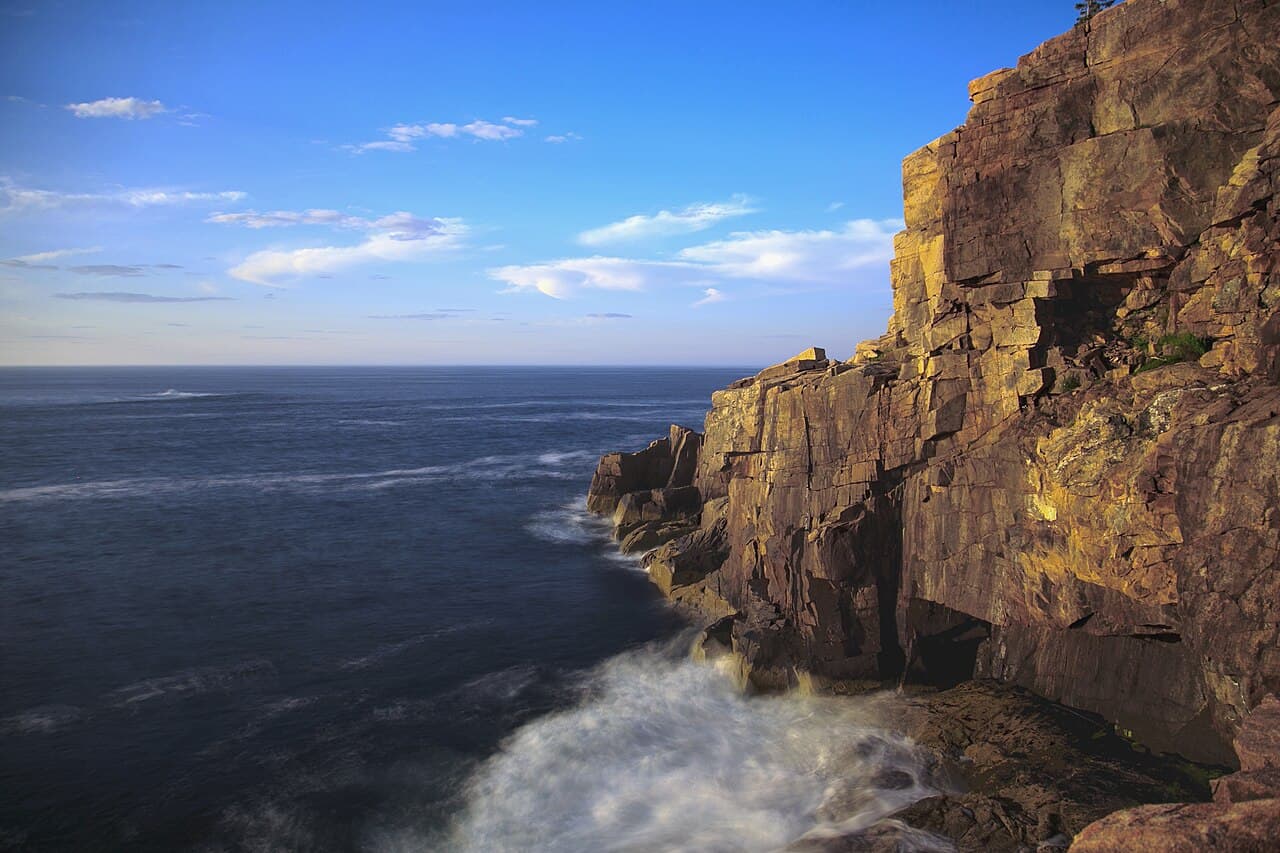
Otter Cliffs Group Climbing Permit
Acadia National Park · Maine
Required for organized climbing groups of 6 or more at Otter Cliffs. Acadia issues two group permits a day, from the Friday before Memorial Day through Labor Day.
70% of the openings our scanner caught on Otter Cliffs Climbing were gone within 5 minutes.
Plan the full trip, not just the permit
Build your full itinerary start to finish
Add your dates and get a day-by-day plan: what needs a permit, what gear to bring, and one link to share with your whole group to coordinate every step.
No permit needed to start
Otter Cliffs Climbing Quick Facts
Otter Cliffs Climbing Permit Facts
- As of September 2026, Otter Cliffs Climbing in Acadia National Park, Maine requires a permit issued via reservation.
- The permit season for Otter Cliffs Climbing runs May 22 (Friday before Memorial Day) through September 7 (Labor Day).
- Cancelled Otter Cliffs Climbing permits are re-released on the booking system; PermitSnag monitors availability and alerts watchers when dates open.
Key Information
Key Dates
Permit Details
Pro Tips
- •The permit threshold is affiliation, not headcount on one rope — six people from the same club, school or business on the same day need one, even if you split up
- •Two groups a day, park-wide, so the calendar is thin on summer weekends
- •One organization gets at most 10 permits a season, so spread them across the dates you actually need
- •Do your ground school somewhere else — NPS asks you to keep that off the cliff to save space
- •Check the tide before you commit: NPS warns climbing here "is more difficult and dangerous at high tide or with high surf"
What to Expect
Route Details
Highlights
- •Short sea-cliff routes on coarse pink granite, up to 5.12 YDS
- •Rappel access from the top, on park-maintained fixed anchors
- •A tide-dependent base — high tide and heavy surf change what is climbable
- •A shared cliff: the permit never grants exclusive use of a route
- •A logbook sign-in with your permit number on arrival
Best Time to Visit
The permit season itself: the Friday before Memorial Day through Labor Day, which in 2026 is May 22 to September 7. Early mornings are calmest and get the light. Outside that window the cliff is still open to climbers, but no group permits are issued.
Hazards & Considerations
- !Tide and surf — NPS: climbing here "is more difficult and dangerous at high tide or with high surf"
- !Fixed protection and rappel stations are maintained by local climbers, not the park, and must be evaluated before use
- !Salt, spray and grit degrade rope and hardware faster than inland crags
- !Exposure directly over water, with limited options for a ground-based rescue
- !Cold water year-round in the Gulf of Maine
How to Get This Permit
Create a Recreation.gov account
Sign up at Recreation.gov if you don't have an account. Have your payment info ready.
Know the release schedule
Permits typically release on a rolling basis. Check the specific release time for your desired dates.
Be ready when permits drop
Log in a few minutes early. Have your dates, group size, and payment ready to go.
Monitor for cancellations
If your dates are sold out, people cancel all the time. Set up PermitSnag alerts to catch openings instantly.
When to Go
Conditions
Cold, wet rock and heavy seas early; the permit season only opens at the very end of the season.
Crowd Level
LowAdvantages
- +Quiet park
- +Cool climbing temperatures once the rock dries
Challenges
- !No group permits issued before the Friday before Memorial Day
- !Cold water and raw wind off the Atlantic
Difficulty Assessment
Fitness and endurance required
Climbing, scrambling, or specialized skills
Steep dropoffs and fall potential
Route finding and trail clarity
Difficulty of bailing out mid-route
Best For
Club, school and business groups with their own instructors and anchor-building competence.
Recommended Experience
Top-rope anchor construction and rappel management on a cliff edge. Sea-cliff experience helps but is not required.
Not Recommended For
Commercial guiding without a CUA, and any group that has not checked the tide.
About This Permit
Otter Cliffs sits on the southeast shore of Mount Desert Island, just off the Park Loop Road in Acadia National Park. NPS describes it as "solid, course-grained pink granite allowing crack and face climbing, rappel access, and routes up to 5.12 (YDS)" rising straight out of the Atlantic.
The permit only applies to organized groups. Any six or more people sharing an affiliation — a club, a school, a business, a scout troop — climbing at Otter Cliffs on the same day need one, whether or not they stay together on the rock. Acadia issues two group permits per day for the season that runs from the Friday before Memorial Day through Labor Day, and caps any one organization at ten permits a season. Individuals and small unaffiliated parties need no permit at all.
The Experience
Why It Matters
Otter Cliffs is the best-known climbing on the Maine coast and one of the few places in the eastern United States where you rappel in from the top of a cliff standing directly in the ocean. NPS describes granite "allowing crack and face climbing, rappel access, and routes up to 5.12 (YDS)." It is also small, which is the whole reason the permit exists: two organized groups on the same short stretch of rock is already a crowd.
The Route
Access is from the parking area just past the Otter Cliff Road turnoff, roughly two miles beyond Sand Beach on the Park Loop Road. NPS asks every group to use "the one existing access trail off the Ocean Path" rather than spreading out through the vegetation on the headland.
From the top, most climbing is set up on fixed anchors the park maintains specifically so that people stop tying off trees. Routes run up to 5.12, with plenty of moderate crack and face lines below that, all of them short and all of them over water.
The permit is a day permit and the logbook at the top is part of it: NPS requires permit holders to "sign in and enter their Permit # in the Comments column of the Otter Cliffs logbook."
The Feeling
You walk in off the Ocean Path with the surf already loud, set anchors on the headland, and drop over an edge into salt spray. The rock is coarse and grippy, the exposure is straight down into moving water, and the whole climb is timed against a tide that is either giving you a base or taking it away. Nowhere inland feels like this.
Trailhead Information
Otter Cliff Parking Area
Closest parking to the climbing access, on the Park Loop Road.
Before you rely on this water
No water at the cliff. Bring what the group needs; the nearest facilities are back toward Sand Beach or in Bar Harbor.
Parking
Small roadside lot that fills early in summer. NPS asks groups to store gear and clothing out of sight without trampling vegetation.
Getting There
From the head of Mount Desert Island follow Route 3 toward the Hulls Cove Visitor Center, then the Park Loop Road toward Sand Beach. The lot is about two miles past Sand Beach, just past the Otter Cliff Road turnoff. Coming from Bar Harbor you can stay on Route 3 and turn onto Otter Cliff Road to skip the Ocean Drive section.
Nearest Services
Bar Harbor, a short drive north, has full services.
Rules & Regulations
- •Groups of 6 to 12 sharing an affiliation require this permit, guides and instructors included
- •Maximum group size is 12; splitting into smaller units does not remove the requirement
- •A maximum of 10 permits per organization per season
- •Permit must be presented on demand, printed or on a mobile device
- •Sign the Otter Cliffs logbook and record your permit number on arrival
- •Use only the existing access trail off the Ocean Path; stay off vegetation and restoration areas
- •Use the park's fixed top anchors rather than tying off trees
- •Commercial instruction or guiding needs a separate Commercial Use Authorization
- •Run ground school somewhere else to keep space free at the cliff
Gear Checklist
Required
- Standard sport and trad rack for short granite routes
- Ropes long enough for rappel access from the headland
- Helmets — this is a rappel-in cliff above moving water
- Printed or on-device permit
- Acadia park pass displayed in every vehicle
Recommended
- Windproof layers — the wall is exposed to open ocean
- A tide table for the day
- Static line for anchor extension over the lip
- Something to keep the rope out of the salt and grit
Plan Your Trip
Gear Checklist
Required and recommended gear for Otter Cliffs Climbing
Shuttle Services
Trailhead transportation options
Browse all shuttlesGuide Services
Experienced wilderness guides
Browse all guidesSome links may be affiliate links. Purchases support PermitSnag at no extra cost to you.
Key Landmarks
Otter Cliff parking area
Nearest parking, just past the Otter Cliff Road turnoff and about two miles past Sand Beach on the Park Loop Road.
Ocean Path access trail
The single approach trail NPS asks all groups to use, to keep traffic off the vegetated headland.
Otter Cliffs climbing area
Pink granite sea cliff with park-maintained top anchors and routes to 5.12 (YDS).
Climber logbook
Sign-in register at the cliff; permit holders must record their permit number in the comments column.
Safety & Planning
Otter Cliffs Climbing FAQ
Who needs an Otter Cliffs group climbing permit?
Organized groups sharing an affiliation. NPS: "Climbing groups of 6 or more people sharing the same affiliation (business, school, church, club, etc) at Otter Cliffs on the same day require a permit. This requirement holds true regardless if the group separates into smaller units." Guides and instructors count toward the total.
How many Otter Cliffs group climbing permits are issued per day?
Two. NPS: "In an effort to reduce crowding and protect natural features, a maximum of two groups are allowed per day." There is also a season cap of 10 permits per organization.
When is the Otter Cliffs group climbing permit required?
"Group climbing permits are required from the Friday before Memorial Day to Labor Day" — May 22 to September 7 in 2026. The 2026 season went on sale March 17, 2026. Outside that window no group permit is issued.
What does the Otter Cliffs group climbing permit cost?
A $6 non-refundable reservation fee and nothing per person. Acadia's park entrance fee is separate and every vehicle must display a pass.
Can a guide service use an Otter Cliffs group climbing permit?
Not on its own. NPS: "Anyone providing instruction or guiding services must obtain a Commercial Use Authorization (CUA)." The group permit does not authorize commercial instruction, and it never grants exclusive use of a route either.
👥Community
Trail Conditions
No active conditions reported
Sign in to report trail conditions.
Questions
No questions yet
Be the first to ask about Otter Cliffs Climbing.
Trip Reports
Write ReportNo trip reports yet
Be the first to share your experience at Otter Cliffs Climbing.
Write the First ReportPhotography Guide
Golden Hour
Sunrise. Otter Cliffs faces southeast into the Atlantic, and Acadia gets some of the earliest sunrise in the country.
Best Light
First light lands directly on the cliff face and the surf below. By afternoon the wall is in its own shadow.
Beat the Crowds
Two permitted groups a day is the cap, but unaffiliated pairs and trios need no permit and are there too. Early morning is both the best light and the quietest rock.
Classic Shots
- 📍A climber on the wall with open Atlantic behind
- 📍The cliff line at sunrise from the Ocean Path
- 📍Surf breaking at the base from the top of a rappel
- 📍Anchor work on the headland with Mount Desert Island behind
Can't Get a Otter Cliffs Climbing Permit?
Consider these alternatives if your preferred dates aren't available.
Climb Otter Cliffs as a small party
Easier AlternativeFive or fewer people, or a group with no shared affiliation, need no permit at all for Otter Cliffs.
Tradeoffs
You give up bringing the whole club on one day, but you get any date you like with no reservation.
Old Rag Day Ticket
Similar ExperienceShenandoah's day ticket for the Old Rag scramble, the other eastern rock-scrambling permit on Recreation.gov.
Tradeoffs
A scramble rather than roped climbing, and a long way south, but a similar reserve-a-day system.
Where to Stay
Nearby campgrounds to complete your Otter Cliffs Climbing trip
A small favor
One tick helps us more than you’d think
Google lets you pick the sites it highlights for you. Add PermitSnag and our permit pages get marked as one of yours in AI Overviews and AI Mode.
Takes less than a minute.