Everglades Wilderness Camping Permit
Everglades National Park · Florida
Required for every overnight in the Marjory Stoneman Douglas Wilderness. One permit covers the whole trip, with a campsite reserved for each night.
70% of the openings our scanner caught on Everglades Wilderness were gone within 5 minutes.
Plan the full trip, not just the permit
Build your full itinerary start to finish
Add your dates and get a day-by-day plan: what needs a permit, what gear to bring, and one link to share with your whole group to coordinate every step.
No permit needed to start
Everglades Wilderness Quick Facts
Everglades Wilderness Permit Facts
- As of September 2026, Everglades Wilderness in Everglades National Park, Florida requires a permit issued via reservation.
- The permit season for Everglades Wilderness runs December 1 through April 30.
- The Everglades Wilderness route covers 99 miles, rated strenuous.
- Cancelled Everglades Wilderness permits are re-released on the booking system; PermitSnag monitors availability and alerts watchers when dates open.
Key Information
Key Dates
Permit Details
Pro Tips
- •Book every night of the trip in one reservation. The $21 fee is per reservation, not per night, so splitting the trip doubles your cost.
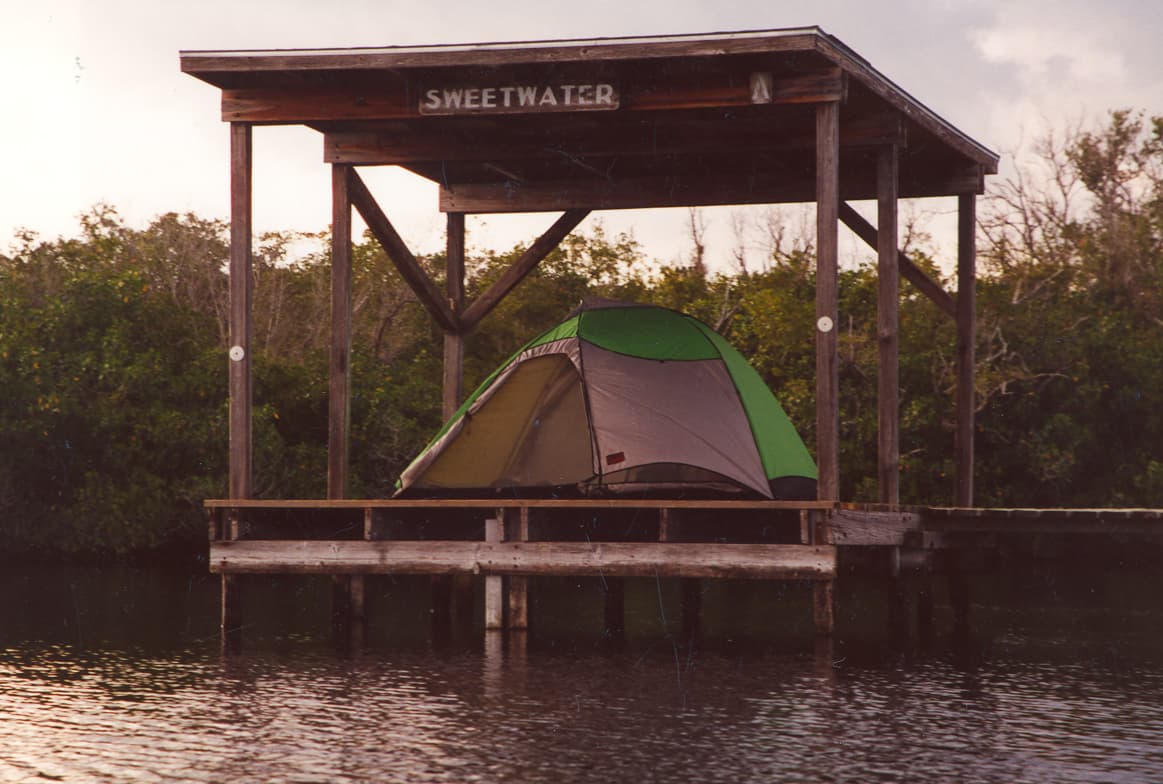
- •Chickee tents have to be free-standing. There is nothing to stake into on a wooden deck.
- •Call or stop by Flamingo Visitor Center before you book if you have not paddled here. The number is 786-758-0635.
- •Fires are legal only at beach sites, and only below the high-tide line.
What to Expect
Route Details
Highlights
- •Chickee platforms 10 by 12 feet, capped at 6 people or one group, with a portable toilet and no ground
- •A 99-mile Wilderness Waterway between Flamingo and Everglades City that takes at least eight days
- •Realistic progress of 8 to 12 miles a day, set by tide and wind
- •Zero fresh water. Everything you drink for the whole trip goes in the boat
- •Tidal ranges that can exceed four feet, which changes where you can launch and land
Best Time to Visit
December through April. The Park Service says the winter months tend to be more pleasant, and summer brings heat, severe storms and intolerable numbers of mosquitoes.
Hazards & Considerations
- !Tidal ranges that can exceed four feet, which can strand a boat or flood a landing
- !Rough seas on windy days. Numerous canoes, kayaks and boats have been swamped
- !Thunderstorms in summer and hurricane season from June through November
- !Very shallow water across large stretches of the Waterway
- !Mosquitoes in numbers that end trips between May and October
- !Motorboat traffic in the same channels as paddlers
Weather Forecast
Trailhead (5,000 ft)
Backcountry Tips
- UV index 8. High altitude sun is intense—sunscreen and hat essential.
- Day 6: 61% chance of precipitation. Pack rain gear.
Today
89°
75°
Fri
89°
74°
41%
Sat
89°
73°
26%
Sun
90°
74°
22%
Mon
90°
75°
46%
Tue
90°
76°
61%
Wed
88°
76°
53%
How to Get This Permit
Create a Recreation.gov account
Sign up at Recreation.gov if you don't have an account. Have your payment info ready.
Know the release schedule
Permits typically release on a rolling basis. Check the specific release time for your desired dates.
Be ready when permits drop
Log in a few minutes early. Have your dates, group size, and payment ready to go.
Monitor for cancellations
If your dates are sold out, people cancel all the time. Set up PermitSnag alerts to catch openings instantly.
When to Go
Conditions
Warming and drying out. March and April still work, May is the turn.
Crowd Level
ModerateAdvantages
- +Good weather into April
- +Wading bird activity
Challenges
- !Insects ramping up
- !Heat building
Difficulty Assessment
Fitness and endurance required
Climbing, scrambling, or specialized skills
Route finding and trail clarity
Difficulty of bailing out mid-route
Best For
Paddlers who can read a nautical chart, plan around tides, and self-rescue in open water far from help.
Recommended Experience
Prior multi-day paddling with open-water crossings. Navigation by chart and compass is not optional here.
Not Recommended For
First-time paddlers, anyone without chart and compass skills, or anyone attempting it between May and October.
About This Permit
Everglades requires a wilderness permit for every overnight in the Marjory Stoneman Douglas Wilderness, except when you sleep aboard your own boat. Campsites come in three kinds: chickees, which are 10 by 12 foot roofed platforms built over water and hold a maximum of 6 people or one group; ground sites on mounds of earth a few feet above the mangroves, which can take multiple parties; and beach sites on the coast, the only place in the wilderness where a campfire is legal.
One permit covers multiple consecutive nights for a single $21 reservation fee, so select every night and campsite before you pay. Reservations open at 10:00 a.m. Eastern on a rolling 90 day window. From November 1 through April 30 campsite specific night limits are in effect.
The Experience
Why It Matters
The Marjory Stoneman Douglas Wilderness is the largest designated wilderness east of the Rockies, and the only practical way through it is by boat. The chickee platforms exist because there is nowhere dry to pitch a tent. Nothing else in the national park system asks you to plan around tide tables rather than elevation.
The Route
The 99-mile Wilderness Waterway connects Flamingo at the south end of the park to Everglades City at the north. Most people allow at least eight days and cover 8 to 12 miles daily, because the current and the wind decide your pace more than your arms do.
Heading north from Flamingo you work through the interior bays and rivers, camping on chickees at Hell's Bay, Lane Bay and Joe River. The middle stretch runs through the Shark and Broad River country where the ground sites appear, mounds of earth a few feet above the mangroves.
The Gulf Coast end drops you into the Ten Thousand Islands, where the beach sites are. Beach sites are the only campsites in the wilderness where a fire is legal, and it has to be built below the high-tide line. Many people skip the through-trip and paddle a three or four night loop from either end instead.
The Feeling
You paddle for six hours through mangrove tunnels barely wider than the boat and then the world opens into a bay with a wooden platform standing in it. There is a roof, a portable toilet, and no ground. The sun goes down enormous and orange, the mosquitoes arrive on cue, and then the stars come out over water on all sides.
Trailhead Information
Flamingo (Guy Bradley Visitor Center)
South end of the Wilderness Waterway. Marina, launches and overnight parking.
Before you rely on this water
Potable water at the visitor center. There is no fresh water anywhere in the wilderness, so carry every drop for the whole trip.
Parking
Designated overnight parking at the Flamingo Visitor Center lot.
Getting There
About an hour inside the park from Florida City on the main park road via Palm Drive.
Nearest Services
Homestead and Florida City, roughly an hour back up the road.
Gulf Coast Visitor Center (Everglades City)
North end of the Waterway and the gateway to the Ten Thousand Islands beach sites.
Before you rely on this water
Fill completely here. Nothing in the wilderness is drinkable.
Parking
Gulf Coast overnight parking lot. Outdoor Resorts and Chokoloskee Island Park are the other listed launches.
Getting There
State Road 29 south from US 41 into Everglades City.
Nearest Services
Everglades City and Chokoloskee have fuel, food and outfitters.
Rules & Regulations
- •A wilderness permit is required for all overnight camping in the wilderness, except when sleeping aboard a boat
- •One permit can cover multiple consecutive nights. Select every night and campsite before paying the single $21 fee
- •Chickee platforms hold a maximum of 6 people or one group, and your tents must fit on the one platform you reserved
- •Campfires, and wood, charcoal or coal-fueled grills and stoves, are not permitted at chickee or ground sites. Use gas
- •Beach sites are the only campsites where campfires are allowed, and fires must be built below the high-tide line
- •Carry a physical copy or a screenshot of your final itinerary along with the permit
- •Campsite specific night limits are in effect November 1 through April 30
Gear Checklist
Required
- All of your drinking water for the entire trip, plus a reserve
- A nautical chart and compass. NOAA publishes the charts for these waters
- Free-standing tent, because you cannot stake into a chickee deck
- Gas stove, since wood, charcoal and coal are prohibited at chickees and ground sites
- Head net and permethrin-treated clothing
Recommended
- Tide tables for your exact dates
- Dry bags for everything, not just electronics
- VHF radio, since cell coverage disappears in the interior
- Long line and a spare paddle
Plan Your Trip
Gear Checklist
Required and recommended gear for Everglades Wilderness
Shuttle Services
Trailhead transportation options
Browse all shuttlesGuide Services
Experienced wilderness guides
Browse all guidesSome links may be affiliate links. Purchases support PermitSnag at no extra cost to you.
Key Landmarks
Flamingo
South end of the Wilderness Waterway. Visitor center, marina and overnight parking.
Hell's Bay Chickee
Elevated platform reached through a mangrove tunnel trail. The classic first-timer overnight.
Joe River Chickee
Interior bay platform on the Flamingo side of the Waterway.
Shark River Chickee
Midway platform where the interior rivers open toward the Gulf.
Sweetwater Chickee
Gulf Coast district platform, roofed, with a portable toilet and room for one group.
Watson's Place
Historic ground site on the Chatham River, one of the larger mounds in the wilderness.
Pavilion Key
Ten Thousand Islands beach site where campfires are legal below the high-tide line.
Gulf Coast Visitor Center
North end at Everglades City. Launch and overnight parking.
Safety & Planning
Everglades Wilderness FAQ
How do I get an Everglades wilderness permit?
Book it on Recreation.gov permit 4675314. Reservations open daily at 10:00 a.m. Eastern on a rolling 90 day window. Your confirmation email serves as the permit, but you must carry a physical copy or screenshot of the final itinerary.
How much does an Everglades wilderness permit cost?
A $21 non-refundable reservation fee plus a $2 per person per night recreation fee. One reservation can cover several consecutive nights for the same $21.
What is a chickee on an Everglades wilderness permit?
An elevated wooden platform with a roof, built over water. Chickees are 10 by 12 feet and hold a maximum of 6 people or one group. A portable toilet is provided and your tents have to fit on the one platform you reserved.
Do I need an Everglades wilderness permit if I sleep on my boat?
No. The permit covers overnight camping in the wilderness, and the Park Service excludes sleeping aboard boats.
When is the best time to use an Everglades wilderness permit?
December through April. The Park Service says the winter months tend to be more pleasant, and summer brings heat, severe storms and intolerable numbers of mosquitoes.
👥Community
Trail Conditions
No active conditions reported
Sign in to report trail conditions.
Questions
No questions yet
Be the first to ask about Everglades Wilderness.
Trip Reports
Write ReportNo trip reports yet
Be the first to share your experience at Everglades Wilderness.
Write the First ReportPhotography Guide
Golden Hour
Sunset from a chickee is unobstructed in every direction. There is nothing between you and the horizon.
Best Light
Early morning flat water gives mirror reflections in the interior bays before the wind picks up.
Beat the Crowds
The interior chickees near Flamingo fill first. Push one more day into the Shark River country and you will not see another party.
Classic Shots
- 📍A tent pitched on a chickee platform with open water beneath
- 📍Mangrove tunnel with the boat bow in frame
- 📍Roseate spoonbills lifting off a mud flat at dawn
- 📍Beach site fire ring below the tide line at Cape Sable
Can't Get a Everglades Wilderness Permit?
Consider these alternatives if your preferred dates aren't available.
Hawaii Volcanoes backcountry
Similar ExperienceAnother coastal permit where the campsites are named shelters and the water is whatever is in the catchment tank.
Tradeoffs
You walk instead of paddle, and the heat is comparable.
Big Bend backcountry
Similar ExperienceRemote desert backcountry with the same self-sufficiency requirement and the same winter season.
Tradeoffs
Dry instead of wet, and far easier to bail out of.
Guadalupe Mountains wilderness
Easier AlternativeDesignated campgrounds in a desert range where every drop of water is also carried in.
Tradeoffs
One or two nights instead of eight, and you can walk out any time.
Where to Stay
Nearby campgrounds to complete your Everglades Wilderness trip
A small favor
One tick helps us more than you’d think
Google lets you pick the sites it highlights for you. Add PermitSnag and our permit pages get marked as one of yours in AI Overviews and AI Mode.
Takes less than a minute.