Glendalough Canoe Permit: Route
Glendalough Canoe permits are booked by advance reservation in Glendalough State Park (MN).
Three campsites on Annie Battle Lake that you can only reach by paddling.
This guide covers the Glendalough Canoe-In Campsites permit.
About Glendalough Canoe
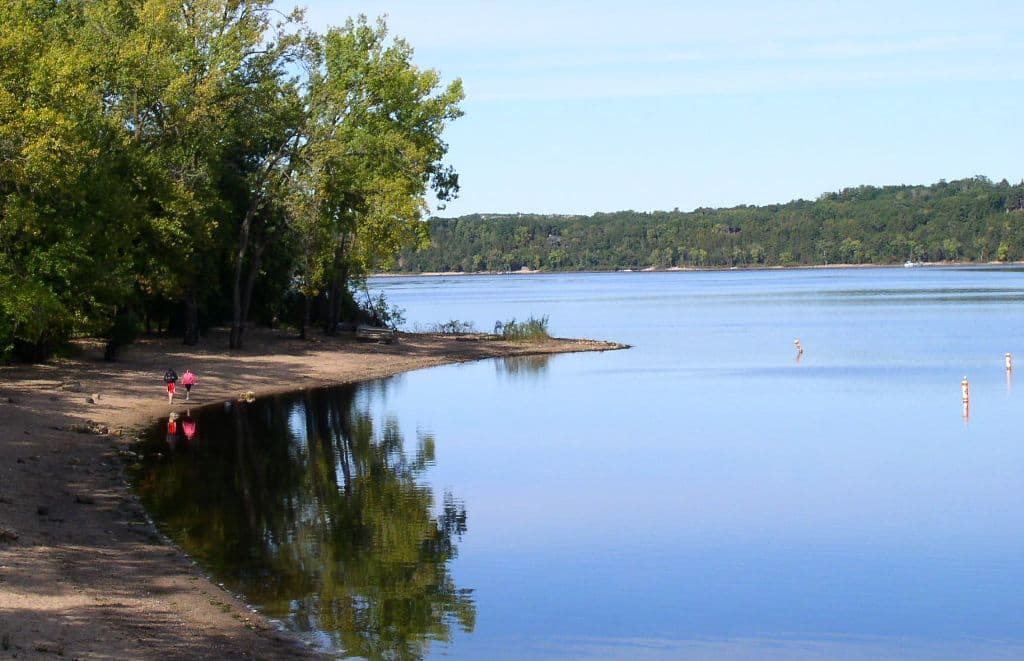
Three canoe-in sites reached by paddling across Annie Battle Lake.
Annie Battle Lake is a motor-free heritage fishery, so the crossing is quiet by regulation rather than by luck. Three sites is the whole paddle-in inventory of the park.
The Glendalough Canoe route
Otter Tail Lakes. Nearest town: Battle Lake
Points along the route
- Annie Battle Lake
- Beaver Pond Trail
- Lake Emma Trail
- Sunset Lake Trail
Glendalough Canoe permit detailsandAll Glendalough State Park (MN) permits
The Experience
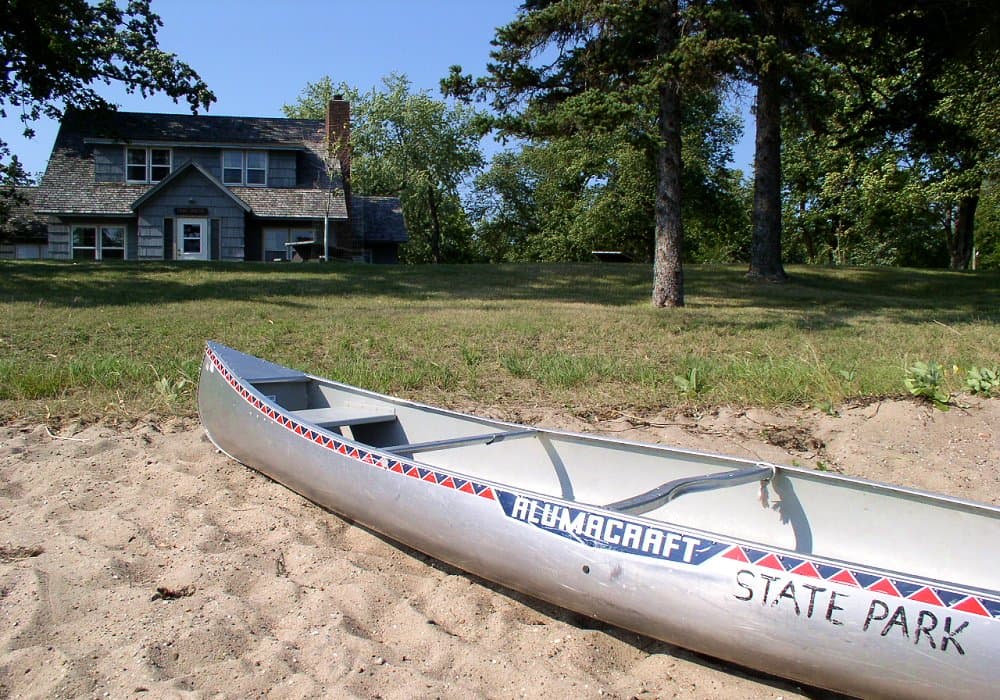
You load a boat instead of a pack, cross water no outboard is allowed on, and land at a tent pad and a fire ring. No electricity, primitive toilet, and the far shore between you and the car park.
What to Expect
Minnesota DNR's definition of the category: "Backcountry campsites in Minnesota state parks are not accessible by motor vehicle and are a half mile or more from a parking area. They do not have electricity, and are a popular option for backpackers, paddlers, and bicyclists."
"Backcountry sites typically have primitive toilet facilities and water, a tent pad, and a fire ring. Some have a picnic table and a grill on the fire ring, and a few have shelters."
The Minnesota reservation system lists this facility as "Canoe-In" with three units, named Canoe-In/Boat-In #CI27, #CI28 and #CI29.
Minnesota DNR's published backcountry rate at Glendalough is $22 per site, per night, plus tax.
DNR groups paddle-in sites in the same backcountry category as backpack sites: not reachable by motor vehicle, half a mile or more from parking, no electricity.
"Seasonal availability varies by park." DNR publishes no season for this facility specifically, so the booking calendar is the authority on which nights exist.
DNR: "Canoe-in Sites | Three sites on the northeast shore of Annie Battle Lake — These sites can also be accessed by foot or bicycle."
No distance is published for the canoe-in sites. The nearest figure DNR gives is for a different facility, the cart-in campground: "Campsites are in a wooded area from 200 to 1,200 feet from parking." That is not this one, so no distance is claimed here.
No season is published for the canoe-in sites either. DNR's season sentence covers other facilities: "Cart-in campground, camper cabins and yurts are open year-round."
Water, and what it depends on. DNR: "Water is on in the campground until Sunday, October 4, 2026. Water is available year-round at the park office." The campground supply has a published end date on it; the office tap is the fallback, and the office is who to ring if water decides your plan.
Toilets: "Vault Toilets | Available year-round throughout the park." The dining hall restroom is year-round; campground and trail centre restrooms are seasonal, and showers ran to October 4, 2026.
Reservations: "Reservations are required at all times for all sites... Same-day reservations can be made for open sites at no charge."
"No vehicles are allowed in the campground area."
Sourcing note: the park-page sentences on this page were read on 2026-08-10 from Minnesota DNR's own live park-content endpoint. maps.dnr.state.mn.us refuses our requests outright, so that fetch went through a Wayback Save-Page-Now capture of the live DNR endpoint, with the Internet Archive acting only as transport. www.dnr.state.mn.us and files.dnr.state.mn.us were read directly.
Get Glendalough Canoe Alerts
Be first to know when cancellations happen.
Permit Requirements
All campsites require a reservation. Minnesota DNR: "All campsites require a reservation. Please make a reservation online or call 866-857-2757."
Reservations open 120 days before arrival, and same-day bookings are allowed. On the day a date first becomes available, online reservations cannot be made before 8 a.m.
The reservation fee is $8.00 online and $10.00 by phone, non-refundable. There is no fee for a same-day booking.
Camping check-in is after 4 p.m. and checkout is by 4 p.m. If you have not checked in by 11 a.m. on the second day of the reservation, DNR may cancel it.
"A campsite's occupancy is limited to one camping group of six people or less, one camping shelter, and one vehicle." More than that needs the park manager's prior approval.
Quiet hours are 10 p.m. to 8 a.m., and generators may not run in those hours.
Park hours are 8 a.m. to 10 p.m., 365 days a year, and "only campers with a reserved campsite are allowed in the park after 10 p.m."
Every vehicle entering a Minnesota state park must display a valid year-round or one-day state park vehicle permit.
Firewood transport is regulated. DNR allows wood bought at this park for use in this park, Minnesota Department of Agriculture certified firewood anywhere on DNR land, and an uncertified bundle only if it is not ash and was harvested in the county where you will burn it — "be sure to keep your receipt and the bundle label to show proof of purchase."
Firewood from home, pallet wood, and painted, stained or metal-bearing lumber are all prohibited, and "collection of firewood in state parks is not allowed."
Pets are welcome on a leash six feet or shorter, or in a portable enclosure, and must be personally attended at all times.
It is illegal to consume or display intoxicating liquors in Minnesota state parks.
Fireworks and metal detectors are not permitted.
Hammocks need trees at least 12 inches in diameter and straps at least an inch wide, one hammock per tree, hung over mowed and cleared ground.
You may pick edible fruits and mushrooms for personal consumption; picking wildflowers or other plants is not allowed.
Campfires here run on a live burning restriction that moves with fire danger, so a fire ring at the site is not permission to use it. The authority is this park's own Camping & Lodging page, https://www.dnr.state.mn.us/state_parks/glendalough/camping.html — read it in the week you travel, not the week you book.
Read 2026-08-10, that page carried both halves of the restriction: "Campfires are not allowed in backcountry (hike-in/backpack and boat-in) campsites, even if there is a fire ring", and "Attended campfires are allowed in established fire rings in state park campgrounds, including drive-in, cart-in and walk-in campsites." Neither half names a canoe-in site. DNR's fee page groups "backpack and watercraft sites over a half mile from parking" as backcountry, while its Glendalough page calls these "Canoe-in Sites" that "can also be accessed by foot or bicycle" — so the two DNR wordings do not settle which side this falls on. We are not picking one: plan on the stricter reading and ask the park.
Gear & Preparation
Required Gear
- •A canoe or kayak, and paddles for everyone in the party
- •Dry bags — everything crosses open water
- •A Minnesota state park vehicle permit for the car you leave at the trailhead
- •Water, or a way to treat it — DNR says these sites "typically" have water, which is not the same as always
- •A camp stove, and a meal plan that works on it — Minnesota DNR closes fire rings at short notice, and its Tettegouche notice of 2026-08-10 read "Camp stoves are permitted for cooking."
Recommended Gear
- •Life vests sized for the party
- •A wind plan; Annie Battle Lake is open water and a loaded canoe is slow into a headwind
Hazards & Safety
DNR's visitor tips: "Annie Battle Lake is a designated Heritage Fishery – no motors, special fishing regulations apply." "Zebra mussels are in park lakes."
DNR prohibits air mattresses, inner tubes and other non-Coast-Guard-approved flotation devices in state park waters outside designated areas.
DNR names no other hazard for this park — no ticks, no bears, no cold-water warning. That is an absence of a published list, not evidence of an absence of hazards.
Best Time to Visit
DNR puts it plainly on its Lake Emma Trail description: "Best times to visit are spring, fall and winter (avoid the summer bugs)." It describes Annie Battle Lake as "a 335-acre, non-motorized 'Heritage Fishery' that provides a tranquil fishing experience second to none," with the canoe-in sites "free from the traffic and noise of traditional drive-in camping." No season is published for the canoe-in sites themselves, so the booking calendar is the authority on which nights exist.
100+ wilderness permits, extensive backcountry experience
This guide is based on personal experience obtaining wilderness permits and is regularly updated to reflect current policies and strategies.
Frequently Asked Questions
How do I get a Glendalough Canoe permit?
+
Glendalough Canoe permits require advance reservations. Book online as soon as reservations open for your desired dates.
When is the best time to visit Glendalough Canoe?
+
DNR puts it plainly on its Lake Emma Trail description: "Best times to visit are spring, fall and winter (avoid the summer bugs)." It describes Annie Battle Lake as "a 335-acre, non-motorized 'Heritage Fishery' that provides a tranquil fishing experience second to none," with the canoe-in sites "free from the traffic and noise of traditional drive-in camping." No season is published for the canoe-in sites themselves, so the booking calendar is the authority on which nights exist.
What gear do I need for the Glendalough Canoe route?
+
Essential gear includes: A canoe or kayak, and paddles for everyone in the party, Dry bags — everything crosses open water, A Minnesota state park vehicle permit for the car you leave at the trailhead, Water, or a way to treat it — DNR says these sites "typically" have water, which is not the same as always, A camp stove, and a meal plan that works on it — Minnesota DNR closes fire rings at short notice, and its Tettegouche notice of 2026-08-10 read "Camp stoves are permitted for cooking.".
Don't Miss Your Glendalough Canoe Permit
Cancellations happen every day. PermitSnag monitors Glendalough Canoe availability 24/7 and alerts you the moment a spot opens up.
Get Permit Alerts