Frontenac Cart-In Campground Permit: Route
Frontenac Cart-In Campground permits are booked by advance reservation in Frontenac State Park (MN). The route covers 0.3 miles.
Six cart-in sites on the bluffs above Lake Pepin, with a cart waiting at the car park.
This guide covers the Frontenac Cart-In Campground permit.
1 night
Duration
0.33 miles
Distance
About Frontenac Cart-In Campground
Six cart-in sites above Lake Pepin. You park, load a cart, and wheel your gear to the site.
Cart-in is Minnesota's answer to wanting a walk-in site without a backpacking kit — DNR provides the cart, the site is half a mile or less from the car, and you still end up somewhere no vehicle can reach.
The Frontenac Cart-In Campground route
- Distance
- 0.33 miles
- Route type
- out-and-back
- Trip length
- 1 night
Starts at Cart-in campground parking
Mississippi River Bluffs. Nearest town: Frontenac
Points along the route
- Lake Pepin
- Bluffside Trail
- Hiking Club Trail
- Sand Point Trail
Frontenac Cart-In Campground permit detailsandAll Frontenac State Park (MN) permits
The Experience
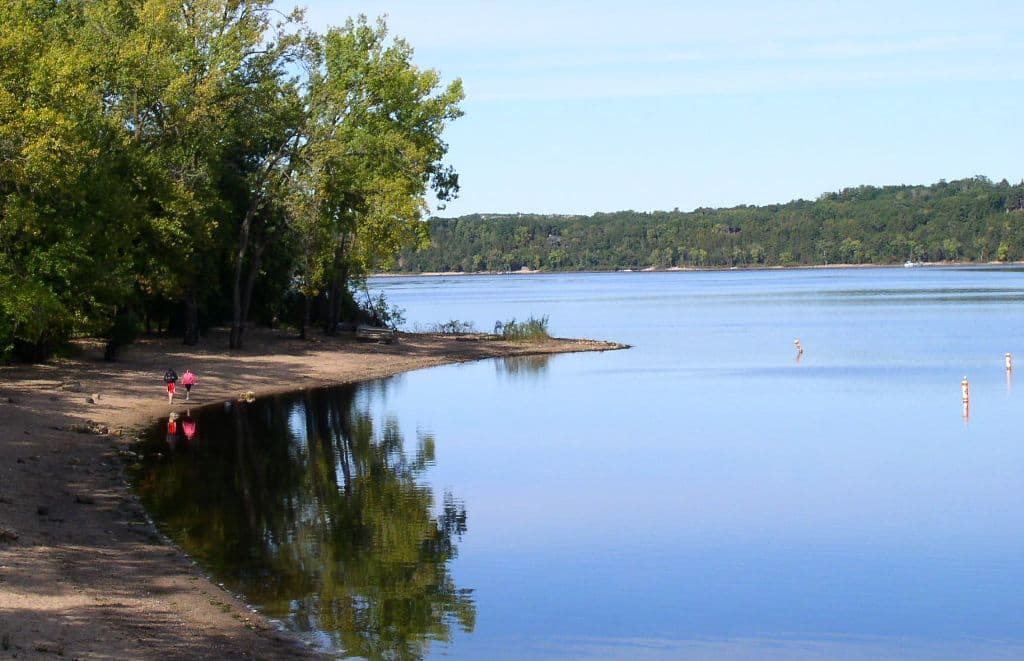
Lake Pepin is the widest natural stretch of the Mississippi, and the park looks down the length of it. Load the cart, wheel it in, and the road noise is behind you.
What to Expect
Minnesota DNR's definition of the category: "Cart-in and walk-in campsites in Minnesota state parks are not accessible by motor vehicle, but are a half mile or less from parking."
"All sites typically have access to primitive toilets and water, and will have a fire ring, picnic table, and tent pad." DNR's own hedge — "typically" — is worth taking seriously; ring the park if water matters to your plan.
"Cart-in campsites will have a large cart available at the parking area to help you carry gear."
The Minnesota reservation system lists this facility as "Cart-In Campground" with six units, Cart-In #CI 1 through #CI 6.
Minnesota DNR's published cart-in rate at Frontenac is $24 per site, per night, plus tax.
"Seasonal availability varies by park." DNR publishes no season for this facility specifically, so the booking calendar is the authority on which nights exist.
DNR states the count and the distance in one line: "Cart-in Sites | Six sites, one-third mile from parking — A cart is available for campers to haul their gear."
DNR's park-wide inventory sentence: "The park has 58 drive-in campsites, 19 of which are electric, with six cart-in sites, two backpack sites, and a group camp. All campsites are 100% reservable."
Two shelters per site here, which is more generous than the statewide one-shelter rule: "We allow up to two shelters (2 tents or 1 tent 1 trailer) at each site."
No showers for cart-in campers. DNR: "Showers are in the main campground, and are available only to campers staying in the main campground, not to those staying in cart-in or group campsites." The campground restroom is the exception — "fully accessible, and may be used by any registered camper - not just those in the main campground."
Water, and what it depends on. DNR: "Water is ON in the campground and the picnic area until late fall." The tap behind the wood shed near the ranger station is the one it describes as running the whole year. Campground water is seasonal in DNR's own wording, so the ranger station is the fallback — ring the park if water decides your plan.
Season: "The park and campground are open year-round."
Hammocks are site-by-site. DNR: "Not all sites in the campground can accommodate hammocks. For tips, call us at 651-299-3000."
Sourcing note: the park-page sentences on this page were read on 2026-08-10 from Minnesota DNR's own live park-content endpoint. maps.dnr.state.mn.us refuses our requests outright, so that fetch went through a Wayback Save-Page-Now capture of the live DNR endpoint, with the Internet Archive acting only as transport. www.dnr.state.mn.us and files.dnr.state.mn.us were read directly.
Get Frontenac Cart-In Campground Alerts
Be first to know when cancellations happen.
Permit Requirements
All campsites require a reservation. Minnesota DNR: "All campsites require a reservation. Please make a reservation online or call 866-857-2757."
Reservations open 120 days before arrival, and same-day bookings are allowed. On the day a date first becomes available, online reservations cannot be made before 8 a.m.
The reservation fee is $8.00 online and $10.00 by phone, non-refundable. There is no fee for a same-day booking.
Camping check-in is after 4 p.m. and checkout is by 4 p.m. If you have not checked in by 11 a.m. on the second day of the reservation, DNR may cancel it.
"A campsite's occupancy is limited to one camping group of six people or less, one camping shelter, and one vehicle." More than that needs the park manager's prior approval.
Quiet hours are 10 p.m. to 8 a.m., and generators may not run in those hours.
Park hours are 8 a.m. to 10 p.m., 365 days a year, and "only campers with a reserved campsite are allowed in the park after 10 p.m."
Every vehicle entering a Minnesota state park must display a valid year-round or one-day state park vehicle permit.
Firewood transport is regulated. DNR allows wood bought at this park for use in this park, Minnesota Department of Agriculture certified firewood anywhere on DNR land, and an uncertified bundle only if it is not ash and was harvested in the county where you will burn it — "be sure to keep your receipt and the bundle label to show proof of purchase."
Firewood from home, pallet wood, and painted, stained or metal-bearing lumber are all prohibited, and "collection of firewood in state parks is not allowed."
Pets are welcome on a leash six feet or shorter, or in a portable enclosure, and must be personally attended at all times.
It is illegal to consume or display intoxicating liquors in Minnesota state parks.
Fireworks and metal detectors are not permitted.
Hammocks need trees at least 12 inches in diameter and straps at least an inch wide, one hammock per tree, hung over mowed and cleared ground.
You may pick edible fruits and mushrooms for personal consumption; picking wildflowers or other plants is not allowed.
Campfires here run on a live burning restriction that moves with fire danger, so a fire ring at the site is not permission to use it. The authority is this park's own Camping & Lodging page, https://www.dnr.state.mn.us/state_parks/frontenac/camping.html — read it in the week you travel, not the week you book.
Read 2026-08-10, that page carried: "Attention visitors - fire danger is very high!" The same notice said "Attended campfires are allowed in established fire rings in state park campgrounds, including drive-in, cart-in and walk-in campsites. If you choose to have a campfire, please keep it small, always supervise the fire, and make sure it is completely out before you walk away." That was DNR's position on that date under fire danger it called very high, and the same notice already banned fires at the backcountry hike-in, backpack and boat-in sites. It can tighten to a full ban before you arrive.
Gear & Preparation
Required Gear
- •Nothing specialised — DNR provides the cart at the parking area
- •A Minnesota state park vehicle permit for the car you leave at the trailhead
- •Water, or a way to treat it — DNR says these sites "typically" have water, which is not the same as always
- •A camp stove, and a meal plan that works on it — Minnesota DNR closes fire rings at short notice, and its Tettegouche notice of 2026-08-10 read "Camp stoves are permitted for cooking."
Recommended Gear
- •Binoculars: the park sits on the Mississippi Flyway
- •A layer for the bluff top, which is exposed above Lake Pepin
Hazards & Safety
DNR: "Trails range from easy to difficult. Use extra caution on the Bluffside Trail." Its own description of that trail is 425 feet of staircases and switchbacks down to the rocky shore of Lake Pepin, and 425 feet back up.
No showers for cart-in campers — DNR restricts the shower building to main-campground campers.
Not every site takes a hammock: "Not all sites in the campground can accommodate hammocks."
Best Time to Visit
DNR is unusually direct here: "Visit the park in spring or fall and you'll be in one of the best spots in the country to view bird migrations." It counts "some 260 species of birds" using the park, says bald eagles are common in fall, winter and spring, and puts the warblers "particularly the first part of May." The park and campground are open year-round, and reservations open 120 days ahead with the 8 a.m. release on day one.
100+ wilderness permits, extensive backcountry experience
This guide is based on personal experience obtaining wilderness permits and is regularly updated to reflect current policies and strategies.
Frequently Asked Questions
How do I get a Frontenac Cart-In Campground permit?
+
Frontenac Cart-In Campground permits require advance reservations. Book online as soon as reservations open for your desired dates.
When is the best time to visit Frontenac Cart-In Campground?
+
DNR is unusually direct here: "Visit the park in spring or fall and you'll be in one of the best spots in the country to view bird migrations." It counts "some 260 species of birds" using the park, says bald eagles are common in fall, winter and spring, and puts the warblers "particularly the first part of May." The park and campground are open year-round, and reservations open 120 days ahead with the 8 a.m. release on day one.
How long is the Frontenac Cart-In Campground route?
+
The route is 0.33 miles, as an out-and-back. Plan on 1 night.
Where does the Frontenac Cart-In Campground route start?
+
Cart-in campground parking.
What gear do I need for the Frontenac Cart-In Campground route?
+
Essential gear includes: Nothing specialised — DNR provides the cart at the parking area, A Minnesota state park vehicle permit for the car you leave at the trailhead, Water, or a way to treat it — DNR says these sites "typically" have water, which is not the same as always, A camp stove, and a meal plan that works on it — Minnesota DNR closes fire rings at short notice, and its Tettegouche notice of 2026-08-10 read "Camp stoves are permitted for cooking.".
Don't Miss Your Frontenac Cart-In Campground Permit
Cancellations happen every day. PermitSnag monitors Frontenac Cart-In Campground availability 24/7 and alerts you the moment a spot opens up.
Get Permit Alerts