Lower GC Permit: Route and Dates
Lower GC permits are first-come, first-served in Colorado Plateau Rivers. The route covers 52 miles.
Fifty-two miles of the lower Grand Canyon with no lottery to enter - and a rapid at the end that river runners describe as harder than anything upstream.
This guide covers the Lower Grand Canyon (Diamond Creek to Pearce Ferry) permit.
The National Park Service currently charges no permit fees for this section. The Hualapai Tribe charges access fees for each person, boat and vehicle traversing Diamond Creek Road - contact Hualapai Game and Fish on (928) 769-6043 for current amounts, which are not published on any federal agency page.
Permit Cost
2-5 days
Duration
52 miles
Distance
strenuous
Difficulty
About Lower GC
A noncommercial river permit from the National Park Service is required to float from Diamond Creek to Lake Mead, and unlike the Lees Ferry section there is no lottery. Applications go direct to the River Permits Office, are accepted no earlier than one year in advance, and are issued first-come, first-served. Grand Canyon National Park authorizes up to two noncommercial river trips to launch from Diamond Creek each day, and each trip is limited to a maximum of 16 participants, with the same 16-person cap per campsite. The fee structure splits between agencies. The Park Service currently charges no permit fees for this section. The Hualapai Tribe charges access fees for each person, boat and vehicle traversing Diamond Creek Road, and tribal permits are required in advance - contact Hualapai Game and Fish on (928) 769-6043, or 928-769-2227 as the regulations PDF gives it, to pay before your launch date. The Park Service states plainly that these fees are outside of its control. We are not publishing dollar figures for them: the Tribe is a sovereign government and its own fee schedule is the only authority, and it is not carried on any federal page. There is a second, separate tribal permit. On the north side of the river, river right, is Grand Canyon National Park; on the south side, river left above the historic high water mark, is Hualapai Tribal Land. Groups wanting to hike or camp on river left above that mark must request a permit from the Hualapai Tribe in advance, on (928) 769-2210 or (800) 622-4409. Equipment requirements are Grand Canyon's standard set. A human waste carry-out system must accompany all trips, containing washable, reusable containers approved by Grand Canyon National Park, plus a portable wag-bag-style day system that must be accessible during the day and carried on side hikes. Plastic bucket systems like the Scat Packer are explicitly not permitted because of their potential for leaking. Wood fires must be contained in a metal fire pan measuring 300 square inches with a 3-inch lip on all sides, elevated using manufactured legs rather than rocks or cans; charcoal may use a 12 by 12 by 3 inch pan; all ash and fire residue must be carried out of the canyon; and fire blankets are required under the pan for all charcoal and wood fires, approximately 60 by 72 inches or at least 20% larger than the pan. Gas stoves with sufficient fuel for cooking are required on all trips. PFDs must be in good and serviceable condition, one per passenger plus one extra for every 10 persons, worn properly fastened at all times while on the river; EU, CE and other foreign PFDs are not acceptable unless they carry US Coast Guard approval. Pets are not permitted. At the Lake Mead end, the South Cove Launch Ramp is currently operable: the concrete ramp is closed as the lake has dropped below the end of it, but a newly established dirt road from the concrete ramp to a beach launch on gravel works so long as the lake level does not drop below 1,035 feet. River runners are not allowed to trailer or de-rig boats on the paved South Cove ramp, and if South Cove becomes inaccessible trips may continue on and take out at Temple Bar. The Park Service warns that river trips must be prepared for variable water levels at Lake Mead due to drought, and for shifting sandbars, high winds and very shallow water near Pearce Bay. One courtesy the Hualapai Tribe has requested: groups should not de-rig at the launch ramp between 7:00 am and 10:00 am.
This is the Grand Canyon section you can actually get. Where the Lees Ferry stretch runs a weighted lottery, Diamond Creek to Lake Mead is first-come, first-served, applied for direct to the NPS River Permits Office up to a year ahead, with up to two noncommercial trips launching each day. What it costs instead is coordination: two agencies plus a sovereign tribal government all have a say in the trip.
The Lower GC route
- Distance
- 52 miles
- Route type
- point-to-point
- Trip length
- 2-5 days
- Difficulty
- strenuous
Lower Grand Canyon. Nearest town: Peach Springs, AZ
Lower GC permit detailsandAll Colorado Plateau Rivers permits
The Experience
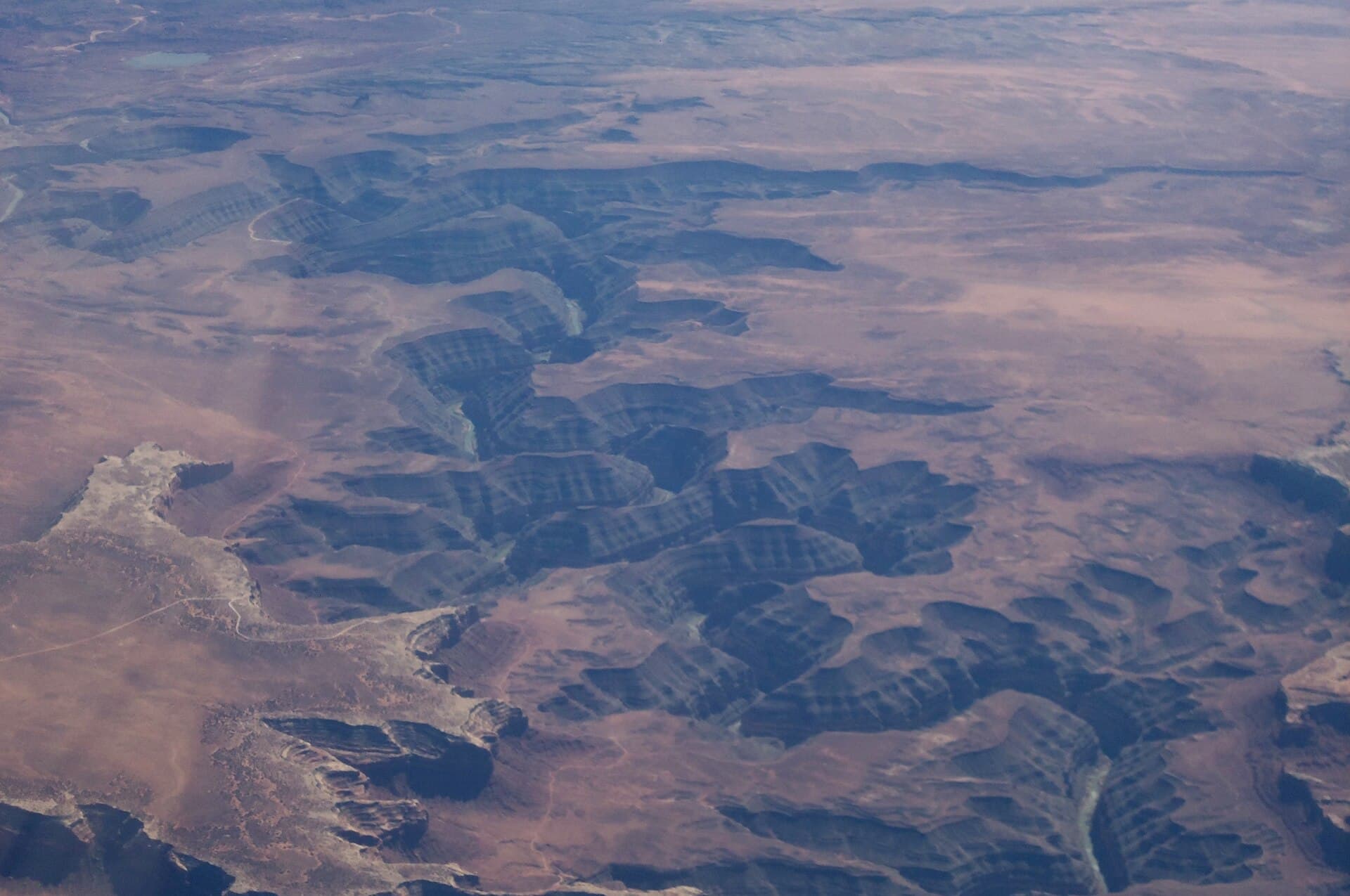
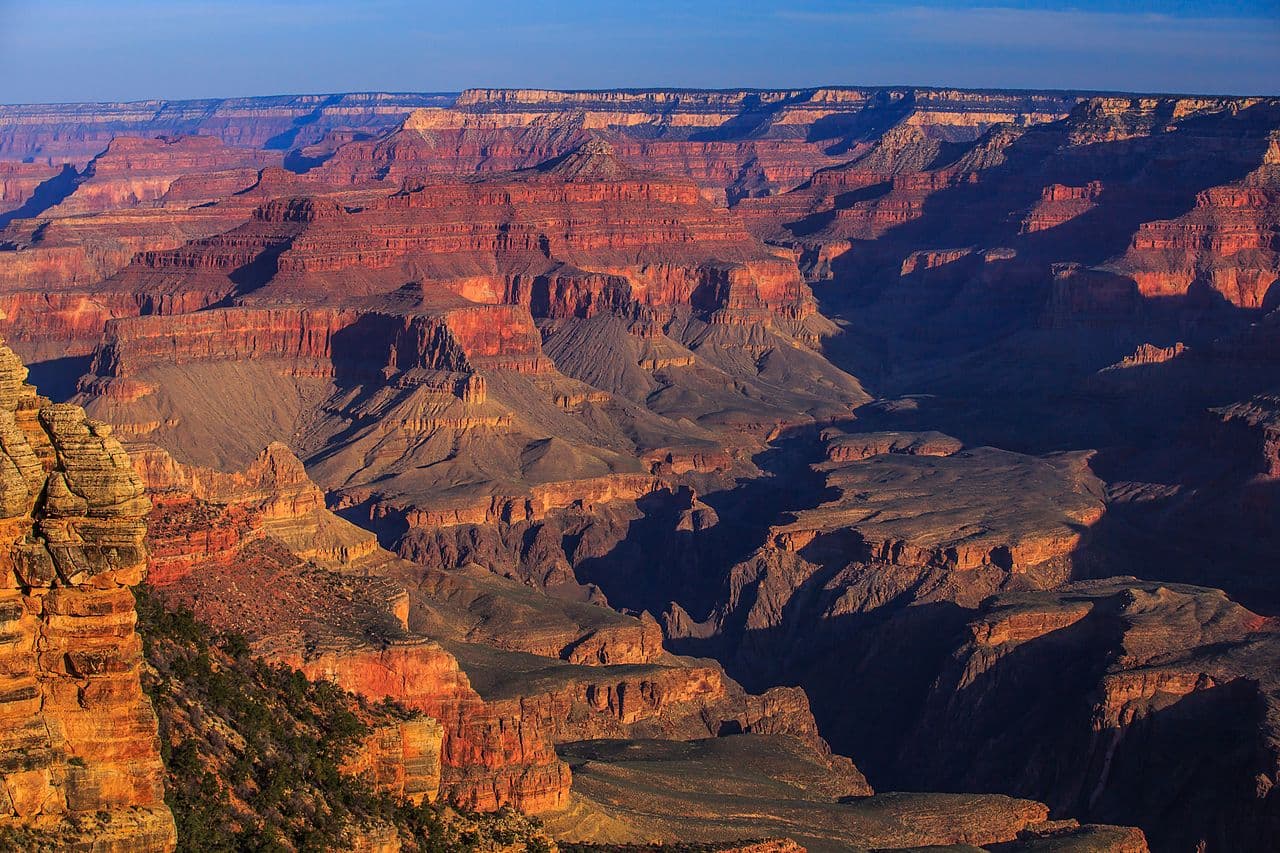
You put in at river mile 225 and the canyon is already ancient and immense. Then the Grand Wash Cliffs give way at mile 277 and you are on Lake Mead - a hard transition from moving water to flat water and wind.
The Park Service publishes the run as launching from Diamond Creek at river mile 225 and covering 52 river miles of smooth and white water, with trips taking 2 to 5 days. From river mile 277 - Pearce Ferry - the surrounding Grand Wash Cliffs give way to Lake Mead National Recreation Area.
Trip length is zoned and short: Diamond Creek to Separation is one night year-round; Separation Canyon to river mile 260 and river mile 260 to Lake Mead each allow two nights from January to April and October to December, but only one night from May to September. Unusually, there is no repeat use restriction and no checkout form requirement for this section.
The take-out is the part to plan hardest. River runners can take out at either South Cove or Pearce Ferry. Pearce Ferry is for take-out only - launching boats is prohibited and the area is closed to swimming, fishing, camping and shoreline fires - with the ramp reserved for boats loaded directly onto trailers without being de-rigged. Continuing to South Cove means running or portaging Pearce Ferry rapid, half a mile below the take-out, which the Park Service describes as technically difficult and as having been described by many river runners as being more difficult than any other rapid in Grand Canyon. It advises scouting it before deciding. Beyond that there are two more rapids near the western end of Iceberg Canyon and an extra 15 miles of often flat water, usually against the wind, likely adding one or two days.
What to Expect
No lottery - first-come, first-served applications direct to the NPS River Permits Office, up to a year ahead
Up to two noncommercial trips launch from Diamond Creek each day
Maximum 16 participants per trip and 16 per campsite
52 river miles from mile 225 to Pearce Ferry at mile 277, over 2 to 5 days
No NPS permit fee - but Hualapai Tribal permits and access fees are required in advance
Pearce Ferry rapid half a mile below the take-out, which the NPS says many river runners call harder than anything in Grand Canyon
Short zoned trip lengths - one night per zone from May to September
Get Lower GC Alerts
Be first to know when cancellations happen.
Permit Requirements
A noncommercial river permit is required; there is no lottery and applications are first-come, first-served up to one year in advance
Each trip is limited to a maximum of 16 participants, and 16 river trip participants per campsite
Hualapai Tribal permits are required in advance to use Diamond Creek Road and to cross tribal lands
Hiking or camping on river left above the historic high water mark requires a separate permit from the Hualapai Tribe
A washable, reusable human waste carry-out system approved by Grand Canyon National Park is required; plastic bucket systems like the Scat Packer are not permitted
Wood fires must be in a metal fire pan of 300 square inches with a 3-inch lip, elevated on manufactured legs, with a fire blanket underneath; all ash and residue must be carried out
Gas stoves with sufficient fuel are required on all trips
All trip participants must wear properly fastened PFDs at all times while on the river; foreign-standard PFDs are not acceptable without US Coast Guard approval
Pearce Ferry is take-out only - launching is prohibited, and the area is closed to swimming, fishing, camping and shoreline fires
Pets are not permitted
Gear & Preparation
Required Gear
- •A washable, reusable human waste carry-out system approved by the park, plus an accessible day system carried on side hikes
- •A metal fire pan of 300 square inches with a 3-inch lip, elevated on manufactured legs, and a fire blanket at least 20% larger than the pan
- •A gas stove with sufficient fuel - required on all trips
- •One US Coast Guard approved PFD per passenger plus one extra for every 10 people
- •Hualapai Tribal permits, arranged before your launch date
Recommended Gear
- •A motor for the flatwater push to South Cove, if you are going that way
- •Extra days in the schedule - the extra 15 miles to South Cove is likely to add one or two
- •Wind protection for Lake Mead
- •A spare set of straps for the de-rig, given the ramp restrictions at both take-outs
Hazards & Safety
Pearce Ferry rapid, half a mile below the take-out, which the NPS says has been described by many river runners as more difficult than any other rapid in Grand Canyon - scout it before you decide to run it
Two further rapids near the western end of Iceberg Canyon on the way to South Cove
Flat water and headwind for the last 15 miles to South Cove
Variable Lake Mead levels, shifting sandbars and very shallow water near Pearce Bay
Quagga mussels, present in Lake Mead and in the Colorado through Grand Canyon; the park asks boaters to clean, drain and dry and wait at least five days before visiting another waterway
Best Time to Visit
October through April gives two nights per zone below Separation instead of one, which makes for a less rushed trip, and avoids the worst of the heat in the lower canyon. May through September compresses the zones to one night each. The permit itself has no season.
Pro Tips
This is the Grand Canyon trip you can actually book. No lottery, first-come first-served, up to a year ahead through the NPS River Permits Office.
Sort the Hualapai permits before anything else. Diamond Creek Road access and any river-left camping both need them, and they are arranged directly with the Tribe.
Decide about South Cove in advance. It adds 15 flatwater miles and one or two days, and puts Pearce Ferry rapid in your path.
Do not de-rig at the launch ramp between 7:00 and 10:00 am - the Hualapai Tribe has asked groups to keep it clear then.
Plan October to April if you want two nights per zone below Separation. From May to September the zones drop to one night each.
100+ wilderness permits, extensive backcountry experience
This guide is based on personal experience obtaining wilderness permits and is regularly updated to reflect current policies and strategies.
Frequently Asked Questions
How do I get a Lower GC permit?
+
Lower GC permits are available first-come, first-served. They can be booked online when they become available. Popular dates fill quickly.
When is the best time to visit Lower GC?
+
October through April gives two nights per zone below Separation instead of one, which makes for a less rushed trip, and avoids the worst of the heat in the lower canyon. May through September compresses the zones to one night each. The permit itself has no season.
How long is the Lower GC route?
+
The route is 52 miles, as a point-to-point. Plan on 2-5 days.
How difficult is the Lower GC route?
+
Experienced private boaters who can coordinate a multi-agency trip and handle a serious rapid at the very end of it.
What gear do I need for the Lower GC route?
+
Essential gear includes: A washable, reusable human waste carry-out system approved by the park, plus an accessible day system carried on side hikes, A metal fire pan of 300 square inches with a 3-inch lip, elevated on manufactured legs, and a fire blanket at least 20% larger than the pan, A gas stove with sufficient fuel - required on all trips, One US Coast Guard approved PFD per passenger plus one extra for every 10 people, Hualapai Tribal permits, arranged before your launch date.
Don't Miss Your Lower GC Permit
Cancellations happen every day. PermitSnag monitors Lower GC availability 24/7 and alerts you the moment a spot opens up.
Get Permit Alerts