Yampa Permit: Route and Dates
Yampa permits get cancelled and re-released through the season in Colorado Plateau Rivers, and they are drawn by lottery to begin with. The route covers 71 miles.
The last major undammed tributary of the Colorado, 44 miles down the Yampa to Echo Park and then 32 more on the Green - and one permit covers both rivers.
This guide covers the Dinosaur NM Yampa River permit.
$15 non-refundable application fee, plus $185 on confirmation - a flat per-permit recreation fee, not per person. An Extended Stay Fee of $35 applies. Park entrance fees are separate.
Permit Cost
4-5 days
Duration
71 miles
Distance
strenuous
Difficulty
About Yampa
The Yampa and the Green through Dinosaur National Monument are one permit, not two - Recreation.gov 250014 covers both. The Yampa's high use season for 2026 runs May 11 to July 11. The quota is measured in launches per day, and during the high use season only 300 permits for launches are issued in total. From May 11 to 20 that is two permits per day; from May 21 to July 11 it is three per day, not to exceed two launches per river; from July 12 to September 11 it is two per day. In the low use season only one permit is issued per day within the monument. Noncommercial river trips may include no more than 25 persons, and only one permitted group is allowed per campsite, with a maximum of 25 participants per site on private trips. Fees are a $15 non-refundable application fee, then $185 on confirmation. That $185 is a flat recreation fee per permit, not per person - an unusual and, for a large group, very cheap structure. An Extended Stay Fee of $35 exists. Monument entrance fees are required of all visitors regardless of where they enter and are not covered by the river permit. The lottery runs December 1 through January 31, with results on February 12 and confirmation due by March 1. There is no wait list for unconfirmed reservations. All low use permits plus any unclaimed high use permits release on March 6, 2026 at 8:00 am MT, and cancellations are made available randomly within 24 hours. Equipment is prescriptive. Fire pans must be elevated a minimum of four inches off the ground and be at least 100 square inches with a 3-inch rim, with a fireproof tarp, blanket or welder's cloth underneath. A mesh strainer for dishwater and ashes is required on multi-day trips but not on one-day trips. Fire residue must be strained before being deposited in the main river current, and all floatable and strained residue carried out. Life jackets must be Type I, III or V Coast Guard approved, properly worn by each participant on any craft, with a static shell and a minimum inherent buoyancy of 15.5 lbs for adults. Also required: a rescue and Z-drag kit, air pump, repair kits, spare oars and paddles, spare PFDs, a kitchen floor tarp, and major plus per-boat first aid kits. One genuine conflict you have to resolve before you launch: on human waste, Recreation.gov 250014 states that each group must carry a washable, reusable container toilet system and that bag systems such as wag bags or PET systems are not permitted - while the monument's own Boating in the Monument regulations, revised March 2025, lists commercial bag systems as approved provided they are stored in hard-sided containers or heavy-duty waterproof bags labelled Human Waste. Two official sources, opposite answers. Call the River Office before you buy a system. There is no formal pre-trip orientation, but there is a mandatory check-in inspection: failure to possess all required equipment at check-in will result in the inability to launch. Every permit holder is also required to read and carry a printed copy of Boating in the Monument.
The Yampa runs on snowmelt, which means the season is short and the water is real. It is also half of a single National Park Service permit that covers both the Yampa and the Green through Dinosaur National Monument - two very different rivers, one lottery, one $185 fee.
The Yampa route
- Distance
- 71 miles
- Route type
- point-to-point
- Trip length
- 4-5 days
- Difficulty
- strenuous
Colorado Plateau. Nearest town: Dinosaur, CO
The Experience
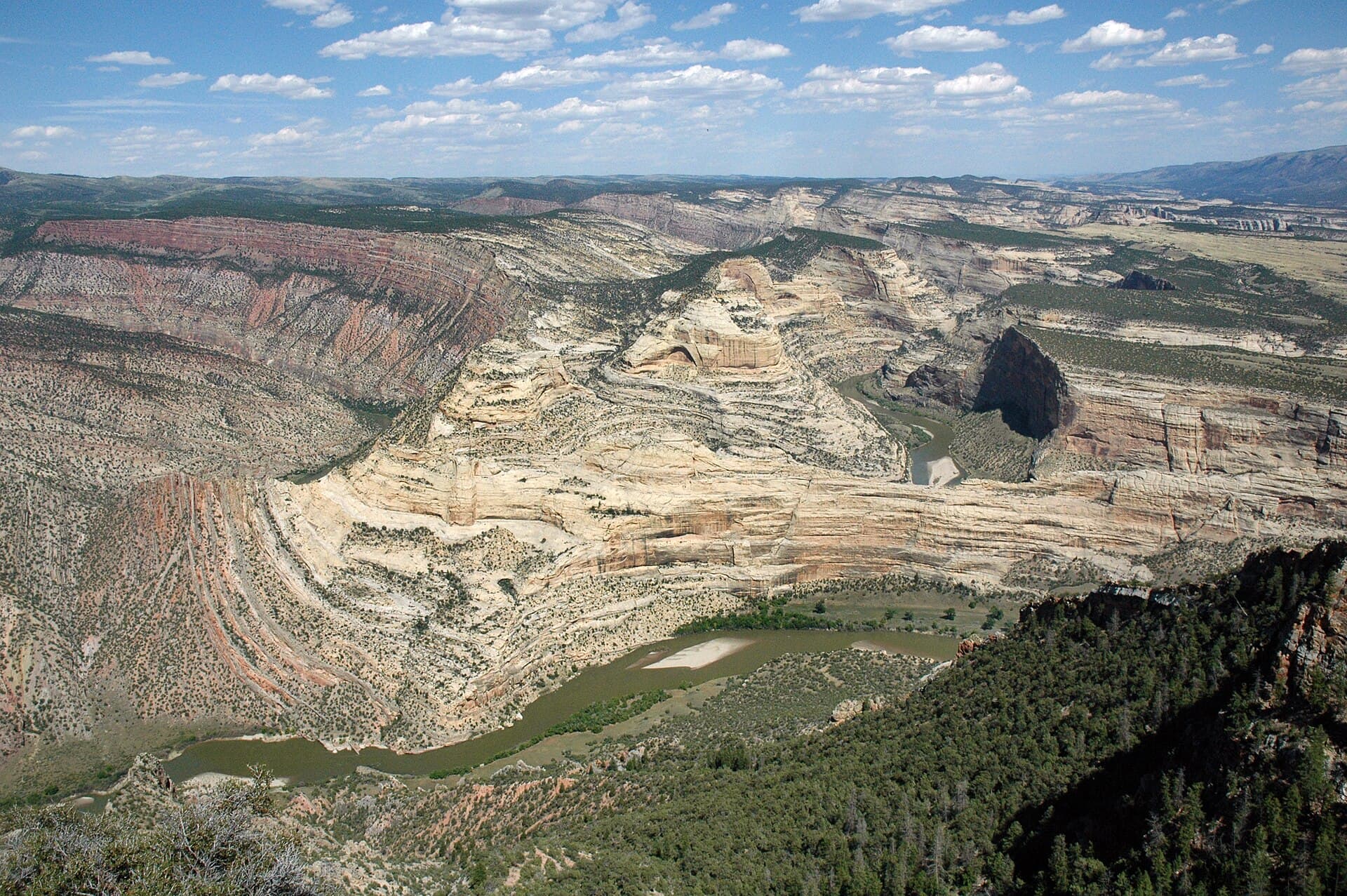
Sandstone that gets redder and higher every mile, and then Echo Park, where the Yampa meets the Green under Steamboat Rock. Warm Springs is the rapid everyone thinks about the night before.
The Park Service publishes the run in pieces: the Yampa begins at Deerlodge Park and rushes downstream 44 miles to join the Green River at Echo Park; from Echo Park boaters continue 17 miles on the Green through Whirlpool Canyon; then six miles of Island and Rainbow Parks; and finally nine rushing miles through Split Mountain, a canyon punctuated by four named rapids, to the Split Mountain boat ramp. Deerlodge Park is 53 miles east of the Canyon Visitor Center.
The monument rates some rapids as high as Class IV and requires boatman experience on the Green and Yampa in Dinosaur or on comparable Class III or higher whitewater. It publishes a list of 15 named rapids in its helmet rule - Teepee, Little Joe, Five Springs, Big Joe, Warm Springs, Winnie's Rapid, Disaster Falls, Harp Falls, Triplet, Hell's Half Mile, Greasy Pliers, Moonshine, SOB, Schoolboy and Inglesby - and helmets are required in all of them for canoeists, kayakers including inflatable kayaks, and standup paddlers.
Craft choice is set by flow: above 900 cfs any approved craft; 500 to 900 cfs wants 14-foot craft and a higher level of skill, with some walking expected; below 500 cfs it is duckies and kayaks, with more walking.
What to Expect
One permit covers both the Yampa and the Green - Recreation.gov 250014
44 miles down the Yampa to Echo Park, then 17 through Whirlpool Canyon, 6 through Island and Rainbow Parks and 9 through Split Mountain
Two to three launches per day in high use season, and only 300 launch permits issued for the whole season
$15 to apply and $185 flat per permit - not per person
Maximum 25 persons per trip, one permitted group per campsite
Helmets required in all 15 named rapids for canoeists, kayakers and paddleboarders
A mandatory equipment inspection at check-in - fail it and you do not launch
Get Yampa Alerts
Be first to know when cancellations happen.
Permit Requirements
Noncommercial river trips shall include no more than 25 persons
Only one permitted group per campsite; during high use season camp only in campsites assigned by the River Office
Helmets must be worn by all canoeists, kayakers including inflatable kayaks, and standup paddlers in all named rapids
Fire pans must be elevated at least four inches off the ground, be at least 100 square inches with a 3-inch rim, and sit on a fireproof tarp, blanket or welder's cloth
A mesh strainer for dishwater and ashes is required on multi-day trips
Fire residue must be strained before deposit in the main current; floatable and strained residue must be carried out
Type I, III or V Coast Guard approved life jackets must be properly worn by each participant on any craft, with a minimum inherent buoyancy of 15.5 lbs for adults
All food, garbage and scented items must be stored in a durable metal or plastic container secured with a latch or strap; IGBC certified containers are strongly encouraged
Permit holders are required to read and carry a printed copy of Boating in the Monument
Gear & Preparation
Required Gear
- •A fire pan of at least 100 square inches with a 3-inch rim, elevated four inches, plus a fireproof blanket underneath
- •A mesh strainer for dishwater and ashes
- •Type I, III or V PFDs with a static shell and 15.5 lbs minimum buoyancy for adults
- •Helmets for every canoeist, kayaker and paddleboarder
- •A rescue and Z-drag kit, air pump, repair kits, spare oars and paddles, spare PFDs and first aid kits
- •A printed copy of Boating in the Monument
Recommended Gear
- •An IGBC-certified food container - the monument strongly encourages it
- •A kitchen floor tarp, which is on the required list but easy to forget
- •Spare straps; Warm Springs has a long history of wraps
- •Sun shelter for the Echo Park camps
Hazards & Safety
Warm Springs, which the monument names among its 15 helmet-mandatory rapids
Rapids rated as high as Class IV depending on water level, on a snowmelt river whose flows change fast
Low flows below 500 cfs, where the monument says expect more walking and only duckies and kayaks are appropriate
Bank collapse near the river edge at Deerlodge, which the monument flagged in its August 7, 2026 conditions update
The human-waste rule conflict between two official sources - resolve it before you launch
Best Time to Visit
Mid-May through June. The Yampa is undammed and runs on snowmelt, so its high use season ends July 11 while the Green's runs to September 12 - by mid-July the Yampa is usually too low. Above 900 cfs any approved craft works; 500 to 900 wants 14-foot boats and more skill; below 500 it is duckies and kayaks.
Pro Tips
The $185 is per permit, not per person. Twenty-five people pay the same as four, which makes this one of the best-value river permits anywhere.
Apply for the Yampa if you want snowmelt water and the Green if you want a longer season - one application, and the high use windows differ by two months.
Sort the toilet system out with the River Office first. Two official sources give opposite answers on bag systems and the check-in inspection is where that gets expensive.
There is no wait list for unconfirmed reservations, so March 6 at 8:00 am MT is the real second chance.
Print Boating in the Monument and put it in a dry bag - carrying a printed copy is a requirement, not a suggestion.
100+ wilderness permits, extensive backcountry experience
This guide is based on personal experience obtaining wilderness permits and is regularly updated to reflect current policies and strategies.
Frequently Asked Questions
How do I get a Yampa permit?
+
Two ways. Cancelled Yampa permits return to the booking system through the season, and PermitSnag alerts you the moment one opens. The other way is the lottery, so apply during the application window as well.
When is the best time to visit Yampa?
+
Mid-May through June. The Yampa is undammed and runs on snowmelt, so its high use season ends July 11 while the Green's runs to September 12 - by mid-July the Yampa is usually too low. Above 900 cfs any approved craft works; 500 to 900 wants 14-foot boats and more skill; below 500 it is duckies and kayaks.
How long is the Yampa route?
+
The route is 71 miles, as a point-to-point. Plan on 4-5 days.
How difficult is the Yampa route?
+
Private boaters with Class III+ experience and a rigged multi-day setup. The monument requires prior experience on comparable water and checks your gear before you launch.
What if I don't win the Yampa lottery?
+
Cancelled permits return to the booking system through the season. PermitSnag watches Yampa and alerts you when one opens, so a lost draw is not the end of the trip.
What gear do I need for the Yampa route?
+
Essential gear includes: A fire pan of at least 100 square inches with a 3-inch rim, elevated four inches, plus a fireproof blanket underneath, A mesh strainer for dishwater and ashes, Type I, III or V PFDs with a static shell and 15.5 lbs minimum buoyancy for adults, Helmets for every canoeist, kayaker and paddleboarder, A rescue and Z-drag kit, air pump, repair kits, spare oars and paddles, spare PFDs and first aid kits. Additional specialized gear may be required based on conditions.
Don't Miss Your Yampa Permit
Cancellations happen every day. PermitSnag monitors Yampa availability 24/7 and alerts you the moment a spot opens up.
Get Permit Alerts