Paria Canyon Permit: Route
Paria Canyon permits are booked by advance reservation in Paria Canyon-Vermilion Cliffs Wilderness. The route covers 38 miles.
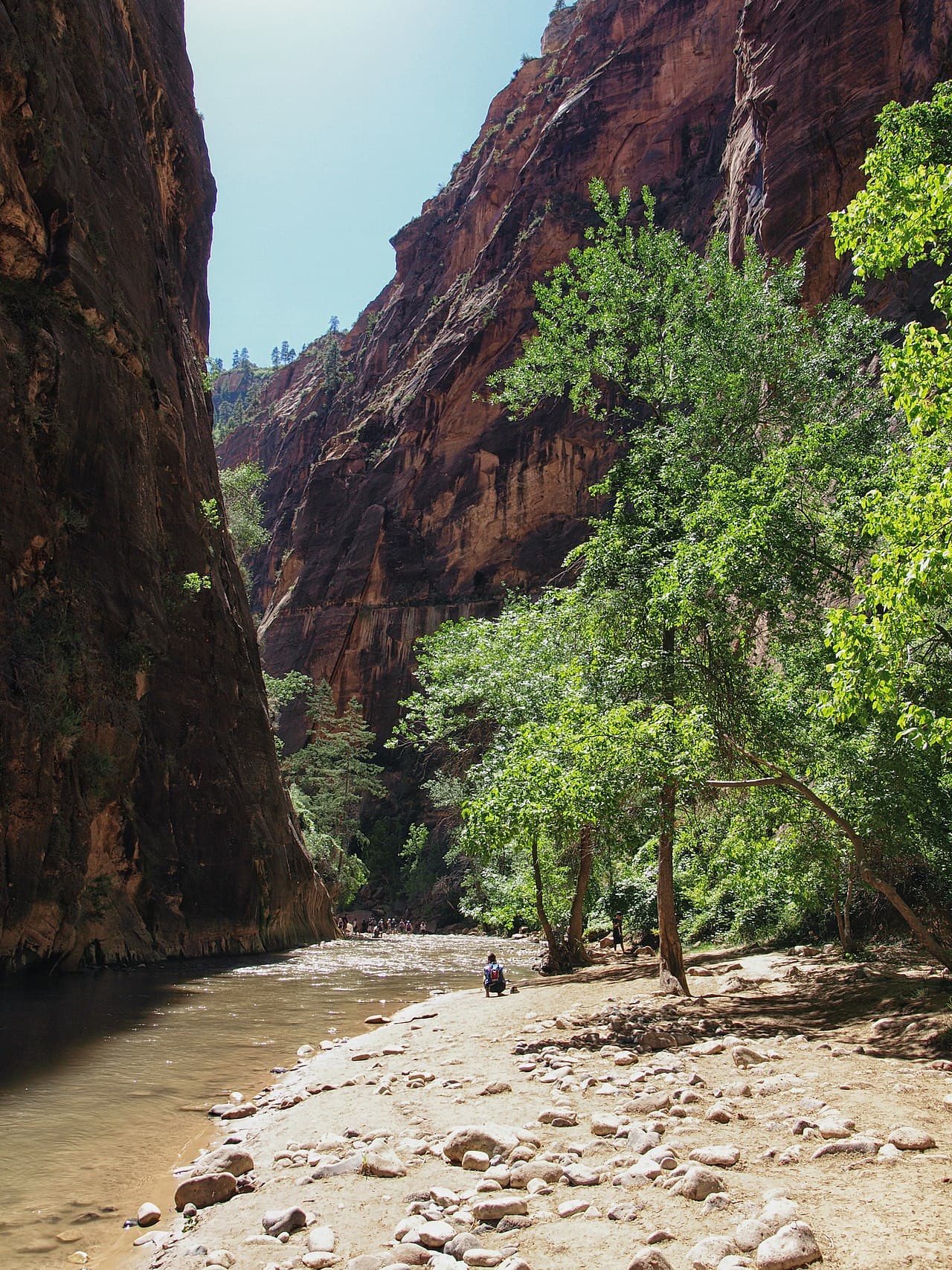
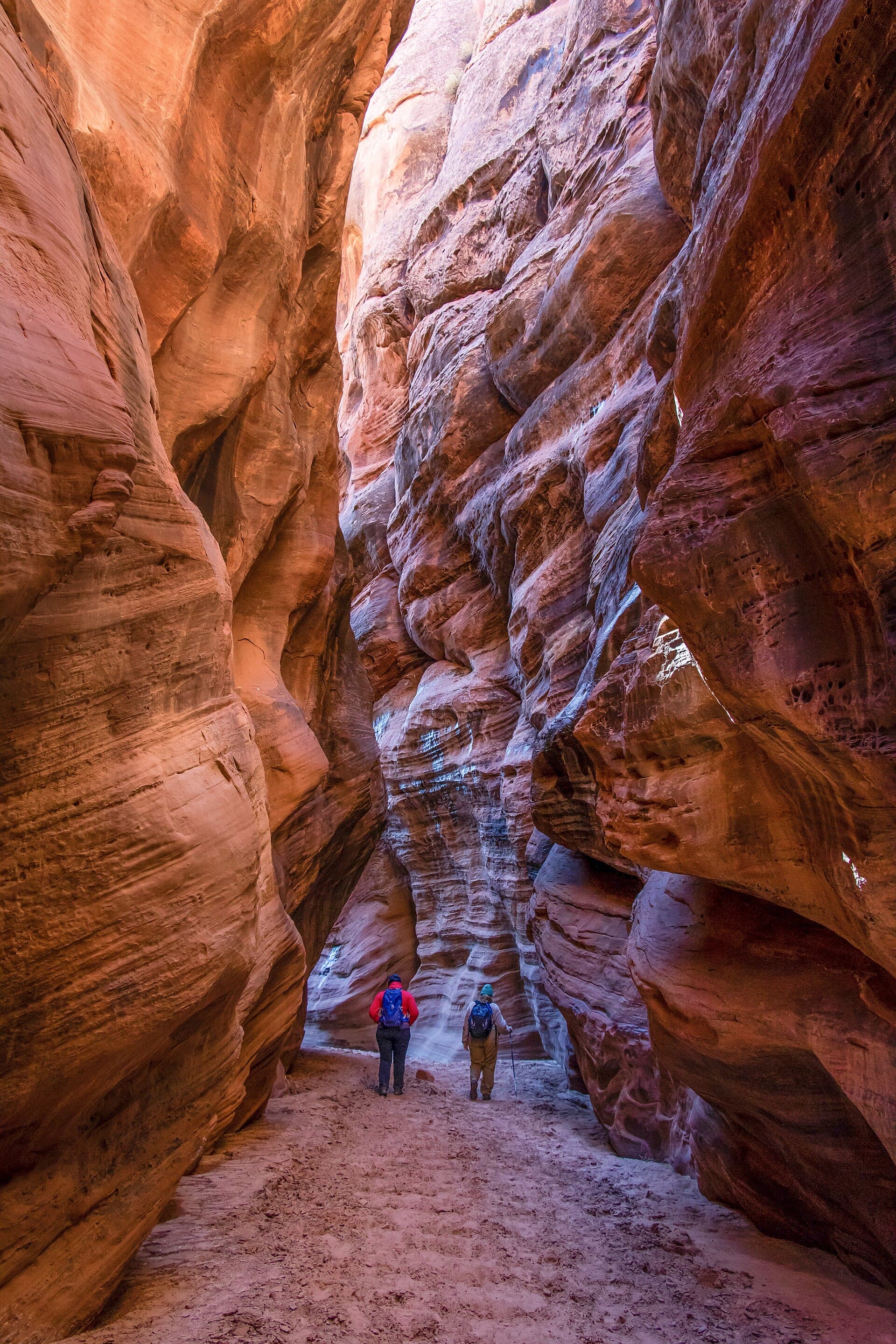
Walk through one of the longest and deepest slot canyon systems on Earth, where thousand-foot Navajo sandstone walls glow in colors no photograph can capture.
This guide covers the Paria Canyon Through-Hike permit.
$6/day
Permit Cost
3-5 days
Duration
38 miles
Distance
1,200'
Elevation Gain
strenuous
Difficulty
About Paria Canyon
Paria Canyon is one of the most immersive slot canyon experiences anywhere - a point-to-point backpack from Utah to Arizona down the Paria River, through what BLM describes as a 2,500-foot-deep canyon whose narrows run only a few feet wide in places and several hundred feet deep. The canyon demands constant river crossings. BLM says to expect to be in and out of the water continuously, over miles of cobbled streambed that make footing difficult, past boulder jams as tall as 20 feet, quicksand, deep mud, and pools cold and deep enough to require swimming. Overnight entry is capped at 20 people a day, counted cumulatively across all four trailheads, so solitude comes standard. BLM does not limit the number of groups - only the head count, and group size, which tops out at 10.
Paria Canyon represents slot canyon wilderness at its most raw and expansive. The confluence with Buckskin Gulch creates the longest slot canyon system in the world—a geologic marvel that takes days, not hours, to traverse.
The Paria Canyon route
- Distance
- 38 miles
- Route type
- point-to-point
- Elevation gain
- 1,200 ft
- High point
- 4,300 ft
- Low point
- 3,150 ft
- Trip length
- 3-5 days
- Difficulty
- strenuous
Entry points: White House Trailhead, Lee's Ferry
Utah/Arizona Border. Nearest town: Kanab
Points along the route
- White House TrailheadMile 0, 4,300 ft
- Paria NarrowsMile 5, 4,150 ft
- Buckskin Gulch ConfluenceMile 7, 4,095 ft
- The Hole3,837 ft
- Big Water SpringMile 22, 3,991 ft
- Wrather CanyonMile 30, 3,815 ft
- Bush Head CanyonMile 35, 3,625 ft
- Lee's FerryMile 38, 3,200 ft
Paria Canyon permit detailsandAll Paria Canyon-Vermilion Cliffs Wilderness permits
The Experience
The canyon walls climb higher with each mile until they block the sky itself, leaving only a ribbon of blue far above. You wade the Paria River dozens of times daily, the silty water swirling around your legs as ancient petroglyphs watch from alcoves. At night, the canyon amplifies every sound—the river's murmur becomes a symphony.
From White House Trailhead, the river immediately claims your feet as you enter the Paria Narrows. The walls grow steadily taller - BLM puts the canyon at 2,500 feet deep. Buckskin Gulch joins from the north, part of what Recreation.gov calls one of the longest slot canyon systems in the United States. Boulder jams, mud pits, and constant river crossings define the middle miles before the canyon opens near Big Water and Wrather Canyon. The final stretch to Lee's Ferry passes ancient petroglyphs and cottonwood groves as the Colorado River draws near.
What to Expect
In and out of the river constantly, over cobbled streambed that makes footing difficult
Canyon walls reaching 800 feet with sections just 15 feet wide
Boulder jams and obstacles requiring scrambling
Extremely silty water requiring extensive settling time
Complete immersion in a slot canyon ecosystem
Potential flash flood conditions during monsoon season
Get Paria Canyon Alerts
Be first to know when cancellations happen.
Permit Requirements
Overnight permit required (limited to 20 people per day canyon-wide)
Permits must be picked up in person, no sooner than 10 days before the trip. Vermilion Cliffs National Monument in St. George is open year-round; the Paria Contact Station closes November 15, after which pickup moves to the BLM Kanab Field Office
WAG bags required—all human waste must be packed out
Campfires prohibited throughout the canyon
Group size limited to 10 people
Wrather Canyon is closed to camping, and all camping must be at least 200 feet from springs and archaeological sites, in existing campsites
Dogs are allowed and cost $5 per dog per day on an overnight permit, the same as a person. Dog waste and the bags must be packed out
Gear & Preparation
Required Gear
- •WAG bags for human waste (required)
- •Water - BLM's permit briefing says a gallon per person per day, and to know where the few sources are
- •Water filter AND container for settling silt
- •Footwear that drains well and provides support when wet
- •Trekking poles for river crossings
- •Emergency communication device
Recommended Gear
- •Neoprene socks for cold water
- •Gaiters to keep debris out of footwear
- •Quick-dry clothing
- •Drybag for sleeping bag and electronics
- •Pre-filter for silty water
- •Camp shoes for drying feet at camp
Hazards & Safety
Flash floods—canyon offers no escape for miles. Check weather forecasts for entire watershed.
Hypothermia from constant immersion in cold water
Quicksand-like mud in some sections
Boulder jams requiring careful navigation
Very silty water—must settle before filtering
No cell service throughout the canyon
Rattlesnakes in warmer months
Best Time to Visit
Spring (March-May) and fall (September-November) offer ideal temperatures. Summer brings flash flood risk from monsoons and extreme heat. Winter is possible but very cold water makes extended immersion dangerous.
100+ wilderness permits, extensive backcountry experience
This guide is based on personal experience obtaining wilderness permits and is regularly updated to reflect current policies and strategies.
Frequently Asked Questions
How do I get a Paria Canyon permit?
+
Paria Canyon permits require advance reservations. Book online as soon as reservations open for your desired dates.
When is the best time to visit Paria Canyon?
+
Spring (March-May) and fall (September-November) offer ideal temperatures. Summer brings flash flood risk from monsoons and extreme heat. Winter is possible but very cold water makes extended immersion dangerous.
How long is the Paria Canyon route?
+
The route is 38 miles, as a point-to-point. Plan on 3-5 days.
How difficult is the Paria Canyon route?
+
Experienced desert backpackers comfortable with uncertainty, route-finding, and constant wet feet. Those who understand flash flood risk and can make weather-dependent decisions.
Where does the Paria Canyon route start?
+
The permit covers 2 entry points: White House Trailhead, Lee's Ferry.
What gear do I need for the Paria Canyon route?
+
Essential gear includes: WAG bags for human waste (required), Water - BLM's permit briefing says a gallon per person per day, and to know where the few sources are, Water filter AND container for settling silt, Footwear that drains well and provides support when wet, Trekking poles for river crossings. Additional specialized gear may be required based on conditions.
Don't Miss Your Paria Canyon Permit
Cancellations happen every day. PermitSnag monitors Paria Canyon availability 24/7 and alerts you the moment a spot opens up.
Get Permit Alerts