Shoshone Lake: Permit, Route and Dates
Shoshone Lake permits are booked by advance reservation in Yellowstone National Park.
Paddle up the Lewis River Channel - dragging the boat the last mile - to a lake with no road to it, no motors on it, and eighty geysers on its far shore.
This guide covers the Shoshone Lake Backcountry permit.
$5 per person per night plus a $10 reservation fee. The early access lottery application costs a separate, non-refundable $10.
Permit Cost
NPS allows a maximum of three consecutive nights at any one campsite.
Duration
About Shoshone Lake
Shoshone Lake sits at the head of the Lewis River southwest of West Thumb, with no road to it. The park describes it as Yellowstone's second largest lake, 8,050 acres in area and 205 feet at its maximum depth, and reports that the US Fish and Wildlife Service believes it may be the largest lake in the lower 48 states that cannot be reached by road. Recreation.gov runs 24 designated campsites around the lake in its Shoshone Lake district. Most take 8 people for up to 3 nights - Windy Point (8R1), Bluff Top (8R2), Cove (8R3), Outlet Hiker (8S0), Outlet Boat (8S1) and DeLacy Creek (8S2) among them - with South Narrow Point (8Q1) limited to 2 nights, Shoshone Meadows (8G1) to a single night, and Basin Beach (8T1) capped at four people. Sites are labelled by travel method: some are backpacker-only, some non-motorized boat only, some both. None allow campfires, all have a pit toilet, and each requires a food pole with a minimum of 30 feet of rope. Boating rules here are the strictest in the park in one direction and the most permissive in another. No motorboats are allowed on the lake - motorized boats are only permitted on Lewis and Yellowstone lakes - but the Lewis River Channel between Lewis Lake and Shoshone Lake is the single exception to Yellowstone's blanket closure of rivers to boating, open to non-motorized watercraft only. Before June 10, boat-accessible campsites on Shoshone Lake are available by walk-up permit only. Lewis and Shoshone Lake are typically ice free in early June. Everything else follows the park-wide backcountry permit: $5 per person per night plus a $10 reservation fee, a March early access lottery ($10 non-refundable to apply), and in-person permit pickup at a backcountry office up to two days before your trip. There is no Bear Management Area covering Shoshone Lake - the park's published BMA table has none here - but the food-storage and bear-spray rules apply exactly as everywhere else.
Recreation.gov names Shoshone Lake as one of four high-demand areas in Yellowstone worth entering the lottery for, and the reason is simple: it is the park's second largest lake and the US Fish and Wildlife Service believes it may be the largest lake in the lower 48 states that cannot be reached by road. That is a narrower claim than the one you will see repeated elsewhere, and it is the one the Park Service actually publishes.
The Shoshone Lake route
- Route type
- out-and-back
- Trip length
- NPS allows a maximum of three consecutive nights at any one campsite.
Entry points: DeLacy Creek Trailhead (7K2), Shoshone Lake / Dogshead Trailhead (8K1), Lewis Lake
Greater Yellowstone. Nearest town: West Thumb, WY
Points along the route
- Lewis River Channel
- Shoshone Lake
- Shoshone Geyser Basin
- Campsite 8T1 - Basin Beach
Shoshone Lake permit detailsandAll Yellowstone National Park permits
The Experience
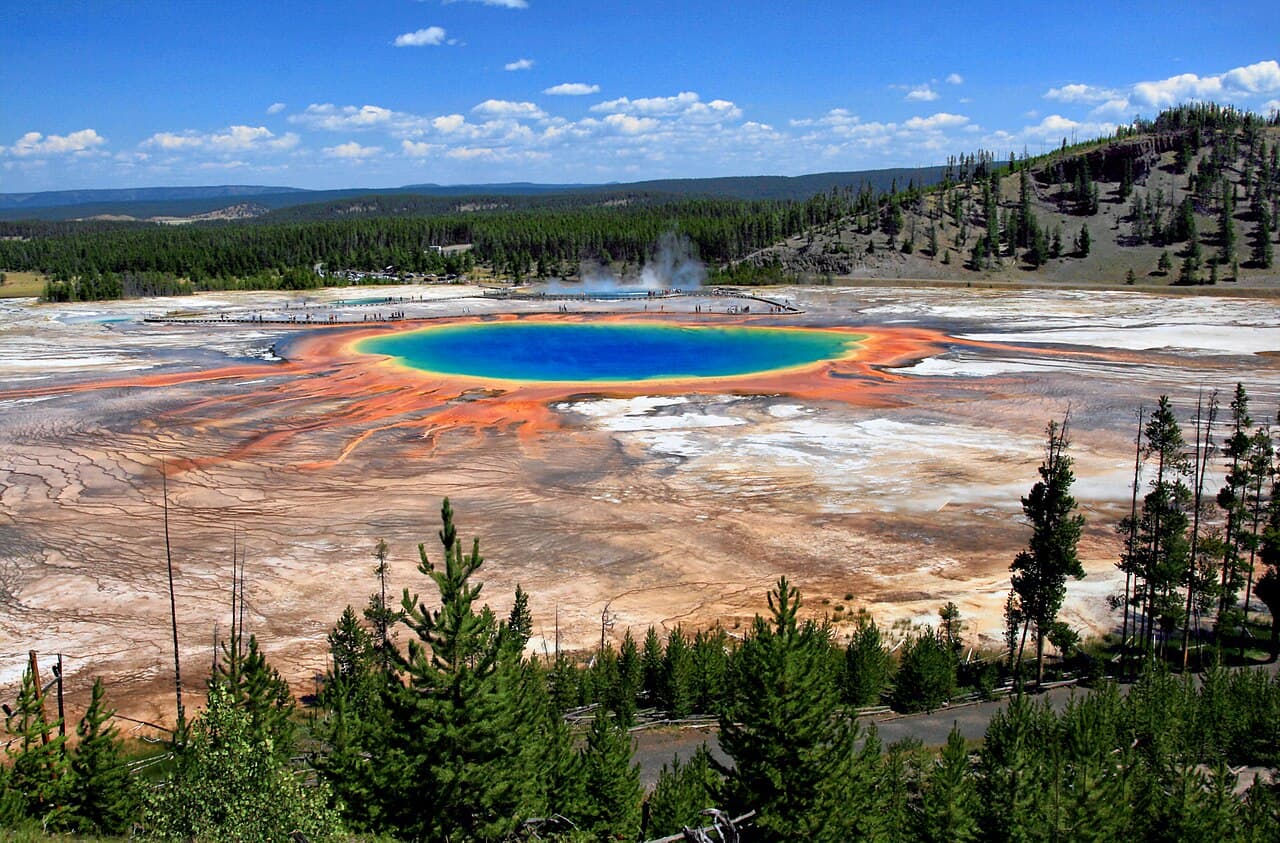
Wind and water. The park warns that winds from the southwest often build through the morning and afternoon on Lewis and Shoshone lakes and can be formidable, which is why paddlers here start at dawn. On the far shore, the Shoshone Geyser Basin - reachable only by hiking or by boat - holds one of the highest concentrations of geysers in the world.
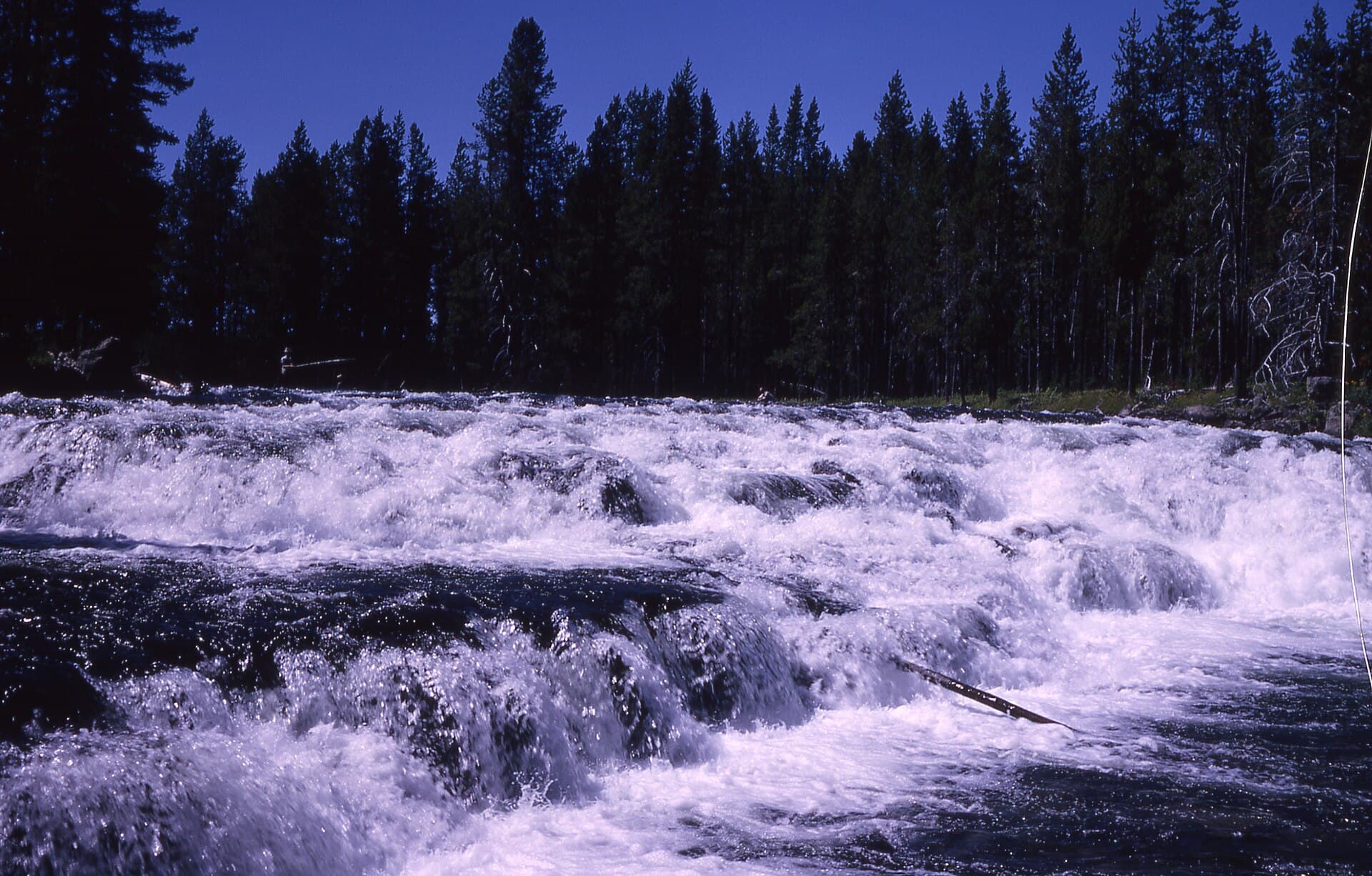
Two ways in. Paddlers cross Lewis Lake and go up the Lewis River Channel, which the park describes as swift and cold, with the last mile requiring boaters to pull their boats up the stream - this is the only river reach in Yellowstone open to boating at all, and non-motorized only. As of the park's August 4, 2026 note, the channel was passable via canoe but shallow, with boats bumping rocks. Hikers come in from DeLacy Creek, where the trail meets the lake at an outlet crossing about a foot and a half deep - the park recommends river-crossing shoes.
The park publishes no mileage for either approach. What it does publish is the rule that matters on the water: cross Shoshone Lake only at the narrows.
What to Expect
24 designated campsites around the lake, most taking 8 people for up to 3 nights
Basin Beach (8T1) is capped at four people and is the geyser-basin access site
Shoshone Meadows (8G1) is a one-night site; South Narrow Point (8Q1) is two
No campfires at the lake sites; pit toilets and food poles at each
No motorboats on the lake; the Lewis River Channel is non-motorized only
Before June 10, boat-accessible sites are walk-up permit only
The last mile of the channel means pulling your boat up the stream
Get Shoshone Lake Alerts
Be first to know when cancellations happen.
Permit Requirements
A backcountry permit is required and names your specific campsite and dates
No motorboats on Shoshone Lake; motorized boats are only allowed on Lewis and Yellowstone lakes
The Lewis River Channel is the only river reach in Yellowstone open to boating, and only to non-motorized watercraft
Cross Shoshone Lake only at the narrows
Food and scented items must be hung from the food pole - a minimum of 30 feet of rope - or stored in a hard-sided bear-resistant container. Soft-sided containers are not allowed
Bathing, soaking or swimming in water entirely of thermal origin is prohibited
No off-trail travel in thermal areas
The Shoshone Geyser Basin is closed to stock year-round
Gear & Preparation
Required Gear
- •Bear spray
- •A minimum of 30 feet of rope for the food pole
- •River-crossing shoes for the DeLacy Creek outlet, which the park puts at about a foot and a half deep
- •A stove - campfires are not allowed at the lake sites
- •Water treatment
Recommended Gear
- •A dry suit or dry top for the channel; the park calls it swift and cold
- •A spray skirt and a boat you can drag - the last mile of the channel is a haul
- •A head net for late June and July
- •Gaiters for the mud on the 8T1 approach to the geyser basin
Hazards & Safety
Wind. The park says southwest winds often build through the morning and afternoon on Lewis and Shoshone lakes and can be formidable
Cold water. The channel is swift and cold and the lake stays cold all summer
Thermal ground at Shoshone Geyser Basin, where the crust is thin and the water is scalding
Grizzly and black bears
The 8T1 trail to the geyser basin, which the park calls difficult to navigate with areas of knee-deep mud
Best Time to Visit
Mid-June through September. Lewis and Shoshone Lake are typically ice free in early June, and boat-accessible campsites are walk-up only before June 10. Late August and September give the calmest mornings on the water and the fewest mosquitoes. The park's August 4, 2026 note has the channel passable by canoe but shallow enough to bump rocks.
Pro Tips
Paddle at dawn. The park warns that southwest winds build through the morning and afternoon on both lakes and can be formidable - the water is usually glass before 9 am.
Before June 10, boat-accessible sites are walk-up permit only. If you want an early-season paddle, plan to collect the permit in person rather than book it.
Basin Beach (8T1) is the geyser-basin site and caps at four people. If your party is five or more, you need a different site and a longer walk to the basin.
Bring river-crossing shoes if you come in via DeLacy Creek. The outlet crossing runs about a foot and a half deep.
Carry 30 feet of rope minimum for the food pole - the site listings state that explicitly for these camps.
100+ wilderness permits, extensive backcountry experience
This guide is based on personal experience obtaining wilderness permits and is regularly updated to reflect current policies and strategies.
Frequently Asked Questions
How do I get a Shoshone Lake permit?
+
Shoshone Lake permits require advance reservations. Book online as soon as reservations open for your desired dates.
When is the best time to visit Shoshone Lake?
+
Mid-June through September. Lewis and Shoshone Lake are typically ice free in early June, and boat-accessible campsites are walk-up only before June 10. Late August and September give the calmest mornings on the water and the fewest mosquitoes. The park's August 4, 2026 note has the channel passable by canoe but shallow enough to bump rocks.
How difficult is the Shoshone Lake route?
+
Paddlers who can handle a cold, wind-exposed lake crossing, and backpackers happy to walk in and share the shore with them.
Where does the Shoshone Lake route start?
+
The permit covers 3 entry points: DeLacy Creek Trailhead (7K2), Shoshone Lake / Dogshead Trailhead (8K1), Lewis Lake.
What gear do I need for the Shoshone Lake route?
+
Essential gear includes: Bear spray, A minimum of 30 feet of rope for the food pole, River-crossing shoes for the DeLacy Creek outlet, which the park puts at about a foot and a half deep, A stove - campfires are not allowed at the lake sites, Water treatment.
Don't Miss Your Shoshone Lake Permit
Cancellations happen every day. PermitSnag monitors Shoshone Lake availability 24/7 and alerts you the moment a spot opens up.
Get Permit Alerts