Yellowstone Backcountry Permit: Route and Dates
Yellowstone Backcountry permits get cancelled and re-released through the season in Yellowstone National Park, and they are drawn by lottery to begin with.
1,114 miles of trail, 293 numbered campsites, and a permit that names exactly which one you sleep at on which night.
This guide covers the Yellowstone Backcountry permit.
$5 per person per night plus a $10 reservation fee. The early access lottery application costs a separate, non-refundable $10; lottery winners do not pay the $10 reservation fee again.
Permit Cost
Varies by itinerary. NPS allows a maximum of three consecutive nights at any one site, some campsites carry a 1- or 2-night limit, and you may book up to 14 nights on one permit if you are hiking from one campsite to the next.
Duration
About Yellowstone Backcountry
A backcountry permit is required year-round for all overnight stays in Yellowstone's backcountry, and each permit specifies a designated campsite and dates for you and your group. There are 293 of those campsites across 1,114 miles of trail. Group sizes are limited to 4 to 12 people depending on the site, stays run 1 to 3 nights, and except for four sites only one group is allowed per campsite. The 2026 season ran on an early access lottery: applications March 1 to 20, notification March 25, and a randomized access window for winners between April 1 and April 25 - note the park's own page gives that window as both April 1-24 and April 1-25 in different places. General on-sale for peak season, May 15 to October 31, opened April 26. Non-peak season, November 1 to May 14, opens for booking on October 6. Fees are $5 per person per night plus a $10 reservation fee, charged year-round whether you book on Recreation.gov or in person at a backcountry office. The early access lottery application is a separate non-refundable $10, and if you win it you do not pay the $10 reservation fee again. A reservation is not a permit. Between May 15 and October 31 you pick the permit up at a backcountry office, up to two days before your trip. Recreation.gov names Slough Creek, the Bechler area, Heart Lake and Shoshone Lake as the high-demand areas worth entering the lottery for. As of the park's August 9, 2026 situation report, fire danger is Very High with no current fire restrictions, and since July 29 the park's rivers and streams have been closed to fishing daily from 2 pm to sunrise because of high water temperatures and low stream flows.
Yellowstone's backcountry is bigger than most national parks put together and almost nobody uses it. The whole system runs on designated sites: you do not get a zone or a general area, you get a site number, and your permit says which nights you have it. That is what makes it plannable - and what makes the good sites go fast.
The Yellowstone Backcountry route
- Trip length
- Varies by itinerary. NPS allows a maximum of three consecutive nights at any one site, some campsites carry a 1- or 2-night limit, and you may book up to 14 nights on one permit if you are hiking from one campsite to the next.
Entry points: Bechler Ranger Station Trailhead (9K1), Cave Falls Trailhead (9K2), DeLacy Creek Trailhead (7K2), Shoshone Lake / Dogshead Trailhead (8K1)
Greater Yellowstone. Nearest town: Gardiner, MT
Points along the route
- Bechler area
- Slough Creek
Yellowstone Backcountry permit detailsandAll Yellowstone National Park permits
The Experience
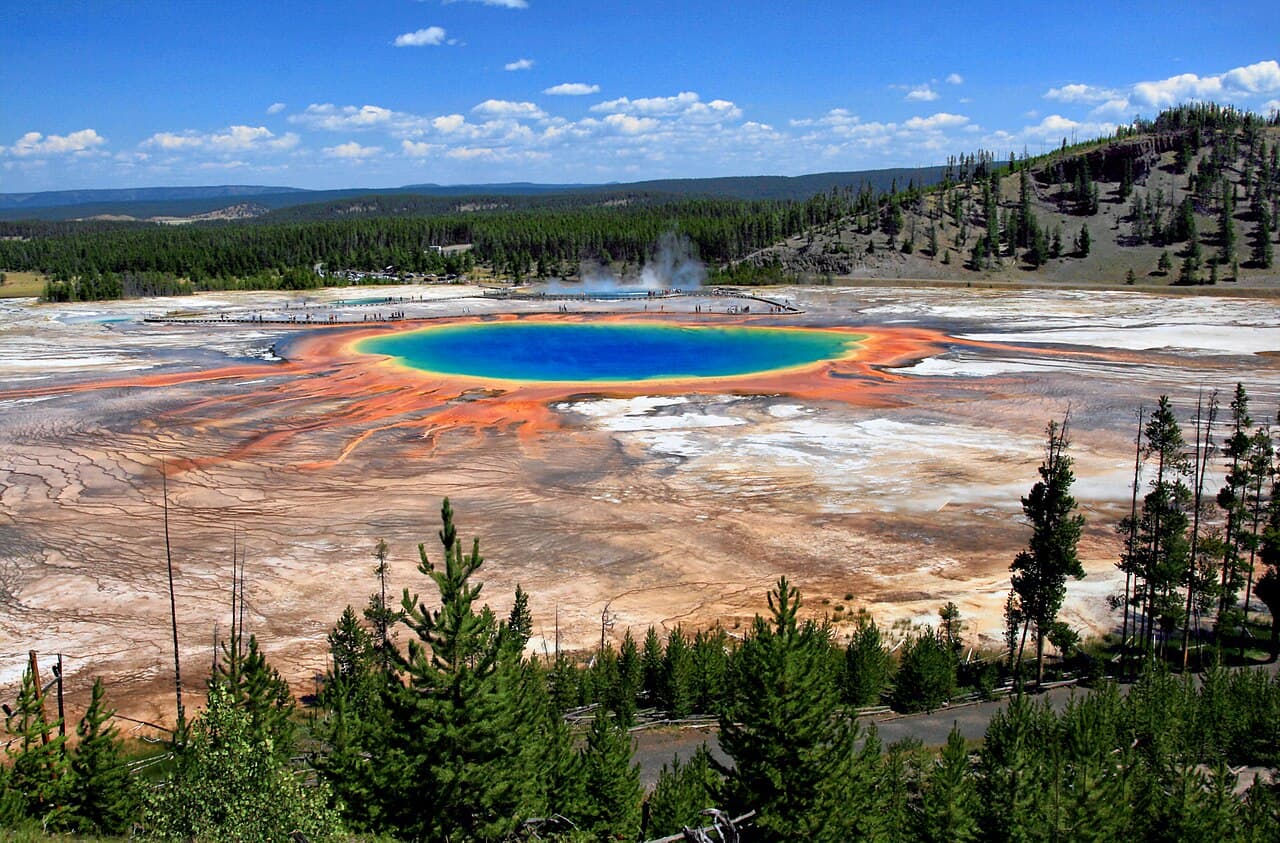
Two miles from a boardwalk full of people you are on your own with bison trails, thermal steam rising off a meadow, and a food pole to hang everything from at night. Bear spray on your hip is not a precaution here, it is equipment.
The park publishes the shape of the system plainly: 1,114 miles of trails and 293 designated backcountry campsites, each with limits on group size and stock, campsite stays ranging from 1 to 3 nights, and group sizes limited to 4 to 12 people. Except for four sites, only one group is allowed per campsite - so when you have a site, you have it to yourself. If your group exceeds a site's limit you need a second permit, and you must cook and sleep separately.
One permit can carry up to 14 nights if you are hiking site to site, with a maximum of three consecutive nights at any one site and some sites capped at one or two. Up to 75% of the campsites may be reserved in advance and at least 25% are left for walk-up permits daily.
What to Expect
A permit that names a specific numbered campsite for each night
293 designated backcountry campsites across 1,114 miles of trail
Group size limits of 4 to 12 people, set per site
Only one group per campsite, except at four sites
Stays of 1 to 3 nights per site; up to 14 nights on one permit if you keep moving
Up to 75% of sites reservable in advance, at least 25% held for daily walk-ups
Pick the permit up in person at a backcountry office, up to two days ahead
Get Yellowstone Backcountry Alerts
Be first to know when cancellations happen.
Permit Requirements
A backcountry permit is required year-round for all overnight stays in the backcountry
Maximum three consecutive nights at any one site; some sites are limited to one or two
If your group exceeds a site's limit you need a second permit and must cook and sleep separately
Secure all food and scented items by hanging them from the food poles or storing them in a bear-resistant food container. Soft-sided containers are not allowed
Carry bear spray and know how to use it
Bathing, soaking or swimming in water entirely of thermal origin is prohibited
No off-trail travel in thermal areas
A reservation is not a permit - collect the permit in person
Gear & Preparation
Required Gear
- •Bear spray, on your hip rather than in the pack
- •Rope for the food poles - the park says at least 35 feet, though Recreation.gov's site listings say 30, so carry 35
- •A hard-sided bear-resistant container if you prefer one to hanging; soft-sided containers are prohibited
- •Water treatment
- •Layers for nights that drop below freezing at 8,000 feet in any month
Recommended Gear
- •Shoes you can ford in - most long Yellowstone routes cross unbridged water
- •A head net for the mosquito peak in late June and July
- •Trekking poles for river crossings
- •A map, because bison trails braid off the real one constantly
Hazards & Safety
Grizzly and black bears throughout the park
Thermal ground. More than 20 people have died from burns after entering or falling into Yellowstone's hot springs, and the crust around them is thin and breakable
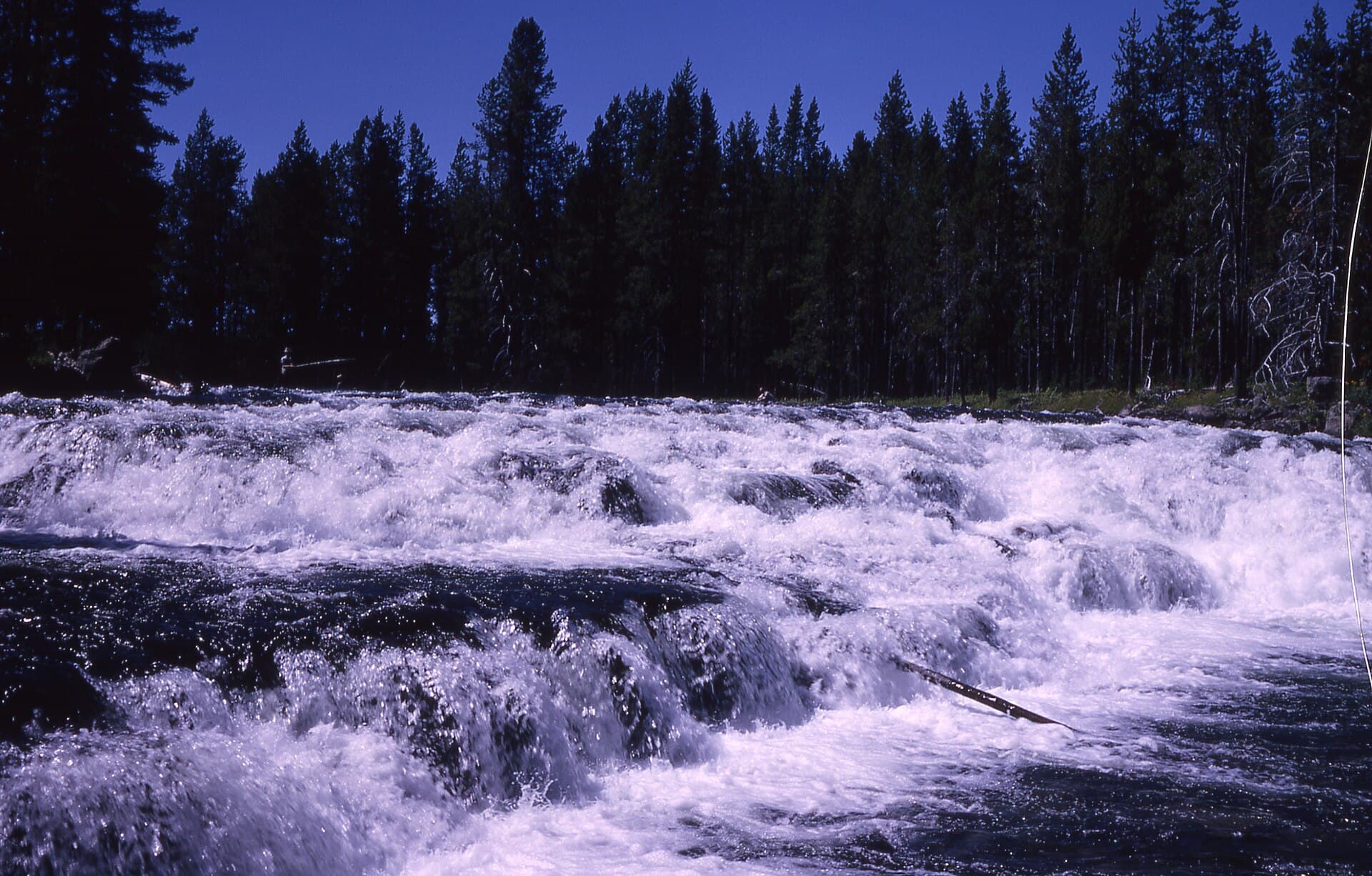
River fords that run high into July
Fire danger listed as Very High on August 9, 2026, with no restrictions currently in place
Bison, which are far more likely to injure you than a bear
Best Time to Visit
Mid-July through September. June is beautiful and largely unwalkable in the low country - high water closes fords and the mosquitoes are serious. September gives the best combination of dry trail, cool nights and elk bugling. Peak season for permits runs May 15 to October 31.
Pro Tips
Enter the March lottery if you want Slough Creek, Bechler, Heart Lake or Shoshone Lake - Recreation.gov names those four as the high-demand areas.
Check each site's own limits before you build an itinerary. Group size, stay length and travel method all vary site by site, and a 12-person site next to a 4-person site is normal.
Carry 35 feet of rope. The park says at least 35 feet for the food poles; Recreation.gov's site listings say 30, and the longer number is the safer one to pack.
Book the walk-up as your plan B rather than your last resort - at least 25% of sites are held back for it every day.
Build in a spare day in June and early July. High water on the unbridged crossings turns a planned itinerary into an improvised one.
100+ wilderness permits, extensive backcountry experience
This guide is based on personal experience obtaining wilderness permits and is regularly updated to reflect current policies and strategies.
Frequently Asked Questions
How do I get a Yellowstone Backcountry permit?
+
Two ways. Cancelled Yellowstone Backcountry permits return to the booking system through the season, and PermitSnag alerts you the moment one opens. The other way is the lottery, so apply during the application window as well.
When is the best time to visit Yellowstone Backcountry?
+
Mid-July through September. June is beautiful and largely unwalkable in the low country - high water closes fords and the mosquitoes are serious. September gives the best combination of dry trail, cool nights and elk bugling. Peak season for permits runs May 15 to October 31.
How difficult is the Yellowstone Backcountry route?
+
Backpackers comfortable being genuinely alone in grizzly country, on trails that are often faint and frequently unbridged.
Where does the Yellowstone Backcountry route start?
+
The permit covers 4 entry points: Bechler Ranger Station Trailhead (9K1), Cave Falls Trailhead (9K2), DeLacy Creek Trailhead (7K2).
What if I don't win the Yellowstone Backcountry lottery?
+
Cancelled permits return to the booking system through the season. PermitSnag watches Yellowstone Backcountry and alerts you when one opens, so a lost draw is not the end of the trip.
What gear do I need for the Yellowstone Backcountry route?
+
Essential gear includes: Bear spray, on your hip rather than in the pack, Rope for the food poles - the park says at least 35 feet, though Recreation.gov's site listings say 30, so carry 35, A hard-sided bear-resistant container if you prefer one to hanging; soft-sided containers are prohibited, Water treatment, Layers for nights that drop below freezing at 8,000 feet in any month.
Don't Miss Your Yellowstone Backcountry Permit
Cancellations happen every day. PermitSnag monitors Yellowstone Backcountry availability 24/7 and alerts you the moment a spot opens up.
Get Permit Alerts