Snowmass Lake (above 10,800') Permit: Route
Snowmass Lake (above 10,800') permits are booked by advance reservation in Maroon Bells-Snowmass Wilderness.
Thirteen groups a night — the largest zone allocation in the Maroon Bells-Snowmass Wilderness — and no campfire, because the lake sits above 10,800 feet.
This guide covers the Snowmass Lake (above 10,800') permit.
13
Groups Per Day
$10 per person, per night from May 1 to October 31 (children 16 and under free), plus a $6 non-refundable reservation fee
Permit Cost
1-7 nights
Duration
strenuous
Difficulty
About Snowmass Lake (above 10,800')
Snowmass Lake is an Overnight Permit Zone in the Maroon Bells-Snowmass Wilderness with a quota of 13 groups per night — the largest allocation of any zone. USFS breaks it down as 11 permits for 1-4 people and 2 permits for 5-10 people. Unlike Conundrum Hot Springs, Crater Lake and Capitol Lake, this zone does not assign campsites. USFS asks you to select a campsite within the zone that is already established and is 70 big steps away from trails and water. What the permit reserves is a spot in the zone for that night. Campfires are prohibited above 10,800 feet, and USFS names Snowmass Lake specifically in that prohibition. Fees are $10 per person per night from May 1 to October 31, children 16 and under free, plus a $6 non-refundable reservation fee. Two permits per person per calendar year, seven nights maximum on a permit, and a spot has to be reserved in the zone for every night you camp.
Snowmass Lake is the biggest water in this wilderness and the standard second night on the Four Pass Loop, which means it absorbs both the loop traffic and the out-and-back traffic. USFS gives it the largest quota of any zone here: 13 groups per night, made up of 11 permits for 1-4 people and 2 permits for 5-10.
The Snowmass Lake (above 10,800') route
- Route type
- out-and-back
- Trip length
- 1-7 nights
- Difficulty
- strenuous
Elk Range, White River National Forest, Colorado. Nearest town: Aspen
Points along the route
- Snowmass Lake
Snowmass Lake (above 10,800') permit detailsandAll Maroon Bells-Snowmass Wilderness permits
The Experience
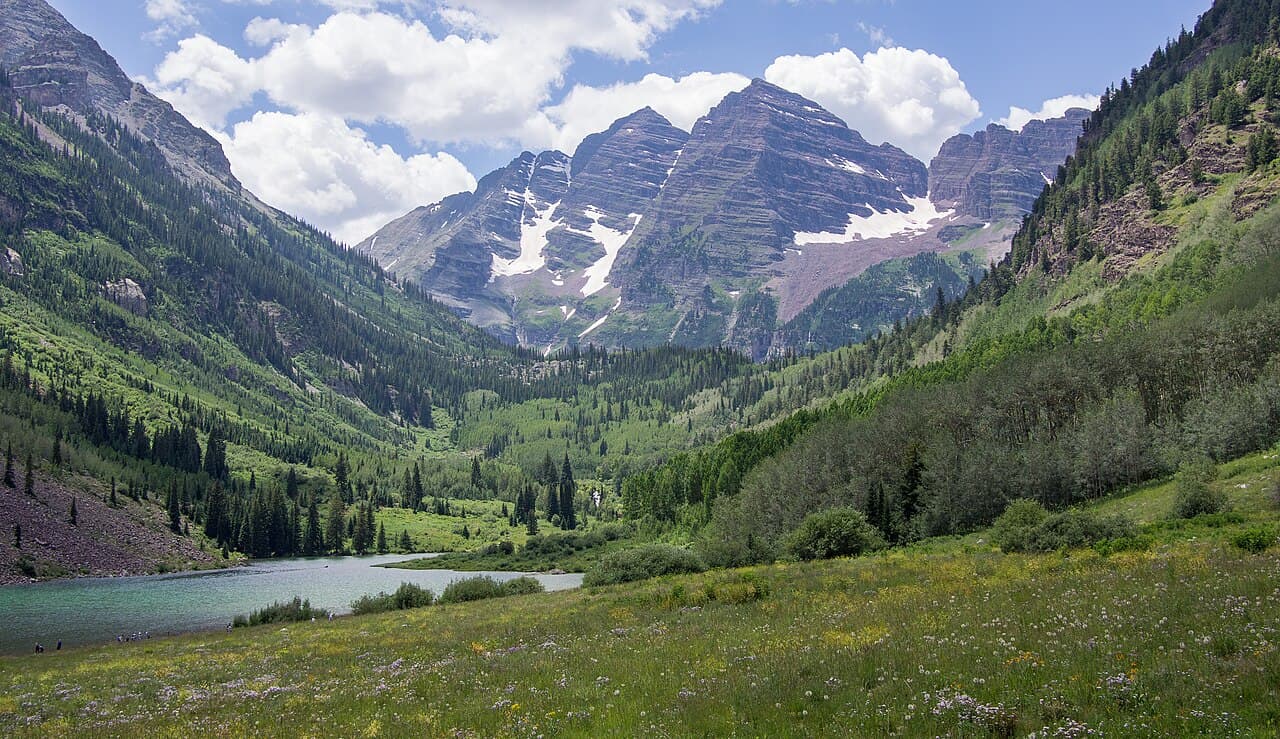
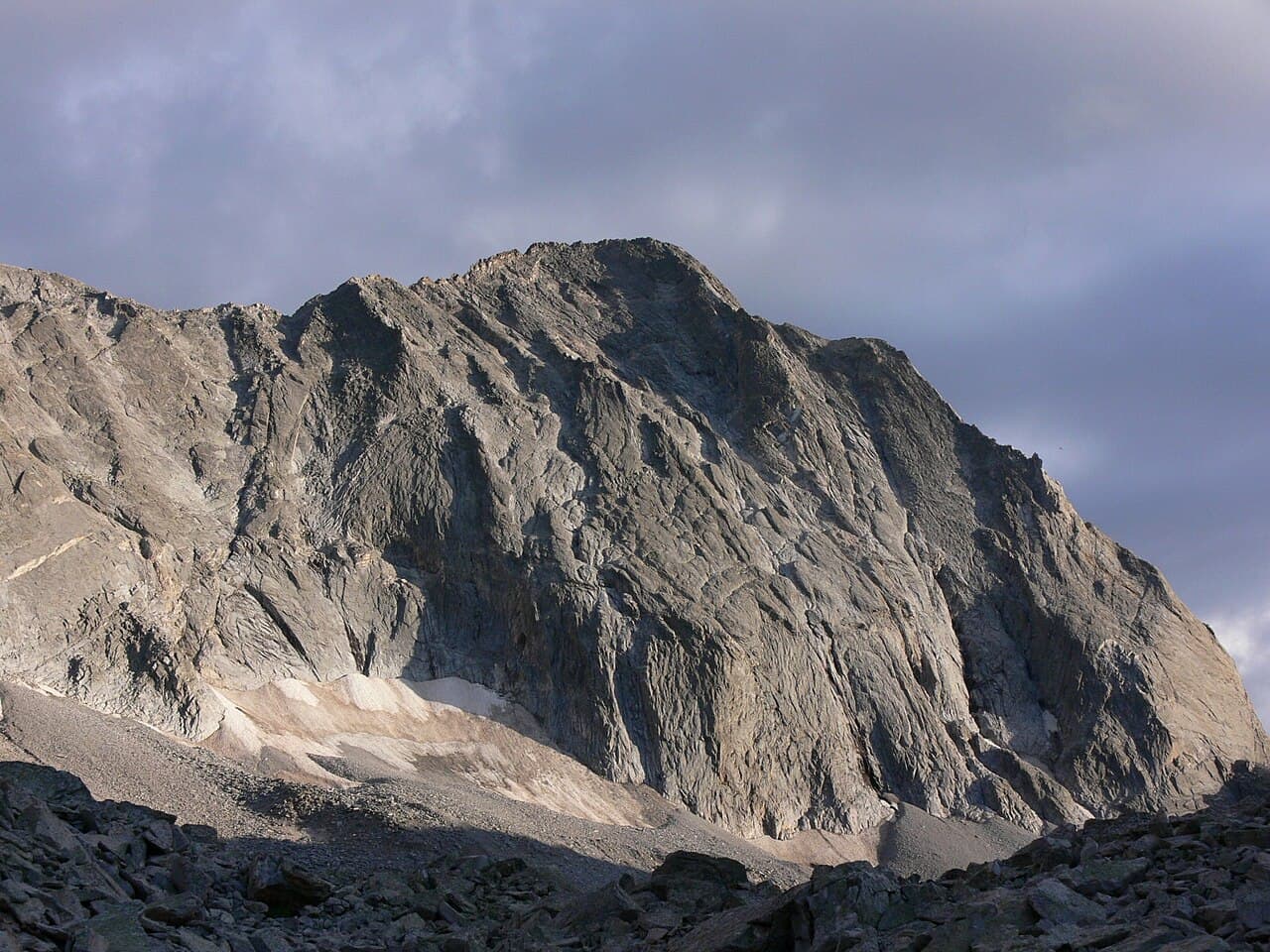
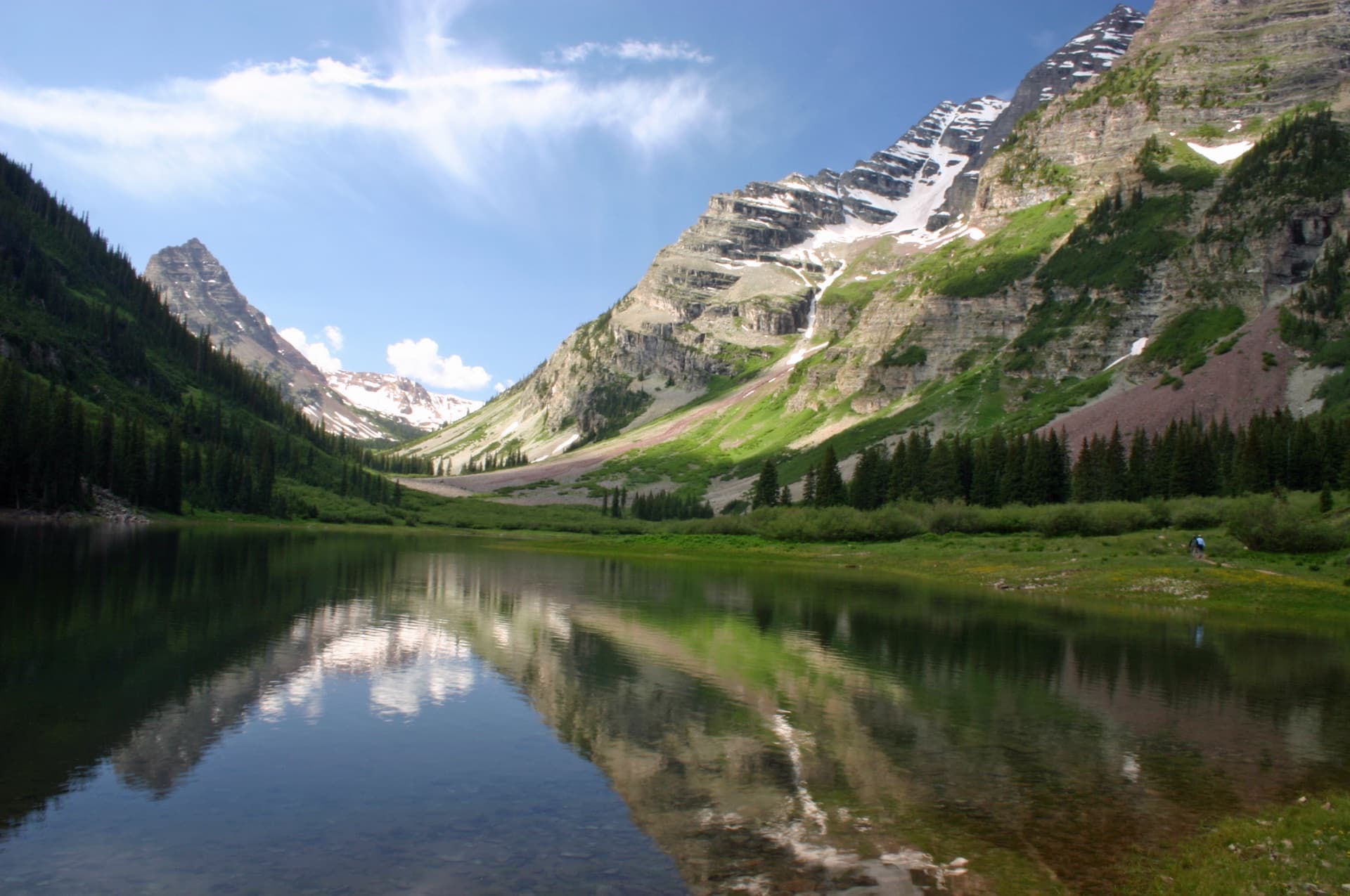
A big alpine lake with Snowmass Mountain and Hagerman Peak closing the far end, and a boulder field you cross to get around it. No fire ring anywhere, because the elevation rule bans them — so it is stoves and headlamps and an early night.
Snowmass Lake is not one of the assigned-campsite zones. In every zone except Conundrum Hot Springs, Crater Lake and Capitol Lake, USFS asks you to pick an established campsite inside the zone that is 70 big steps from trails and water. The permit reserves you a spot in the zone for the night, not a specific pad.
The "above 10,800" in the permit name is the campfire boundary and it is the rule that catches people out: campfires are prohibited above 10,800 feet, and USFS names Snowmass Lake explicitly when it says so. Bring a stove and plan for a cold evening.
Thirteen groups a night is the largest allocation in the wilderness, which makes this the most gettable of the famous zones — and it still goes.
What to Expect
Thirteen groups a night — the biggest quota in the wilderness, and still competitive
Choose-your-own established campsite rather than an assigned pad, 70 big steps from trails and water
No campfires at all, because the lake is above 10,800 feet
Overlap with Four Pass Loop parties, who use this zone as a standard night
No toilets anywhere
Get Snowmass Lake (above 10,800') Alerts
Be first to know when cancellations happen.
Permit Requirements
Eleven of the thirteen Snowmass Lake permits are for 1-4 people; two are for 5-10
Group size is limited to the maximum number of persons allowable at the campsite, with total group size limited to 10 if multiple campsites are reserved
This zone does not assign campsites — select an established site at least 70 big steps from trails and water
Campfires are prohibited above 10,800 feet, including Snowmass Lake
Permits are limited to two per person per calendar year, and two permits cannot overlap the same night
Maximum length of stay per permit is seven nights
Food, trash and any scented item must be stored in an IGBC-approved bear-resistant container. USFS states that visitors without one will be ticketed and required to leave
There are no toilets in the Maroon Bells-Snowmass Wilderness. WAG bags are highly recommended but not required and must be packed out; otherwise dig a cat hole six to eight inches deep at least 200 feet from water, camp and trails
Dogs must be on leash
Permits are only available through Recreation.gov — ranger stations will not issue them
The permit must be printed and carried with photo ID, and can be printed as early as 14 days before your date
Gear & Preparation
Required Gear
- •An IGBC-approved bear canister or Ursack — this is enforced, not encouraged
- •A stove. Campfires are banned at every designated site in this zone
- •A WAG bag or a trowel, because there are no toilets anywhere in this wilderness
- •A printed permit and photo ID
- •Water treatment
Recommended Gear
- •Trekking poles for the boulder field on the north shore
- •An extra insulating layer, since there is no fire at this elevation
- •A tarp for the afternoon storms
Hazards & Safety
Altitude. This is Colorado high country and the campsites sit well above most people's baseline
Afternoon thunderstorms, which arrive on schedule in July and August and have nowhere to hide from
Snow on the passes and at the campsites from early October to late June, with avalanche hazard and difficult route finding
Black bears — the reason USFS writes the canister rule as a ticketable offence
Trailheads that may be inaccessible to vehicles outside the July-to-September window
Best Time to Visit
July through September, the window USFS names. From early October to late June the campsites, trails and passes are snow-covered, avalanche hazard exists and route finding is difficult.
Pro Tips
Reserve a spot in the zone for every night of the trip — the permit is per zone per night, not per trip
Permits are capped at two per person per calendar year, so do not burn one on a date you are unsure about
Permits cannot be booked into a future release window: a trip that spans a month boundary has to wait for the later month to open
If you are starting from the Maroon Scenic Area you also need a separate parking or bus reservation — the confirmation email links to it, and parking spaces are limited
Once the permit is printed it cannot be changed or cancelled, so print it late
Only two of the thirteen Snowmass Lake permits are sized 5-10 people, so a big group has one narrow target
100+ wilderness permits, extensive backcountry experience
This guide is based on personal experience obtaining wilderness permits and is regularly updated to reflect current policies and strategies.
Frequently Asked Questions
How do I get a Snowmass Lake (above 10,800') permit?
+
Snowmass Lake (above 10,800') permits require advance reservations. Book online as soon as reservations open for your desired dates.
When is the best time to visit Snowmass Lake (above 10,800')?
+
July through September, the window USFS names. From early October to late June the campsites, trails and passes are snow-covered, avalanche hazard exists and route finding is difficult.
How difficult is the Snowmass Lake (above 10,800') route?
+
Backpackers who want the signature Elk Range lake camp and are willing to carry a stove instead of expecting a fire.
What gear do I need for the Snowmass Lake (above 10,800') route?
+
Essential gear includes: An IGBC-approved bear canister or Ursack — this is enforced, not encouraged, A stove. Campfires are banned at every designated site in this zone, A WAG bag or a trowel, because there are no toilets anywhere in this wilderness, A printed permit and photo ID, Water treatment.
Don't Miss Your Snowmass Lake (above 10,800') Permit
Cancellations happen every day. PermitSnag monitors Snowmass Lake (above 10,800') availability 24/7 and alerts you the moment a spot opens up.
Get Permit Alerts