White Rim Permit: Route
White Rim permits are booked by advance reservation in Canyonlands National Park. The route covers 100 miles.
Circle the Island in the Sky mesa on a 100-mile ledge road that traverses some of the most expansive canyon country on Earth.
This guide covers the White Rim Road permit.
3-4 days biking, 2-3 days 4WD
Duration
100 miles
Distance
7,500'
Elevation Gain
strenuous
Difficulty
About White Rim
White Rim Road is a 100-mile primitive loop that circles the Island in the Sky mesa in Canyonlands National Park, following a narrow bench of white sandstone suspended between two cliff systems. The route has become legendary among mountain bikers and 4WD enthusiasts as one of the premier multi-day routes in the American Southwest. The road passes through terrain that ranges from sandy washes to rocky technical sections, with major elevation changes at the Shafer and Mineral Bottom roads that access the rim. Primitive campsites are spaced along the route, each offering private access to some of the most expansive views in canyon country. Day use is capped at 50 vehicles and 50 bicycles a day, and only 25 of those vehicle permits can be booked online - the other 25 are issued in person. The overnight permit works differently: NPS publishes no daily cap for it, only per-campsite limits of 15 people and 3 vehicles.
White Rim Road offers a unique perspective on Canyonlands' geology—riding or driving the bench between two cliff systems that define the Island in the Sky district. It's the ultimate Colorado Plateau road trip.
The White Rim route
- Distance
- 100 miles
- Route type
- loop
- Elevation gain
- 7,500 ft
- High point
- 6,200 ft
- Low point
- 3,900 ft
- Trip length
- 3-4 days biking, 2-3 days 4WD
- Difficulty
- strenuous
Entry points: Shafer Trail Road, Mineral Bottom
Southeast Utah. Nearest town: Moab
Points along the route
- Shafer TrailMile 4.7, 5,321 ft
- Musselman ArchMile 10, 4,462 ft
- White Crack CampsiteMile 39, 5,214 ft
- Murphy HogbackMile 45, 5,285 ft
- Potato BottomMile 66, 3,932 ft
- Mineral BottomMile 79.3, 3,941 ft
White Rim permit detailsandAll Canyonlands National Park permits
The Experience
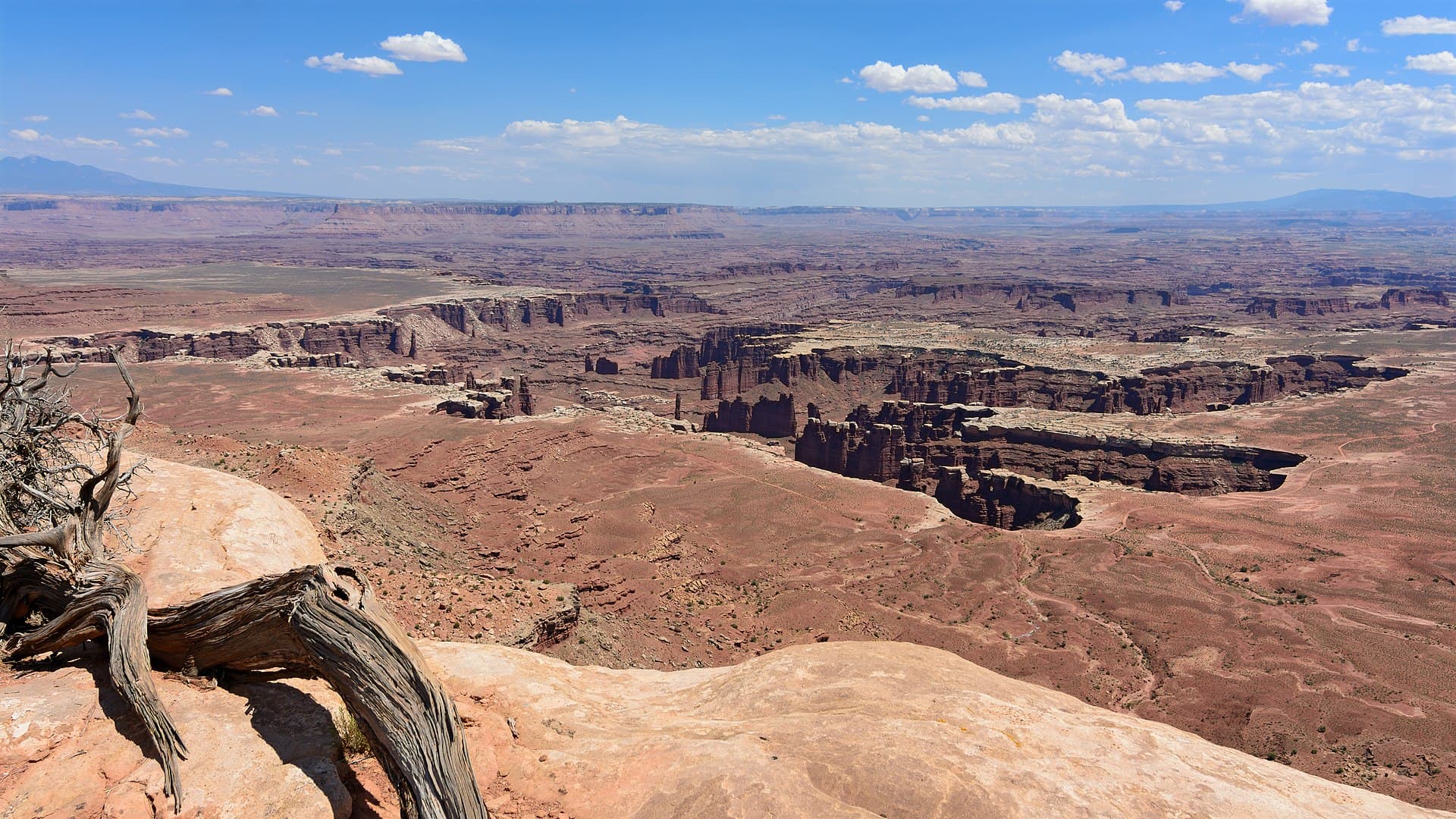
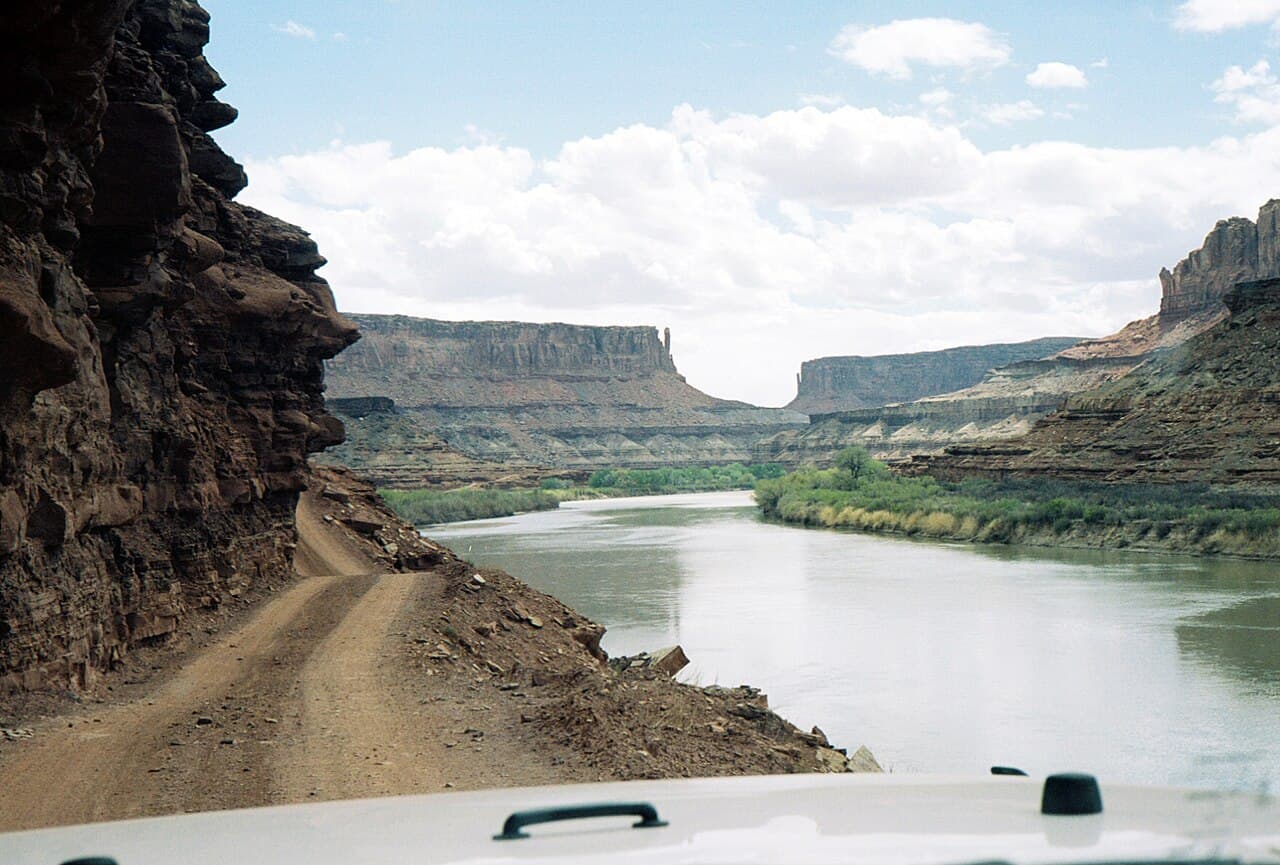
The road hugs a narrow ledge between towering red walls above and the churning Green and Colorado Rivers far below. You're suspended in space, the horizontal vastness broken only by distant buttes that look like monuments from another world. Each campsite offers private sunset shows over canyon country that extends to the horizon.
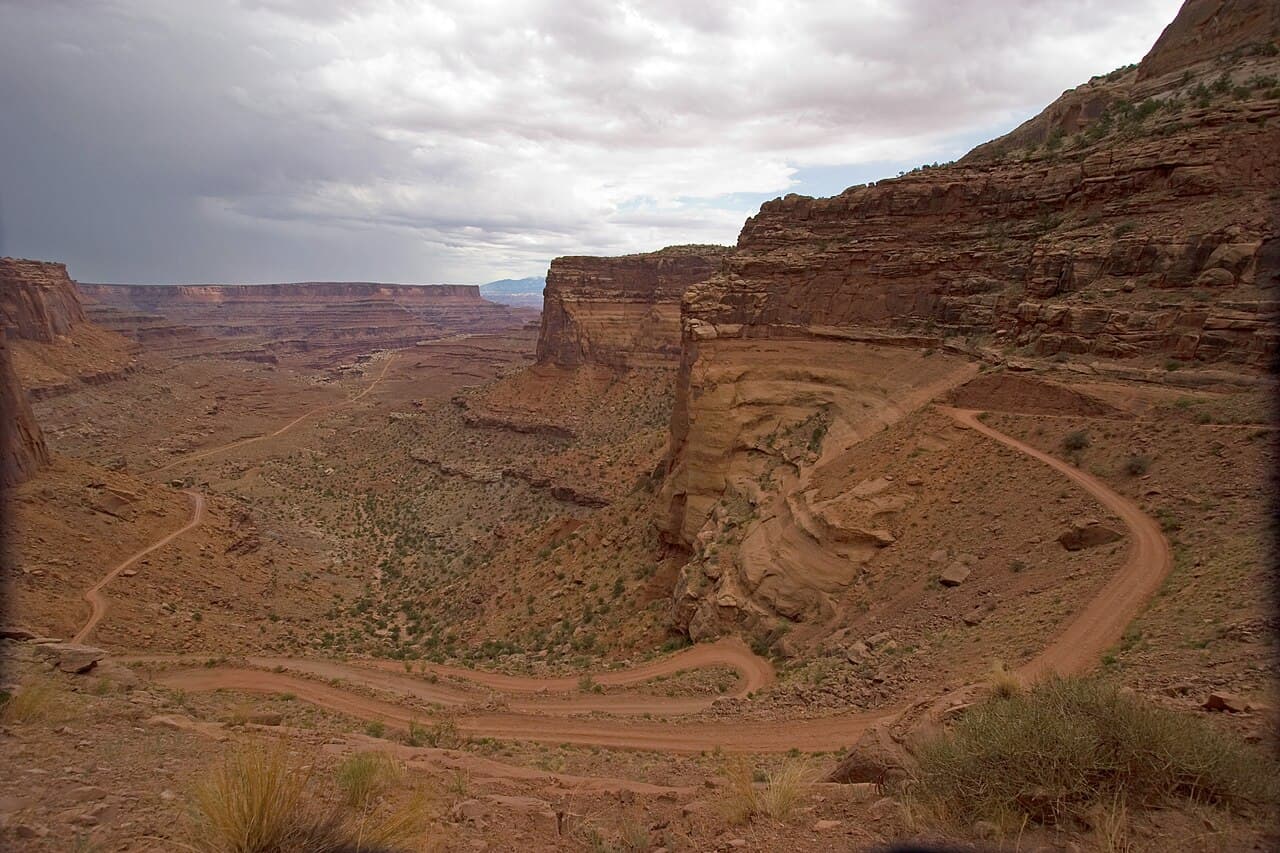
From Island in the Sky, Shafer Trail plunges 1,500 feet in a series of switchbacks to reach the White Rim. The route circles the mesa counterclockwise, passing Murphy Hogback's challenging climb, the uranium mining remnants of Potato Bottom, and countless canyon overlooks. The Green River provides a brief encounter with water before the route turns east toward the Colorado River confluence. The final ascent via Mineral Bottom (or back up Shafer) completes the circuit.
What to Expect
100 miles of primitive road with sand, rock, and technical sections
Dramatic elevation changes at entry/exit points (1,500+ feet)
No water anywhere on the route—must carry all water needed
Primitive campsites with pit toilets only
Extreme temperature variations between day and night
Vehicle support recommended for bikers (carry water, gear)
Get White Rim Alerts
Be first to know when cancellations happen.
Permit Requirements
Every vehicle, motorbike and bicycle needs a permit - a day-use permit for a single day, or an overnight permit, which covers the day use too
Overnight permits extremely competitive—reserve 4 months in advance
Maximum 3 vehicles and 15 people per campsite
E-bikes permitted on White Rim Road
ATVs, UTVs, and OHVs strictly prohibited
Pets prohibited on White Rim Road including inside vehicles
Campfires prohibited—camp stoves only
Use the pit toilets at the campsites, or carry a washable reusable toilet system
Gear & Preparation
Required Gear
- •Minimum 1 gallon (4L) water per person per day
- •High-clearance 4WD vehicle with low range (if driving)
- •Mountain bike with wide tires for sand (if biking)
- •Shade shelter—no natural shade at most camps
- •Full-size spare tire and repair kit
Recommended Gear
- •Support vehicle for bikers to carry water and gear
- •Tow straps and recovery gear
- •Satellite communicator (no cell service)
- •Extra fuel - there are no services on the road, and NPS warns a tow out of the backcountry runs over $1,000
- •Bike repair kit including extra tubes and chain links
Hazards & Safety
No water on entire 100-mile route—dehydration is serious risk
Extreme heat in summer - NPS says temperatures often exceed 100°F, making strenuous exercise difficult
Deep sand sections can trap unprepared vehicles
Technical rocky sections challenge both bikes and vehicles
Cliff edges with significant exposure
Flash flood potential in Shafer Canyon during storms
No cell service and limited rescue access
Best Time to Visit
Spring (March-May) and fall (September-November) offer ideal temperatures. Summer is brutally hot and not recommended. Winter is possible but cold nights and potential mud make conditions challenging.
Pro Tips
Book 4 months out
Spring and fall are best
Permits sell out in minutes
100+ wilderness permits, extensive backcountry experience
This guide is based on personal experience obtaining wilderness permits and is regularly updated to reflect current policies and strategies.
Frequently Asked Questions
How do I get a White Rim permit?
+
White Rim permits require advance reservations. Book online as soon as reservations open for your desired dates.
When is the best time to visit White Rim?
+
Spring (March-May) and fall (September-November) offer ideal temperatures. Summer is brutally hot and not recommended. Winter is possible but cold nights and potential mud make conditions challenging.
How long is the White Rim route?
+
The route is 100 miles, as a loop.
How difficult is the White Rim route?
+
Experienced mountain bikers or 4WD drivers comfortable with primitive conditions and multi-day self-support. Those who appreciate remote desert solitude.
Where does the White Rim route start?
+
The permit covers 2 entry points: Shafer Trail Road, Mineral Bottom.
What gear do I need for the White Rim route?
+
Essential gear includes: Minimum 1 gallon (4L) water per person per day, High-clearance 4WD vehicle with low range (if driving), Mountain bike with wide tires for sand (if biking), Shade shelter—no natural shade at most camps, Full-size spare tire and repair kit.
Don't Miss Your White Rim Permit
Cancellations happen every day. PermitSnag monitors White Rim availability 24/7 and alerts you the moment a spot opens up.
Get Permit Alerts