Reservation5/10
Great Smoky AT Thru-hiker permit
For through-hikers crossing the park....
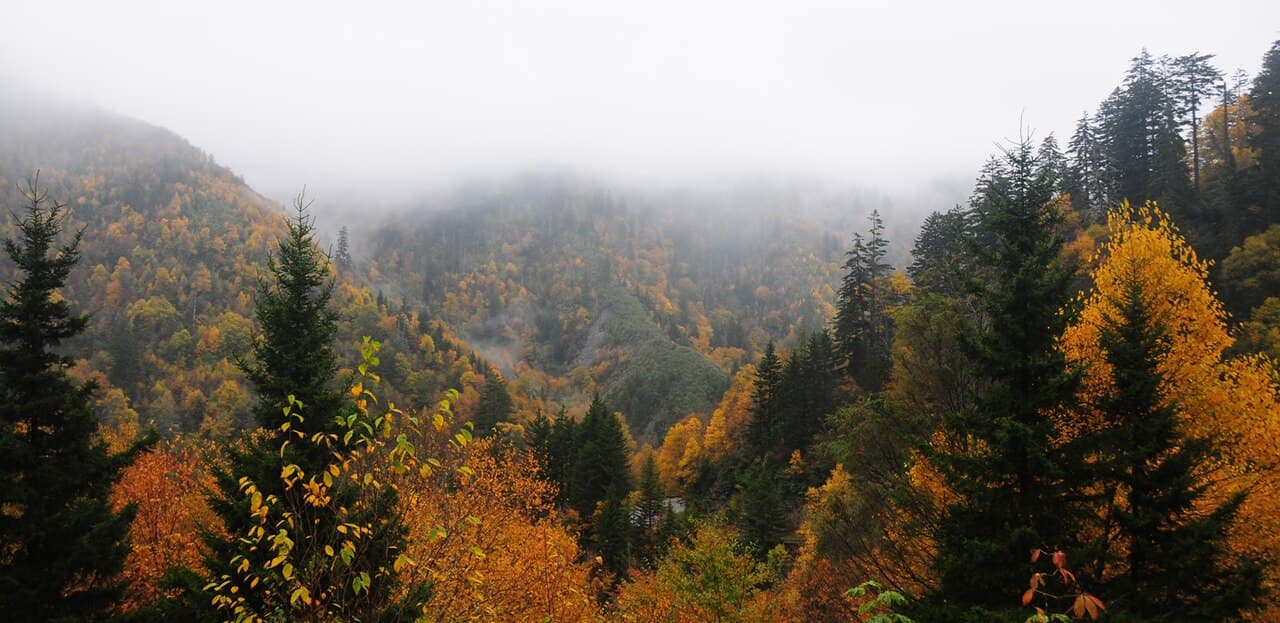
Great Smoky Mountains National Park · Tennessee
Required for all overnight camping.
70% of the openings our scanner caught on Smokies Backcountry were gone within 10 minutes.
Build your full itinerary start to finish
Add your dates and get a day-by-day plan: what needs a permit, what gear to bring, and one link to share with your whole group to coordinate every step.
No permit needed to start
April to June and September to November. Summer is hot, humid and busy in the low country; winter closes some access and ices the high trails. October is peak colour and peak demand together. Permits are available year-round.
Trailhead (5,000 ft)
Backcountry Tips
Today
73°
64°
63%
Sun
73°
62°
Mon
80°
64°
Tue
82°
60°
Wed
78°
60°
22%
Thu
77°
62°
Fri
74°
60°
28%
Sign up at Recreation.gov if you don't have an account. Have your payment info ready.
Permits typically release on a rolling basis. Check the specific release time for your desired dates.
Log in a few minutes early. Have your dates, group size, and payment ready to go.
If your dates are sold out, people cancel all the time. Set up PermitSnag alerts to catch openings instantly.
Fitness and endurance required
Climbing, scrambling, or specialized skills
Steep dropoffs and fall potential
Route finding and trail clarity
Difficulty of bailing out mid-route
Backpackers of most experience levels. The trail network is dense, maintained and well signed, and the sites are numbered.
Basic backpacking plus creek-crossing sense. The exposure rating covers wet rock and high-water fords rather than heights.
Anyone unwilling to hang food properly. Bear activity here is constant and the cable system is the whole defence.
Great Smoky Mountains National Park requires a permit and advance reservations for all backcountry camping. As of April 30, 2026 all new permits are issued through Recreation.gov - the park's own smokiespermits.nps.gov portal has retired and the domain no longer resolves, so any link you find pointing there is dead. The live product is Recreation.gov permit 4675347.
The camping fee is $8 per person per night, unchanged. What changed alongside the portal is a new $6 non-refundable permit fee and the removal of the previous $40 cap, so there is now no maximum total permit cost.
Permits may be obtained up to one month in advance of the first night of your trip, and the maximum on a single permit is seven nights. Camping is permitted only at designated backcountry campsites and shelters. You may not stay at any backcountry campsite for more than three consecutive nights, and you may not stay consecutive nights at any shelter or at campsite 113. Maximum party size is 8. All odorous items - the park's list includes food, trash, lip balm, toothpaste, stock feed and hay - must be hung on the bear cable system at each campsite or shelter.
Appalachian Trail thru-hikers use a different product entirely: a thru-hiker pass at $44.50, sold as Recreation.gov Activity Pass AP26095. That is a flat one-time pass rather than the $8-per-person-per-night plus $6 structure.
Separately from the permit, the park runs Park It Forward parking tags at $5 daily, $15 weekly and $40 annual, required for all vehicles parking for longer than 15 minutes. The park is explicit that the parking tag is not an entrance fee. It does not publish a backcountry-specific rule about trailhead parking, so we are not going to state one - what it publishes is the 15-minute rule applied to all vehicles.
Two current closures worth checking: Recreation.gov lists campsites 91 and 19 as closed due to broken bear cable systems, and the Bullhead Trail has been closed Monday through Thursday each week since May 4, 2026, excluding federal holidays, through November 19.
Great Smoky is the most visited national park in the country and its backcountry is the part almost nobody sees. The permit system changed in April 2026: the park's own smokiespermits.nps.gov portal retired and everything moved to Recreation.gov, so old links and old bookmarks are dead.
Camping is permitted only at designated backcountry campsites and shelters. Campsites allow up to three consecutive nights; shelters allow one, and if your itinerary includes a shelter you are required to sleep inside it. Campsite 113 shares the shelters' one-night rule.
A single permit can carry up to seven nights, and permits may be obtained up to one month in advance of the first night. Maximum party size is 8 throughout.
Rhododendron tunnels, creek crossings, and bear cables strung between trees at every site. The elevation range across the park is big enough that a two-day trip can start in oak forest and finish in spruce-fir.
Not a trailhead. This is the permit desk, and the only location Recreation.gov publishes coordinates for on this permit. Open daily 8 a.m. to 5 p.m. Eastern, 865-436-1297.
A parking tag is required to park anywhere in the park for longer than 15 minutes, including every trailhead. Tags are $5 daily, $15 weekly and $40 annual, are not location-specific, and NPS states that buying one does not guarantee you a spot. America the Beautiful passes are not accepted in place of a tag.
From I-40 take Exit 407 to TN-66 South, continue straight onto US-441 South at the Sevierville intersection, follow US-441 through Sevierville and Pigeon Forge into the park, then turn right onto Fighting Creek Gap Road at Sugarlands Visitor Center. The office is left of the visitor center main entrance.
The park does not publish per-trailhead starting elevations, water, restrooms or cell coverage for this permit, so nothing of that kind is listed here.
Required and recommended gear for Smokies Backcountry
Trailhead transportation options
Browse all shuttlesExperienced wilderness guides
Browse all guidesSome links may be affiliate links. Purchases support PermitSnag at no extra cost to you.
Singled out in the park's own rules: you may not stay consecutive nights here, the same restriction that applies to every shelter.
Campsites 17, 20, 46, 60, 86 and 90 can take groups up to 12. Recreation.gov says to call the Backcountry Office to arrange those.
Closed Monday through Thursday each week, excluding federal holidays, from May 4, 2026 for the Bullhead Rehabilitation Project. Recreation.gov gives an end date of September 19, 2026; the park's conditions page says through November 19.
Closed to all vehicle traffic every Wednesday from May 6 to September 30, 2026. Recreation.gov's note is blunt: backpackers should plan accordingly.
Yes. The park requires a permit and advance reservations for all backcountry camping. Since April 30, 2026 permits are issued through Recreation.gov - the old smokiespermits.nps.gov portal has retired and its domain no longer resolves.
$8 per person per night, plus a $6 non-refundable permit fee introduced with the move to Recreation.gov. The previous $40 cap has been removed, so there is no maximum total permit cost.
Up to one month in advance of the first night of your trip itinerary. The maximum on a single permit is seven nights.
Three consecutive nights at a backcountry campsite. Shelters and campsite 113 are the exceptions - you may not stay consecutive nights at either.
No - the park uses bear cables instead. All odorous items must be hung on the bear cable system at each campsite or shelter, and the park's list of what counts includes food, trash, lip balm, toothpaste, stock feed and hay. Note that a broken cable closes a site: campsites 91 and 19 are currently shut for exactly that.
They use a different product - an Appalachian Trail thru-hiker pass at $44.50, sold as Recreation.gov Activity Pass AP26095. It is a flat one-time pass rather than the $8 per person per night plus $6 structure that applies to other backcountry trips.
The park's Park It Forward rule is that parking tags are required for all vehicles parking for longer than 15 minutes, at $5 daily, $15 weekly or $40 annual, and it states that the parking tag is not an entrance fee. It publishes no backcountry-specific exemption or requirement, so plan on the general rule applying to a car left at a trailhead.
No active conditions reported
Sign in to report trail conditions.
No questions yet
Be the first to ask about Smokies Backcountry.
No trip reports yet
Be the first to share your experience at Smokies Backcountry.
Write the First ReportConsider these alternatives if your preferred dates aren't available.
The backcountry shelter on the park's third-highest peak, at 6,593 feet.
One night only, and you sleep inside the shelter rather than in a tent. Five trails reach it, from 10 to 16.2 miles round trip.
A ticketed day hike on Virginia's best-known rock scramble.
$2 a head and no overnight - but capped at 800 people a day and released in two batches, 30 days and 5 days ahead.
Designated high-country campsites in the Chisos Mountains of west Texas.
A desert range instead of a temperate rainforest, with no water at all in the high country and in-person permits only from April 16 to October 31.
Nearby campgrounds to complete your Smokies Backcountry trip
 Very HardIn Demand16 sites
Great Smoky Mountains National Park
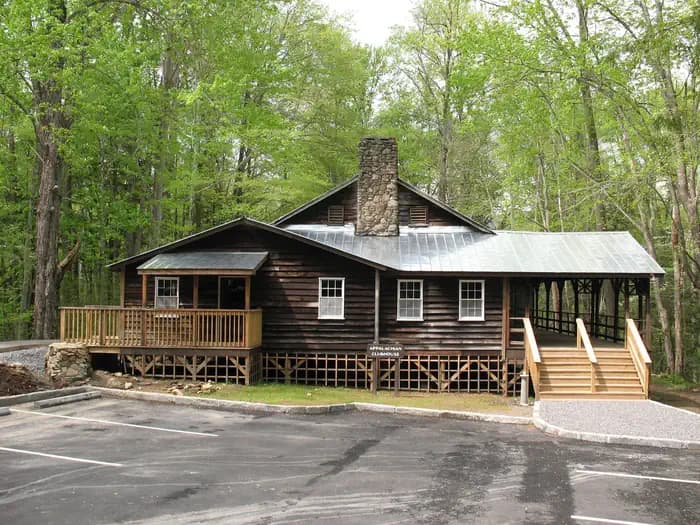 Very HardIn Demand1 sites
Great Smoky Mountains National Park
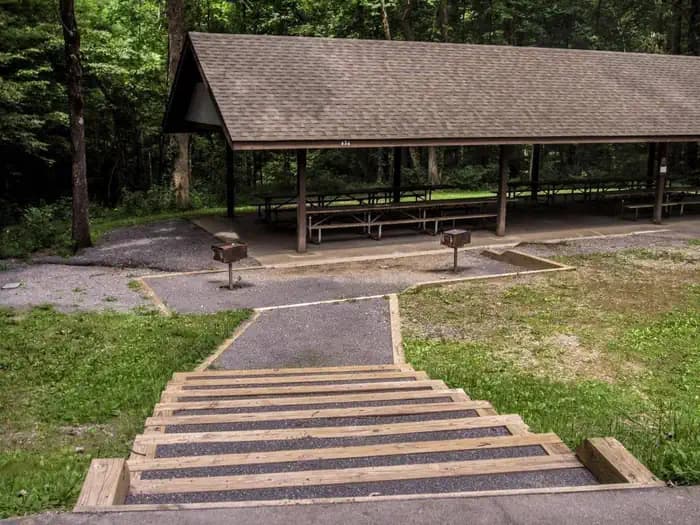 Very HardIn Demand2 sites
Great Smoky Mountains National Park
A small favor
Google lets you pick the sites it highlights for you. Add PermitSnag and our permit pages get marked as one of yours in AI Overviews and AI Mode.
Takes less than a minute.