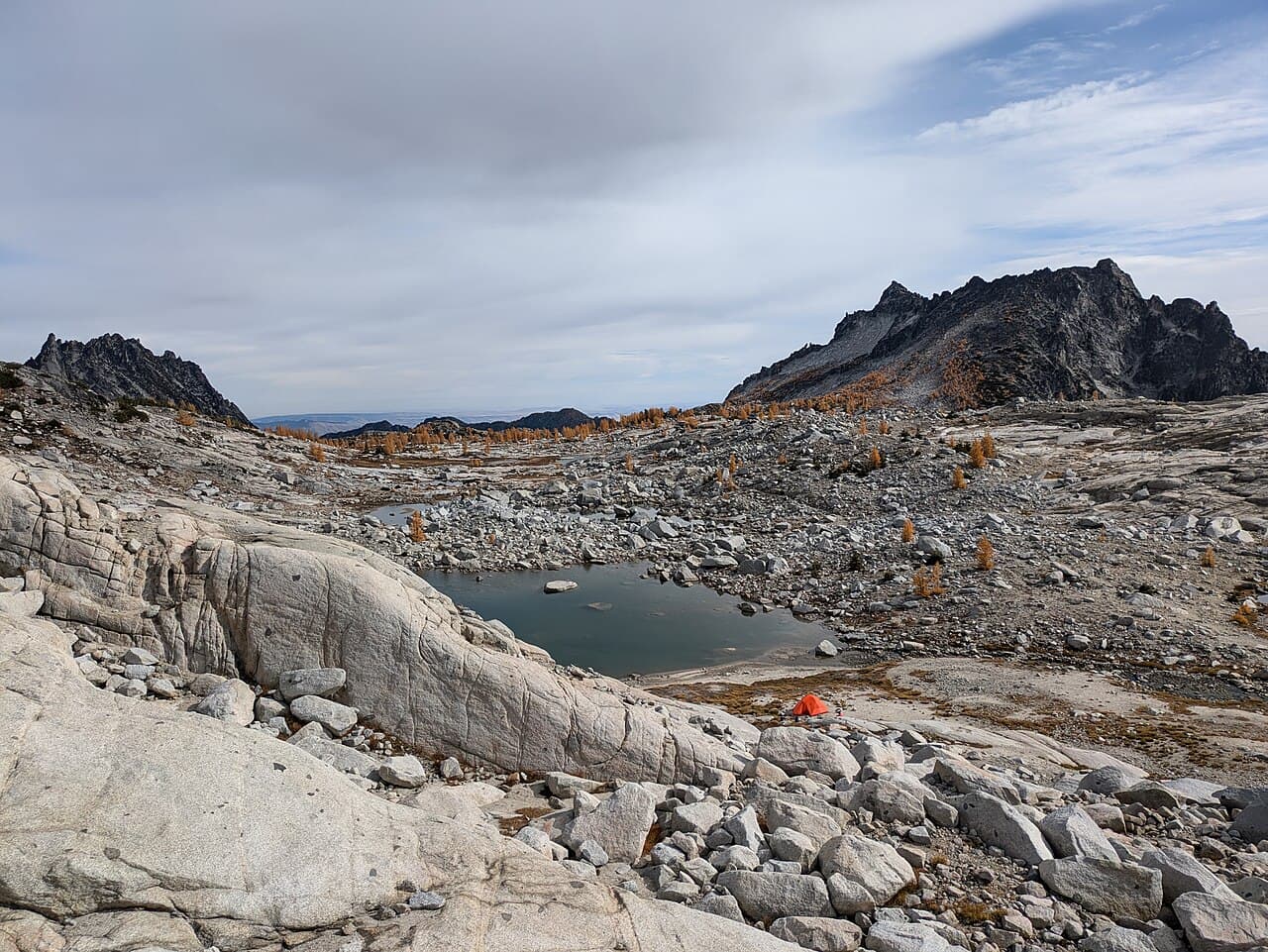
Colchuck: Permit, Quota, Dates and Route
Colchuck permits get cancelled and re-released through the season in The Enchantments, and they are drawn by lottery to begin with. The route covers 8.4 miles.
Three groups a day get to sleep at Colchuck Lake — the turquoise bowl under Dragontail Peak that everyone else has to walk out of before dark.
This guide covers the Colchuck Zone permit.
3
Groups Per Day
$6 non-refundable lottery application fee, then $5.00 per person per day May 15 - October 31 if you draw a permit
Permit Cost
2-3 days
Duration
8.4 miles
Distance
2,100'
Elevation Gain
About Colchuck
The Colchuck Zone is one of five overnight permit zones in the Enchantment Permit Area, inside the Alpine Lakes Wilderness. USFS allocates three groups per day to it — a separate allocation from the Core Zone, which is counted in people rather than groups. A group can be up to eight people, and the permit is good for up to 14 days in the zone named on it. USFS defines the zone as the entire Colchuck Lake Trail from its junction with the Stuart Lake Trail to a contour line mid-slope below Aasgard Pass at 6,500 feet. Camping immediately below Aasgard Pass is not allowed on this permit. You may camp in any established campsite at Colchuck Lake, and climbers may use established bivouac sites below Colchuck Col and elsewhere in the upper basin. Permits come three ways: the annual advance lottery that opens in February, straight reservation online if anything is left, and the daily lottery, which holds one permit from each zone and requires you to be inside the geofence on a location-enabled device to enter. A visitor may only obtain one permit per season.
Colchuck is the way into the Enchantments that does not require you to win the hardest permit in Washington. The Core Zone takes 24 people a day and is counted by the head; the Colchuck Zone gets its own separate allocation of three groups a night, and from a camp at the lake you can day hike the whole Core basin without carrying a pack over Aasgard Pass.
The Colchuck route
- Distance
- 8.4 miles
- Route type
- out-and-back
- Elevation gain
- 2,100 ft
- High point
- 5,500 ft
- Low point
- 3,399 ft
- Trip length
- 2-3 days
- Difficulty
- strenuous
Starts at Stuart Lake Trailhead
Alpine Lakes Wilderness, North Cascades. Nearest town: Leavenworth
Points along the route
- Stuart Lake TrailheadMile 0, 3,399 ft
- Colchuck LakeMile 4.2, 5,500 ft
- Aasgard Pass (6,500 ft contour)6,500 ft
The Experience
Colchuck Lake is the colour of antifreeze and sits directly under a thousand feet of granite. Dragontail and Colchuck Peak close off the far end, the Colchuck Glacier hangs between them, and the whole basin goes into shadow early because of it. Day hikers stream out around five and the lake goes quiet.
From the Stuart Lake Trailhead the trail climbs through forest along Mountaineer Creek and splits at the Colchuck junction. USFS puts the trail to Colchuck Lake at 4.2 miles, gaining 2,100 feet.
The zone boundary matters more here than at any other Enchantments permit. USFS defines the Colchuck Zone as the entire Colchuck Lake Trail from its junction with the Stuart Lake Trail up to a contour line mid-slope below Aasgard Pass, at 6,500 feet — and camping immediately below Aasgard Pass on a Colchuck permit is not allowed. Camp in an established site at the lake, or at a bivouac site below Colchuck Col.
Day use across all five zones is open to anyone with the free self-issued trailhead permit, so the Core Zone is a legal day hike from your Colchuck camp. That is what makes this permit the value play: same country, a third of the lottery pressure, and no full pack on Aasgard.
What to Expect
Three groups a night in the whole zone, so the lake is genuinely quiet once the day hikers leave
Heavy day-use traffic during the day — USFS notes Colchuck Lake is extremely popular with day users
Established campsites only; no improving sites by moving rocks or building walls
A free Overnight Visitor Parking Pass included with the permit, which has to be displayed on the dashboard
Steep, rocky, primitive trail — USFS describes the whole permit area that way
Get Colchuck Alerts
Be first to know when cancellations happen.
Permit Requirements
Maximum group size is eight people, including stock
Dogs are prohibited throughout the Enchantment Permit Area
No campfires above 5,000 feet or within half a mile of any lake
Camping immediately below Aasgard Pass is not allowed on a Colchuck permit — the zone stops at the 6,500-foot contour
The permit must be printed and signed; an unsigned permit on a cell phone is not valid
All group members must begin on the reserved trip start date and camp with the permit holder
One permit per person per season, including serving as an alternate group leader
Day use across all five zones needs a free self-issued permit from any of the three trailheads, plus a Northwest Forest Pass for parking
Gear & Preparation
Required Gear
- •A printed and signed permit — USFS is explicit that an unsigned permit on a phone is not valid
- •Water filter for the lakes
- •A stove: no campfires above 5,000 feet or within half a mile of any lake
- •Rain gear and warm layers; May, June, September and October are shoulder seasons where winter conditions are normal
- •Sturdy boots for primitive, steep, rocky trail
Recommended Gear
- •Trekking poles for the descent
- •Microspikes early in the season — snow lingers in the basin well past the May 15 season start
- •A day pack so you can leave camp and hike the Core Zone unloaded
Hazards & Safety
Aasgard Pass: USFS says it is not advised for hikers not prepared and equipped for steep snow travel, and that hikers have died glissading and falling into a creek or a hole in the snowpack
Snow into the summer in the upper basin
Sudden weather — May, June, September and October are shoulder seasons with winter-like conditions
Mountain goats around camps
Best Time to Visit
The overnight season runs May 15 to October 31. Late July through September is snow-free most years. Larch colour lands in late September and early October and is the single most competitive stretch of the calendar, with genuinely cold nights and short days to go with it.
Pro Tips
Apply for every zone. Colchuck has its own three-groups-a-day allocation and does not compete with the Core Zone
One permit from every zone is held back for the daily lottery, which needs you inside the geofence on a location-enabled device
A Colchuck permit lets you day hike the Core Zone — you just cannot camp there
You may only obtain one Enchantments permit per season, and being someone else's alternate group leader uses it up
Print and sign the permit. USFS does not accept an unsigned permit on a phone
100+ wilderness permits, extensive backcountry experience
This guide is based on personal experience obtaining wilderness permits and is regularly updated to reflect current policies and strategies.
Frequently Asked Questions
How do I get a Colchuck permit?
+
Two ways. Cancelled Colchuck permits return to the booking system through the season, and PermitSnag alerts you the moment one opens. The other way is the lottery, so apply during the application window as well.
When is the best time to visit Colchuck?
+
The overnight season runs May 15 to October 31. Late July through September is snow-free most years. Larch colour lands in late September and early October and is the single most competitive stretch of the calendar, with genuinely cold nights and short days to go with it.
How long is the Colchuck route?
+
The route is 8.4 miles, as an out-and-back. Plan on 2-3 days.
How difficult is the Colchuck route?
+
Backpackers who want the Enchantments without committing to Aasgard Pass under a full pack.
Where does the Colchuck route start?
+
Stuart Lake Trailhead.
What if I don't win the Colchuck lottery?
+
Cancelled permits return to the booking system through the season. PermitSnag watches Colchuck and alerts you when one opens, so a lost draw is not the end of the trip.
Don't Miss Your Colchuck Permit
Cancellations happen every day. PermitSnag monitors Colchuck availability 24/7 and alerts you the moment a spot opens up.
Get Permit Alerts