Collegiate Loop Permit: Route and Dates
Collegiate Loop permits are walk-up only in Colorado Trail. The route covers 160 miles.
A 160-mile circuit around the Collegiate Peaks that needs no permit at all - and where the real gate is snow, fire restrictions and a season the trail's own foundation calls short.
This guide covers the Collegiate Loop permit.
No permit fee - no permit is required. A Colorado State Wildlife Area pass may be required for the first half-mile of Segment 12 on the Collegiate East, depending on your trip plan.
Permit Cost
10-14 days
Duration
160 miles
Distance
strenuous
Difficulty
About Collegiate Loop
No permit is required to walk the Collegiate Loop. The Pike-San Isabel National Forests publish which of their wilderness areas need a self-issued trailhead permit - Holy Cross, Lost Creek and Mount Evans - and Collegiate Peaks is not among them, so there is no registration station to fill in on this route. The Colorado Trail Foundation states there is no permit required to travel the CT, though note its FAQ also carries a blanket line about self-issuing at wilderness areas that does not apply to this particular wilderness. The one piece of paperwork it does flag is a Colorado State Wildlife Area pass, which may be required to travel through the first half-mile of Segment 12 on the Collegiate East depending on your trip plan. Commercial and nonprofit groups are a separate case: they are required to obtain a special use permit through the local ranger district in advance. The loop is 160 miles as a circuit. Collegiate West is 84.8 miles with 19,800 feet of gain across five segments; Collegiate East is 78.3 miles with 17,800 feet across parts or all of Segments 11 to 15. The Foundation publishes no loop high point and no combined gain figure. The season is short. The Foundation's guidance is that the CT season is primarily July and August, that thru-travellers should begin no earlier than late June because high elevations and north-facing, treed slopes retain troublesome snowpack into July, and that you should finish no later than late September before snow becomes plentiful. Winter snow remains into late June with snowfields lingering into July, and it advises against travelling higher portions - generally above 10,000 feet - until late June. Group size is capped by forest order. The Collegiate Peaks Wilderness occupancy and use order prohibits entering the area with more than 15 people per group, or a maximum combination of 25 people and pack or saddle animals in any one group. The same order requires dogs to be under physical restraint of a leash except working stock dogs or dogs used for legal hunting; prohibits camping within 100 feet of lakes, streams and National Forest System trails; prohibits campfires within 100 feet of any lake, stream or trail or above 11,000 feet in elevation; requires stock to be hitched at least 100 feet from water and trails; prohibits shortcutting switchbacks; requires weed-free forage; and prohibits storing equipment, personal property or supplies for longer than 72 hours. The order runs to December 31, 2027. Fire restrictions are the live variable and we cannot give you today's answer. As of a late-July 2026 reading, the Pike-San Isabel National Forests had Stage 2 Fire Restrictions in effect covering the Salida and Leadville Ranger Districts among others, beginning June 30, 2026, with fire danger at both listed as Very High; the Grand Mesa, Uncompahgre and Gunnison National Forests began Stage 2 on July 1, 2026. Between them those two forests cover the whole loop, and under Stage 2 campfires are banned outright - which supersedes the wilderness order's 11,000-foot rule. Because fs.usda.gov blocks automated requests, that is the most recent verifiable state rather than the current one. Check both forests before you go. Two Leadville Ranger District closures were also active at that reading and sit on or beside the loop's northern end: a Willow Fire Area Closure starting July 22, 2026, and an Interlaken Hotel and Annex Area closure starting June 22, 2026, at Twin Lakes. Their exact boundaries could not be verified. The Colorado Trail Foundation's own detours and closures page could not be read at all - its site blocks automated access and no 2026 archive exists - so treat any claim about what is currently open on the CT, including ours, as needing confirmation from the Foundation directly. Resupply is straightforward: the Foundation names Twin Lakes Village, Buena Vista, Mount Princeton Hot Springs, Monarch Pass and Salida as good resupply points on or near the loop.
The Collegiate Loop joins the Colorado Trail's two Collegiate routes into a self-contained circuit: 84.8 miles of Collegiate West with 19,800 feet of gain, and 78.3 miles of Collegiate East with 17,800. The northernmost point is Twin Lakes Reservoir southwest of Leadville and the southernmost is south of Monarch Pass. The entire Collegiate West is co-located with the Continental Divide National Scenic Trail.
The Collegiate Loop
- Distance
- 160 miles
- Route type
- loop
- Trip length
- 10-14 days
- Difficulty
- strenuous
Entry points: Avalanche Trailhead (Colorado Trail #1776), Colorado Trail #1776 (North Cottonwood), North Cottonwood Trail, Denny Creek Trail, Colorado Trail #1776 / Clear Creek Trail
Sawatch Range. Nearest town: Buena Vista, CO
The Experience
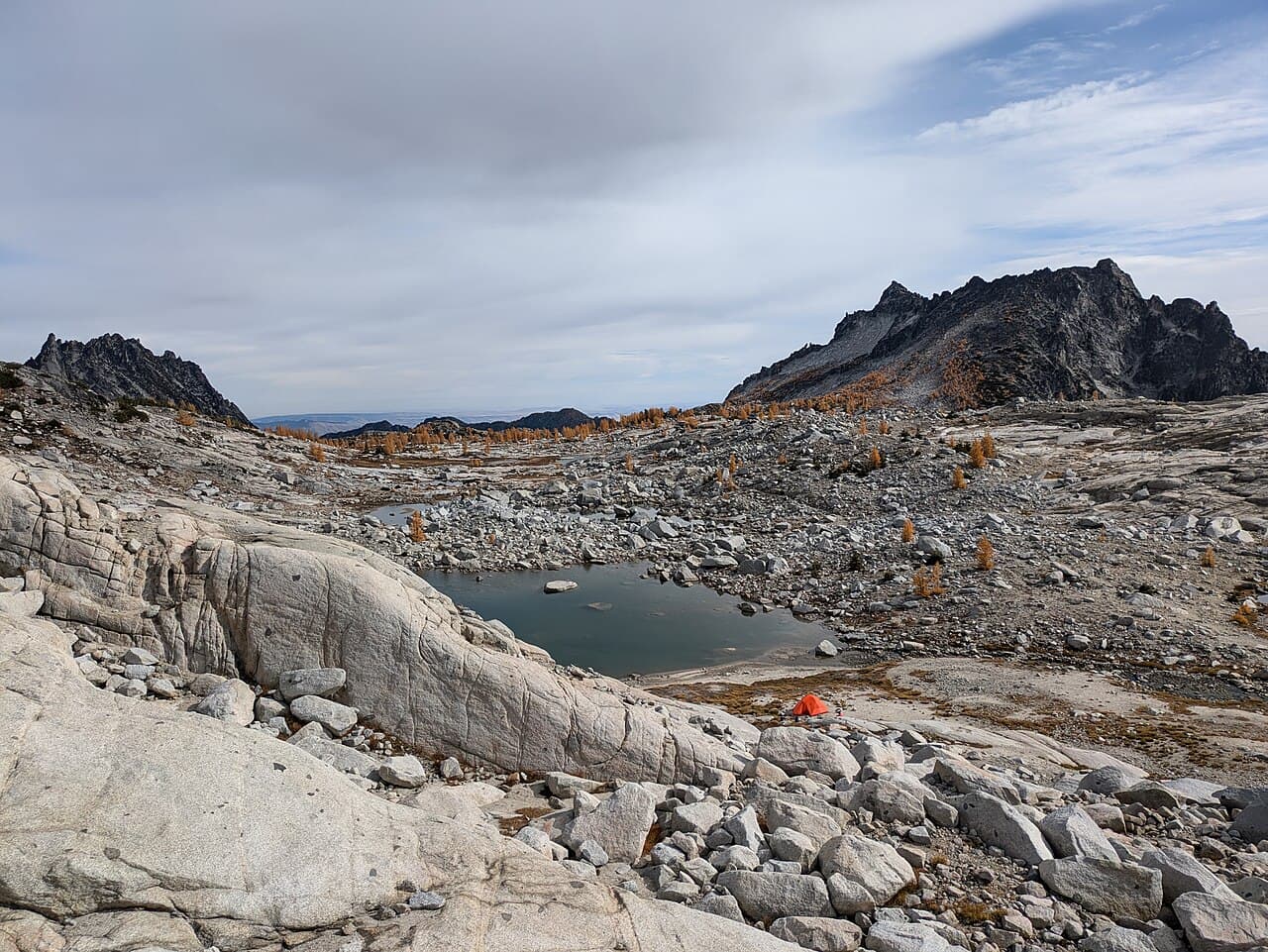
High and open on the west side - Hope Pass, Lake Ann Pass, the Alpine Tunnel - and quieter, lower, more forested on the east. Two weeks of walking that never leaves the Sawatch.
The Colorado Trail Foundation publishes both halves segment by segment. Collegiate West: CW01 Twin Lakes to Sheep Gulch, 9.9 miles; CW02 to Cottonwood Pass, 25.9; CW03 to Tincup Pass Road, 16.1; CW04 to Boss Lake Trailhead, 16.9; CW05 to the ridge above South Fooses Creek, 16.0. Total 84.8 miles and 19,800 feet of gain. Collegiate East: part of Segment 11 from Twin Lakes to Clear Creek Road, 7.8 miles; Segment 12 to Silver Creek Trailhead, 18.7; Segment 13 to Chalk Creek Trailhead, 22.4; Segment 14 to US Highway 50, 20.8; part of Segment 15 to South Junction, 8.6. Total 78.3 miles and 17,800 feet of gain.
The Foundation does not publish a high point for the loop, and we are not going to borrow one - the widely quoted 13,271 feet just below Coney Summit belongs to Segment 22 in the San Juans, which is nowhere near this loop. Nor does it publish a combined elevation gain for the circuit; the two route figures above are what exist.
Bikes are restricted: parts of both routes are closed to bike traffic including where the trail passes through the Collegiate Peaks Wilderness, and only CW01, CW04 and CW05 are open to bikes.
What to Expect
No permit required - the Collegiate Peaks Wilderness has no self-issue registration
160 miles as a circuit: 84.8 west with 19,800 feet of gain, 78.3 east with 17,800
A season the Foundation calls short - primarily July and August
A 15-person group limit by forest order, or 25 people and animals combined
Campfires banned within 100 feet of water or trail and above 11,000 feet - and banned outright under Stage 2
Resupply at Twin Lakes Village, Buena Vista, Mount Princeton Hot Springs, Monarch Pass and Salida
The entire Collegiate West co-located with the Continental Divide National Scenic Trail
Get Collegiate Loop Alerts
Be first to know when cancellations happen.
Permit Requirements
No permit is required to travel the Colorado Trail, and Collegiate Peaks is not one of the three PSICC wilderness areas requiring a self-issued trailhead permit
Commercial and nonprofit groups are required to obtain a special use permit through the local ranger district in advance
Group size in the Collegiate Peaks Wilderness may not exceed 15 people, or a maximum combination of 25 people and pack or saddle animals
Dogs must be under physical restraint of a leash, except working stock dogs or dogs used for legal hunting
No camping within 100 feet of lakes, streams and National Forest System trails
No campfire within 100 feet of any lake, stream or trail, or above 11,000 feet in elevation
Stock must be hitched or tethered at least 100 feet from water and trails; weed-free forage only
Shortcutting a switchback is prohibited
Equipment, personal property or supplies may not be stored for longer than 72 hours
A Colorado State Wildlife Area pass may be required for the first half-mile of Segment 12 on the Collegiate East
Gear & Preparation
Required Gear
- •A stove you can rely on. Under Stage 2 restrictions campfires are banned outright and only stoves are left
- •A leash, if you bring a dog - it is required by forest order in the Collegiate Peaks Wilderness
- •Layers for repeated crossings above 12,000 feet
- •Water treatment
- •Weather protection for exposed high passes with daily afternoon storms
Recommended Gear
- •Traction for lingering snowfields into July
- •Trekking poles for 19,800 feet of gain on the west route alone
- •A resupply plan around Buena Vista and Salida
- •A way to check fire restrictions on the road - they change mid-season
Hazards & Safety
Afternoon thunderstorms on high passes, repeatedly, over two weeks
Snow lingering above 10,000 feet into July, which the Foundation warns about explicitly
Fire restrictions - Stage 2 was in effect on both governing forests as of late July 2026, banning campfires outright
Two Leadville Ranger District closures near Twin Lakes, whose boundaries we could not verify
Altitude across almost the entire route
Best Time to Visit
July and August, which the Colorado Trail Foundation calls the CT season outright. It recommends beginning no earlier than late June because high elevations and north-facing, treed slopes retain troublesome snowpack into July, and finishing no later than late September before snow becomes plentiful.
Pro Tips
There is no permit to plan around, so plan around snow and fire instead. Late June is the earliest sensible start and late September the latest sensible finish.
Check both the Pike-San Isabel and the GMUG for fire stage before you leave. Stage 2 was in effect on both as of late July 2026 and it bans campfires entirely.
Confirm current closures with the Colorado Trail Foundation directly. Its detours page blocks automated access, and two Leadville district closures were active near Twin Lakes in July 2026.
Fifteen is the hard group cap in the Collegiate Peaks Wilderness - and 25 if you count pack animals in the total.
Collegiate West carries more gain, 19,800 feet against 17,800, in fewer miles. If you want the easier half first, walk the loop east-side-out.
100+ wilderness permits, extensive backcountry experience
This guide is based on personal experience obtaining wilderness permits and is regularly updated to reflect current policies and strategies.
Frequently Asked Questions
Do I need a permit for Collegiate Loop?
+
Yes, a permit is required. Walk-up permits are available at the trailhead or visitor center, but arrive early as they may be limited.
When is the best time to visit Collegiate Loop?
+
July and August, which the Colorado Trail Foundation calls the CT season outright. It recommends beginning no earlier than late June because high elevations and north-facing, treed slopes retain troublesome snowpack into July, and finishing no later than late September before snow becomes plentiful.
How long is the Collegiate Loop route?
+
The route is 160 miles, as a loop. Plan on 10-14 days.
How difficult is the Collegiate Loop route?
+
Fit thru-hikers with altitude experience. 160 miles and more than 37,000 feet of combined gain across two routes, mostly above 10,000 feet.
Where does the Collegiate Loop route start?
+
The permit covers 5 entry points: Avalanche Trailhead (Colorado Trail #1776), Colorado Trail #1776 (North Cottonwood), North Cottonwood Trail.
What gear do I need for the Collegiate Loop route?
+
Essential gear includes: A stove you can rely on. Under Stage 2 restrictions campfires are banned outright and only stoves are left, A leash, if you bring a dog - it is required by forest order in the Collegiate Peaks Wilderness, Layers for repeated crossings above 12,000 feet, Water treatment, Weather protection for exposed high passes with daily afternoon storms.
Don't Miss Your Collegiate Loop Permit
Cancellations happen every day. PermitSnag monitors Collegiate Loop availability 24/7 and alerts you the moment a spot opens up.
Get Permit Alerts