Compare
Mount Adams Climbing Pass permit
Both are first-come climbing permits on a Cascade volcano, one in the St. Helens monument and one in Gifford Pinchot National Forest.
Mount St. Helens National Volcanic Monument · Washington
Daily quota permits for climbing Mount St. Helens. Permits release monthly on the 1st at 7:00 AM PT for the following month.
70% of the openings our scanner caught on St. Helens were gone within 5 minutes.
Build your full itinerary start to finish
Add your dates and get a day-by-day plan: what needs a permit, what gear to bring, and one link to share with your whole group to coordinate every step.
No permit needed to start
Mount St. Helens needs a climbing permit every day of the year. How you get one depends on the date you climb, and the split does not move from season to season.
Source: USDA Forest Service, Gifford Pinchot National Forest (Mount St. Helens National Volcanic Monument). Read the official permit page.
“During the limited use season, permits will be available for advance purchase only, online, first come, first served, until the daily use limit is reached.”
Checked against the agency page on August 20, 2026.
The quota splits the year for you. April 1 to May 14 allows 350 climbers a day and is usually a snow climb — more permits, more equipment. From May 15 the cap drops to 110 a day and demand concentrates into summer weekends. Late spring gives you snow to descend instead of ash, which many climbers prefer. December through March needs no permit at all and is a serious winter objective.
St. Helens
Trailhead (5,000 ft)
Backcountry Tips
Today
29°
26°
100%
Mon
37°
26°
Tue
47°
24°
Wed
57°
29°
Thu
60°
36°
Fri
61°
37°
Sat
56°
35°
Sign up at Recreation.gov if you don't have an account. Have your payment info ready.
Permits typically release on a rolling basis. Check the specific release time for your desired dates.
Log in a few minutes early. Have your dates, group size, and payment ready to go.
If your dates are sold out, people cancel all the time. Set up PermitSnag alerts to catch openings instantly.
Snow route. The quota is 350 climbers per day from April 1 to May 14, dropping to 110 on May 15.
Fitness and endurance required
Climbing, scrambling, or specialized skills
Steep dropoffs and fall potential
Route finding and trail clarity
Difficulty of bailing out mid-route
Fit hikers comfortable scrambling on steep, rugged, loose terrain. USFS calls this a popular climb for beginner and experienced mountaineers alike.
None technical. In April and early May, comfort on steep snow with an axe is the real prerequisite.
Anyone counting on a cell phone as a safety plan, or bringing a dog — USFS strongly discourages pets because volcanic rock, ash and snow shred paws.
A climbing permit is required year round to climb Mount St. Helens, but the quota only applies from April 1 to October 31. In that window USFS caps the mountain at 350 climbers per day from April 1 to May 14, and 110 climbers per day from May 15 onward. Group size is limited to 12 individuals.
Permits are released in one-month blocks on the first day of the preceding month at 7:00 a.m. Pacific — April permits go on sale March 1. The recreation fee is $20 per climber per day, raised from a lower figure for the 2024 season, plus a non-refundable $6 reservation fee per transaction. A permit holder can hold a maximum of five permits at a time and is restricted to one permit per day.
From December 1 to March 31 there is no cap on the number of climbers, and permits are free and self-issued at the trailheads. That is the same mountain, the same closure area and the same rules — just no reservation and no fee, in exchange for full winter conditions.
Before May 18, 1980, Mount St. Helens stood 9,677 feet and was the fifth-highest peak in Washington — the conical snow-covered mountain people called the Mount Fuji of America. The eruption removed an estimated 3.4 billion cubic yards of the cone, about 1,300 feet of height, and left a horseshoe-shaped crater open to the north. The southwestern rim, at 8,365 feet, is what you climb to now. USFS calls it the most active volcano in the Cascade Range, present tense.
USFS describes the climb as strenuous but non-technical, suitable for people in good physical condition who are comfortable scrambling on steep rugged terrain. There are two trailheads and they split by season: Climber's Bivouac is the summer route, and Marble Mountain Sno-Park is the winter route.
The permit is valid from 12:01 a.m. to 11:59 p.m. on the date printed on it, and it does not authorize entry into the crater — the crater is closed to all entry. Within that constraint, individuals may choose their preferred route to the summit.
Overnight use inside the closure area requires two permits for two consecutive days. That is the only way to legally sleep up there.
The route starts in forest, breaks out into boulder fields, and then turns into ash and pumice that gives back half of every step. And then it stops, abruptly, at an edge — with the crater and the dome below you and Rainier, Adams and Hood arranged around the horizon.
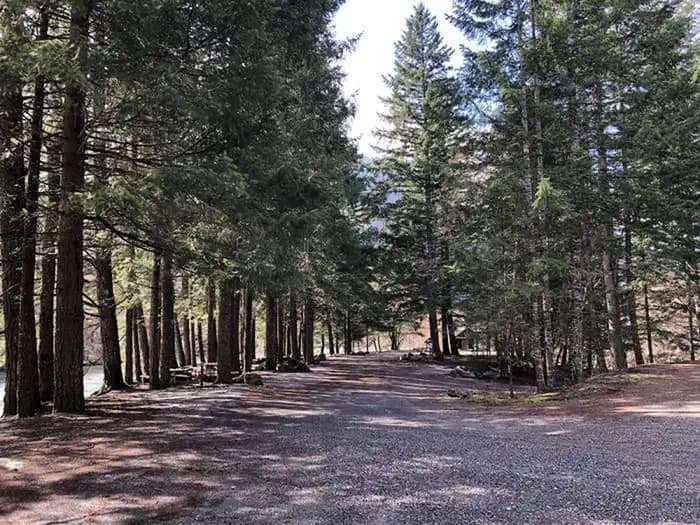
The summer route trailhead, reached from state route 503 via Forest Roads 90, 83 and 81.
A valid Federal Recreation Pass is required. A parking pass is provided as part of the permit to use in lieu of one.
From I-5, east on SR 503 towards Cougar for 30 miles; continue straight on FR 90 at the Skamania County line; left on FR 83; left on FR 81; right onto the Climber's Bivouac road for 2 miles.
Cougar, Washington.
The winter route trailhead.
A Washington State Sno-park pass is required December 1 through March 30, available online or from local vendors.
From I-5, east on SR 503 towards Cougar for 30 miles; continue straight on FR 90; left on FR 83; continue straight 6 miles; left at signs for Marble Mountain Sno-park.
Cougar, Washington.
Required and recommended gear for St. Helens
Trailhead transportation options
Browse all shuttlesExperienced wilderness guides
Browse all guidesSome links may be affiliate links. Purchases support PermitSnag at no extra cost to you.
The summer route trailhead. A valid Federal Recreation Pass is required to park; a parking pass is provided as part of the permit.
The winter route trailhead. A Washington State Sno-park pass is required December 1 through March 30.
The summit you are permitted to reach. USFS: the highest part of the crater rim, on the southwestern side, at 8,365 feet.
Find authorized guide services and mountaineering schools for this peak.
Authorized guide services:
Don't own technical gear? Find rental shops near the trailhead.
Required gear you can rent:
Real-time route status, snow levels, and climbing conditions.
Current conditions include:
Check avalanche conditions before winter and spring climbs.
Avalanche info includes:
USFS caps the mountain at 350 climbers per day from April 1 to May 14, and 110 climbers per day from May 15 to November 30. Group size is limited to 12 individuals. From December 1 to March 31 there is no limit on the number of climbers per day.
$20 per climber per day during the quota season, which runs April 1 to October 31, plus a non-refundable $6 reservation fee for every transaction. The fee rose to $20 starting with the 2024 climbing season. Outside the quota season permits are free of charge and self-issued at the trailhead.
In one-month increments, on the first day of the preceding month, at 7:00 a.m. Pacific. April permits are released on March 1, May permits on April 1, and so on. A permit holder may reserve a maximum of five permits at one time and is restricted to one permit per day.
Yes — a valid permit is required year round. But from December 1 to March 31 there is no quota, permits are free of charge, and they are self-issued at the trailheads. You still need a Washington State Sno-park pass at Marble Mountain Sno-Park from December 1 to March 30.
No. Entry into the crater is strictly prohibited and the crater is closed to all entry. The permit authorizes you to be in the closure area and to reach the rim; USFS notes that within that, individuals may choose their preferred route to the summit.
8,365 feet. Before the May 18, 1980 eruption the summit stood at 9,677 feet and was the fifth-highest peak in Washington. USFS estimates the eruption removed 3.4 billion cubic yards of the cone — about 1,300 feet of height — leaving a horseshoe-shaped crater open to the north, with the highest part of the rim on the southwestern side.
No active conditions reported
Sign in to report trail conditions.
No questions yet
Be the first to ask about St. Helens.
Sunrise from the rim. Most parties start in the dark for exactly this reason.
Clear mornings before the valley haze builds — Rainier, Adams and Hood all read from the rim.
The quota drops to 110 a day on May 15 and midweek dates are dramatically easier to get than Saturdays. Starting before dawn also puts you on the rim before the bulk of the day's 110.
Consider these alternatives if your preferred dates aren't available.
From December 1 to March 31 USFS sets no limit on the number of climbers per day, and permits are free and self-issued at the trailheads.
You trade the reservation problem for genuine winter mountaineering out of Marble Mountain Sno-Park.
The quota is 350 climbers per day in that window, more than three times the rest of the season.
A snow climb rather than a hike. Ice axe and traction, and the steep snow slopes USFS singles out as the hazard.
The 30-mile loop all the way around the mountain, across the lava flows, pumice plains and blast zone rather than up the cone.
Multi-day rather than a single push, and no summit — but it sees the eruption's aftermath from every side.
Nearby campgrounds to complete your St. Helens trip
Articles that plan a trip around this permit.
A small favor
Google lets you pick the sites it highlights for you. Add PermitSnag and our permit pages get marked as one of yours in AI Overviews and AI Mode.
Takes less than a minute.