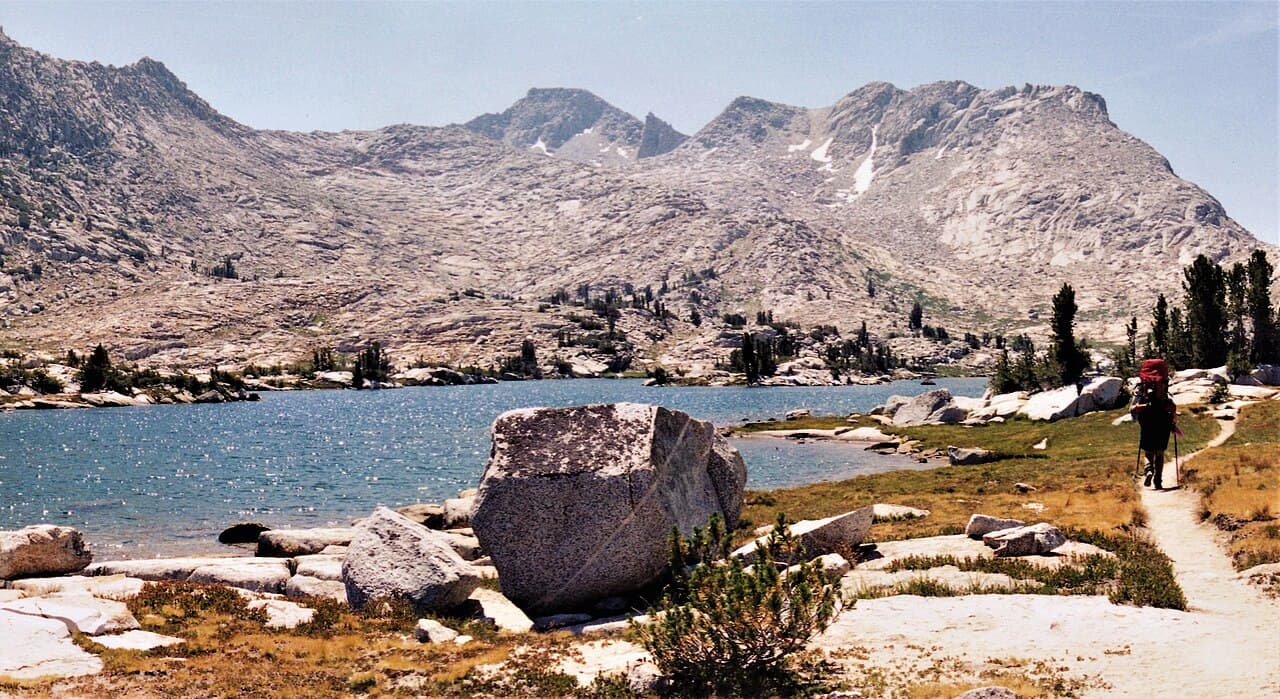
John Muir Trail — Yosemite Entry Permit
The legendary 211-mile trail from Yosemite Valley to Mount Whitney. Multiple Donohue Pass-eligible trailheads offer different entry strategies.
“Walk 211 miles along the spine of the Sierra Nevada, from Yosemite Valley to the summit of Mount Whitney—the highest peak in the contiguous United States.”
Lottery + trailhead alerts— one setup covers both
Two ways to land it
Track cancellations or run a lottery pool
Fast Lane tracking
We watch JMT Yosemite for cancellations 24/7 and alert you when a spot opens so you can book before it's gone.
Set trailhead alertsLottery pool
Apply with a crew. Each person multiplies your combined odds (solo ~8%). We coordinate invites, deadlines, and outcomes.
See plans to start a poolMost crews do both: pool for the lottery, watch for cancellations.
Better odds with a crew
JMT Yosemite is a lottery — solo odds run about 8%. Every friend who applies adds another entry. Five of you, each applying: about 34%.
One of you runs the pool (Pro or a $12 alert). Everyone else joins free.
JMT Yosemite Quick Facts
JMT Yosemite Permit Facts
- As of July 2026, JMT Yosemite in Yosemite National Park, Thru-Hikes & Long Trails requires a permit issued via lottery.
- JMT Yosemite is one of the most competitive permits in the United States, rating 10/10 on PermitSnag's demand index.
- The permit season for JMT Yosemite runs July 1 through September 30.
- The JMT Yosemite route covers 211 miles with 47,000 feet of elevation gain with rated strenuous.
- Cancelled JMT Yosemite permits are re-released on the booking system; PermitSnag monitors availability and alerts watchers when dates open.
Key Information
Key Dates
Permit Details
Pro Tips
- •Apply for shoulder season dates
- •Consider Glacier Point trailhead as alternate
- •Have backup plans with Lyell Canyon
- •All three Donohue-eligible starts connect to the JMT
What to Expect
Route Details
Highlights
- •211 miles over 14-21 days with approximately 47,000 feet of total elevation gain
- •Eleven mountain passes, six exceeding 11,000 feet including Forester Pass at 13,153 ft
- •Remote wilderness with limited cell service and no roads for over 150 miles
- •3-5 resupply opportunities depending on your strategy
- •Bear canister required for entire duration
- •Variable weather including afternoon thunderstorms and potential early-season snow
Best Time to Visit
Mid-July through September offers the most reliable conditions. Early July may have challenging creek crossings and snow on high passes. September brings cooler temps, fewer crowds, and lower creek levels but also shorter days and early season snowstorms.
Hazards & Considerations
- !High altitude—most of trail is above 8,000 ft with passes exceeding 13,000 ft
- !Creek crossings can be dangerous in high-water years (June-early July)
- !Afternoon thunderstorms are common July-August
- !Black bears are present throughout—proper food storage mandatory
- !Remote location—evacuation can take days
How to Get This Permit
Create a Recreation.gov account
Sign up at Recreation.gov if you don't have an account. Verify your email and add payment info ahead of time.
Apply during the lottery window
Submit your application between Rolling weekly lottery, 24 weeks before entry. Apply for multiple dates to increase your odds.
If unsuccessful, monitor cancellations
Permits get cancelled daily. Peak cancellation times are 24-48 hours before the trip date.
Set up PermitSnag alerts
Get instant notifications when cancellations happen. We check availability every 2-3 minutes, 24/7.
When to Go
Conditions
Trail generally snow-free above 11,000 ft by mid-July. Creeks can be high early in season.
Crowd Level
HighAdvantages
- +Snow-free passes
- +Long daylight hours
- +All resupply stations open
Challenges
- !High permit competition
- !Crowded campsites
- !Afternoon thunderstorms
Difficulty Assessment
Fitness and endurance required
Climbing, scrambling, or specialized skills
Steep dropoffs and fall potential
Route finding and trail clarity
Difficulty of bailing out mid-route
Best For
Experienced backpackers ready for a multi-week wilderness expedition with significant elevation and remote conditions.
Recommended Experience
Should have completed at least one multi-day backpacking trip of 50+ miles and have experience hiking at elevation above 10,000 feet.
Not Recommended For
First-time backpackers or those without experience in high-altitude mountain travel.
About This Permit
The John Muir Trail is a 211-mile continuous footpath through the heart of California's Sierra Nevada range, connecting Yosemite Valley to the summit of Mount Whitney. It passes through Yosemite, Kings Canyon, and Sequoia National Parks, traverses the Ansel Adams and John Muir Wilderness areas, and crosses 11 passes over 10,000 feet—including six over 11,000 feet.
Most thru-hikers complete the trail in 14-21 days, though fastpackers and trail runners have set records under 4 days. The route requires significant planning for food resupply (typically at Tuolumne Meadows, Red's Meadow, Muir Trail Ranch, and/or MTR food drop).
The Experience
Why It Matters
Named for the Scottish-American naturalist who championed the Sierra Nevada's protection, the John Muir Trail is America's most coveted long-distance hike. It traverses three national parks, two national forests, and passes through some of the most pristine wilderness remaining in the Lower 48. For many hikers, completing the JMT is a lifelong dream and a pilgrimage to the heart of the American West.
The Route
The trail begins at Happy Isles, climbing past the thundering curtains of Vernal and Nevada Falls. The first section through Yosemite is heavily trafficked, but solitude comes quickly after Little Yosemite Valley.
From Tuolumne Meadows, the trail enters the serene 8-mile stretch of Lyell Canyon, following the Lyell Fork through a broad glacial valley. Then comes the first major climb: Donohue Pass at 11,066 feet, marking the boundary between Yosemite and the Ansel Adams Wilderness.
Beyond lies a procession of high country: Island Pass, Thousand Island Lake beneath the spires of the Ritter Range, and the volcanic Devils Postpile. The trail winds through the John Muir Wilderness, crossing passes named for Sierra luminaries—Muir, Mather, Pinchot—each one higher than the last. The final push over Forester Pass (13,153 ft) leads to the climactic ascent of Mount Whitney, where 211 miles of trail culminate at 14,505 feet above sea level.
The Feeling
There's a rhythm to the JMT that takes hold after the first few days. Wake with the sun. Walk. Climb. Descend. Filter water. Walk more. By the end, you've internalized the Sierra—the way light falls on granite at golden hour, the scent of sun-warmed pine needles, the quiet thunder of a distant waterfall. Cresting Donohue Pass for the first time, with the whole of the Ansel Adams Wilderness spread below you, something shifts. You're no longer visiting the mountains. You're living in them.
Trailhead Information
Happy Isles Trailhead
4,035 ft elevationThe traditional JMT starting point. Only 15 'Donohue Pass Eligible' permits issued daily from this trailhead.
Parking
No direct parking. Use Half Dome Village lot (fills early) or take shuttle to Stop #16.
Getting There
Access via Yosemite Valley shuttle system.
Nearest Services
Half Dome Village has general store, showers, and restaurants.
Lyell Canyon Trailhead (Tuolumne Meadows)
8,600 ft elevationAlternative JMT start that skips Yosemite Valley crowds. 30 'Donohue Pass Eligible' permits issued daily.
Parking
Parking at Tuolumne Meadows Wilderness Center or Dog Lake parking area.
Getting There
Requires Tioga Road to be open (typically June-November). 1.5 hours from Yosemite Valley.
Nearest Services
Tuolumne Meadows store and grill (seasonal).
Glacier Point Trailhead
7,200 ft elevationScenic alternate start descending to Little Yosemite Valley. Donohue Pass eligible via LYV connection.
Parking
Glacier Point parking (seasonal road access, typically late May-October).
Getting There
Glacier Point Road from Yosemite Valley; check seasonal opening.
Nearest Services
Yosemite Valley services via shuttle or drive.
Rules & Regulations
- •'Donohue Pass Eligible' wilderness permit required to exit Yosemite southbound
- •Only 45 southbound permits issued per day (15 from Happy Isles, 30 from Lyell Canyon)
- •Bear-resistant food canister required for entire trail
- •Group size limit of 15 people
- •Campfires prohibited above 9,600 feet in Yosemite and at many locations along the trail
- •Camp at least 100 feet from water and trails
Gear Checklist
Required
- Bear-resistant food canister (required by law)
- Water filter or purification system
- Shelter (tent, tarp, or bivy)
- Warm sleeping bag rated to 20°F or lower
- Rain gear and insulating layers
- Navigation (map, compass, GPS device)
Recommended
- Trekking poles (invaluable for creek crossings and steep passes)
- Gaiters for early season snow travel
- Ice axe and microspikes (if starting before July)
- Solar charger or battery bank
- Lightweight camp shoes
- Wilderness first aid kit
Plan Your Trip
Gear Checklist
Required and recommended gear for JMT Yosemite
Shuttle Services
Trailhead transportation options
Browse all shuttlesGuide Services
Experienced wilderness guides
Browse all guidesSome links may be affiliate links. Purchases support PermitSnag at no extra cost to you.
Key Landmarks
Landmarks (50)
Lottery Statistics
~8%
estimated success rate
Get detailed lottery statistics and tips. Sign up to track this permit.
Boost Your Chances
Apply with a crew to multiply your combined odds, and let auto win-detection tell you the moment you win — you never have to check Recreation.gov. Pool and auto win-detection are on Pro or a $12 permit alert.
12,453 permits and 8,294 campsites secured by PermitSnag users
JMT Yosemite FAQ
How do I get a JMT Yosemite permit?
JMT Yosemite permits use a lottery system. The lottery typically opens Rolling weekly lottery, 24 weeks before entry. PermitSnag sends lottery open, deadline, and results reminders; you can also enable cancellation alerts if spots open later.
When is the best time to visit JMT Yosemite?
The season typically runs July 1 to September 30. Weekdays generally have better availability than weekends.
How competitive is the JMT Yosemite permit?
This permit has a demand score of 10/10, making it extremely competitive. We recommend having backup dates and using PermitSnag's cancellation alerts.
What if I can't get a JMT Yosemite permit?
Cancellations happen daily. Set up alerts with PermitSnag to get notified the moment a spot opens up. We check availability every 2-3 minutes, 24/7.
👥Community
Trail Conditions
Questions
Trip Reports
Write ReportPhotography Guide
Golden Hour
Thousand Island Lake at sunrise is the JMT's most iconic shot—the Ritter Range reflected in glassy water with the first light hitting Banner Peak.
Best Light
For pass photography, early morning offers the best clarity and drama. The granite bowls of Evolution Basin glow in alpenglow both at dawn and dusk.
Beat the Crowds
The first 25 miles from Yosemite Valley are the most crowded. Timing your start mid-week and camping beyond Tuolumne Meadows on day one provides more solitude.
Classic Shots
- 📍Thousand Island Lake sunrise with Banner Peak reflection
- 📍Cathedral Peak from Cathedral Lakes
- 📍Evolution Basin panorama from Muir Pass
- 📍The summit of Mount Whitney at sunrise (if summiting for finish)
- 📍Looking back at Donohue Pass from the Ansel Adams Wilderness
Can't Get a JMT Yosemite Permit?
Consider these alternatives if your preferred dates aren't available.
Rae Lakes Loop (Sequoia/Kings Canyon Entry)
Easier AlternativeA 42-mile loop that traverses a spectacular section of the JMT without the full commitment. Covers some of the trail's most beautiful terrain including Rae Lakes.
Tradeoffs
Still requires permit but much easier to obtain. Shorter duration (3-5 days) but misses Yosemite and Whitney sections.
JMT Southbound from Kearsarge Pass
Similar ExperienceEnter the JMT from Onion Valley via Kearsarge Pass, hiking the southern 100 miles to Whitney. Inyo NF permits are easier to obtain than Yosemite permits.
Tradeoffs
Skips Yosemite section but covers the highest and most remote portions. Better permit odds.
High Sierra Trail
Similar ExperienceA 72-mile east-west traverse from Crescent Meadow to Mount Whitney, intersecting the JMT at its climax.
Tradeoffs
Different route but shares the Whitney summit experience. Generally easier permits.
Permit Directory
Browse Backcountry Permits
Find permits for day hikes, overnight backpacking, thru-hikes, canyoneering, and river trips across federal and state lands.
National Park Permits
Day-use, overnight, and wilderness permits at America's crown jewels
California Wilderness Permits
Sierra Nevada, Lost Coast, and backcountry access
Utah & BLM Permits
Red rock canyons, slot canyon permits, and desert wilderness
National Forest & Wilderness Permits
USFS wilderness areas with quota systems
Thru-Hikes & Long Trails
Multi-day point-to-point traverses and epic long-distance trails
River Permits
Multi-day rafting and river access permits
California State Park Permits
Backcountry camping and trail permits
Mountaineering & Summit Permits
High-altitude summit permits and technical climbing routes